


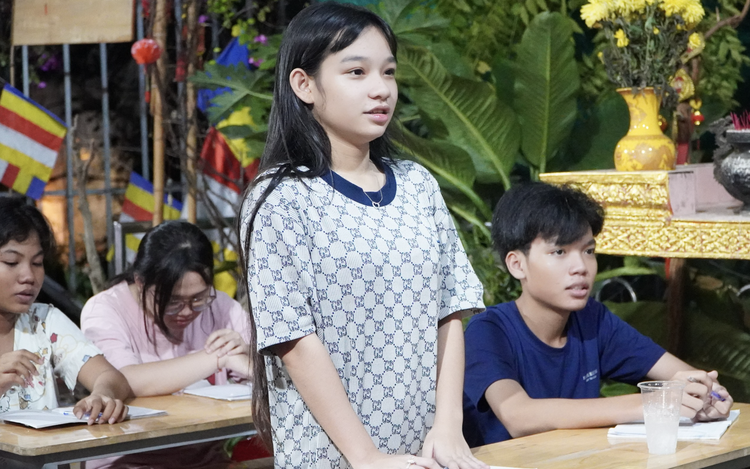
The free Khmer classes at Pothiwong Pagoda in Ho Chi Minh City open every evening during the summer, helping preserve and nurture the Khmer language for young Khmer children. Photo: Ngoc Sang / Tuoi Tre
For many years, the pagoda has served as a free Khmer-language learning center, helping young children grow up knowing their mother tongue and preserving the cultural spirit of their community.
Carefully writing each Khmer character on the board, Venerable Thach Do La slowly guides the class through pronunciation.
When students struggle with tricky pronunciations or the language's intricate, curved letters, he patiently guides them through every syllable and stroke.
For nearly 15 years, many Khmer children living around the pagoda or those who moved to Ho Chi Minh City with their parents from rural areas have attended the classes.
Some learners have stayed with the program through three or four consecutive summers.
“Teaching the language is only part of our work. We also tell the children about the culture, customs and festivals of our people so they understand their roots and know who they are,” Venerable La shared.
The classes help kids learn the written language and spoken words so they can understand Khmer culture and traditions, continue preserving them, and pass them on to future generations, he said.
Each session lasts about 90 minutes, from Monday to Saturday every week.
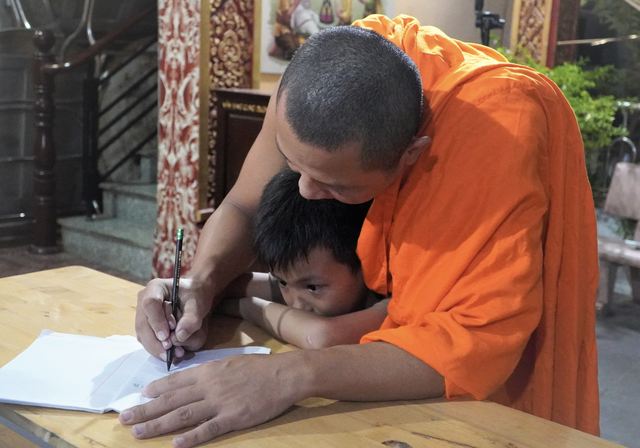
Students who have not yet mastered reading and writing receive dedicated guidance from Venerable Thach Do La. Photo: Ngoc Sang / Tuoi Tre
After students learn the alphabet and basic word combinations, the monk introduces them to traditional festivals such as Chol Chnam Thmay, Sen Dolta, Ok Om Bok and Pchum Ben–celebrations closely connected to the spiritual life of Khmer people in southern Vietnam.
Interwoven with language lessons are stories about morality, filial piety and kindness, helping children develop their character alongside the goal of preserving their mother tongue.
Twelve-year-old Lam Tri Dung is always among the first students to arrive, sitting in the front row. Before class begins, he helps wash cleaning cloths, carefully wipes the board and arranges the desks neatly.
Dung shared that writing is the most difficult part of learning Khmer because there are many curved strokes, and sometimes he cannot write them correctly.
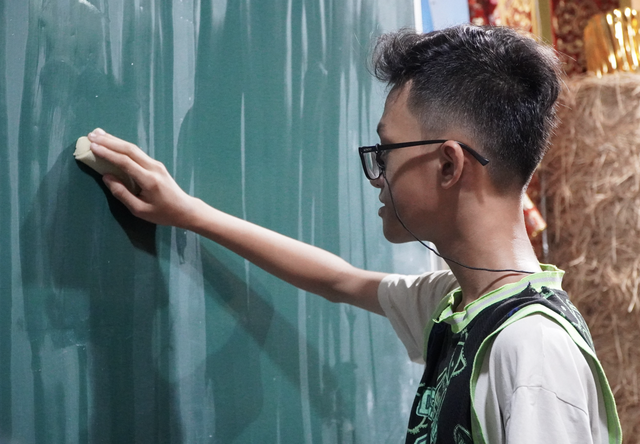
Lam Tri Dung often arrives early to help clean the board. Photo: Ngoc Sang / Tuoi Tre
Because of the challenge, Dung practices every day.
“Attending the class is enjoyable,” he said.
“Apart from having learned about Khmer culture and my own ethnic language, I can play with my friends and learn good values through the stories told by the monk,” Dung added proudly.
The children may still write slowly and pronounce words imperfectly. Yet, beneath the peaceful pagoda roof, their mother tongue is quietly taking root.
Alongside the language, timeless stories of heritage, tradition, and ancestral pride continue to be passed from one generation to the next.
- REFERENCE MORE








Max: 1500 characters
There are no comments yet. Be the first to comment.