


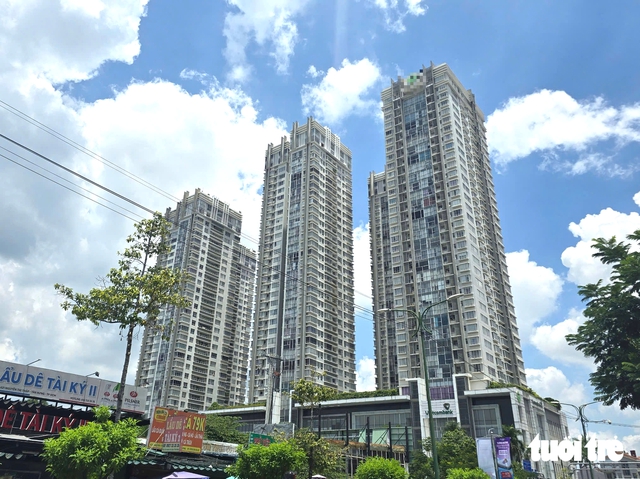
Experts say limiting apartment ownership to a building's service life is not only a matter of safety but also one of investment efficiency and sustainable urban development. Photo: Cong Trieu / Tuoi Tre
Experts say linking apartment ownership to a building's designed lifespan is an issue of investment efficiency and urban redevelopment, rather than simply how long residents can occupy a property.
Proposal would apply only to new apartment projects
Debate has intensified over whether apartments would become depreciating assets if Vietnam adopts regulations tying their period of use to the designed lifespan of buildings.
Under the policy direction set out in Resolution No. 21, land allocated for commercial housing projects would continue to carry long-term land use rights, while apartment buildings constructed on that land would be subject to a fixed period of use based on their designed lifespan.
The proposal, included in the draft revised Housing Law, has generated public concern, particularly among apartment owners, according to the Ho Chi Minh City Real Estate Association (HoREA).
Le Hoang Chau, chairman of HoREA, told Tuoi Tre (Youth) online newspaper that the association had submitted recommendations to the National Assembly Standing Committee and relevant ministries.
HoREA proposed applying the building lifespan provision only to apartment projects approved after the revised Housing Law takes effect.
The association also urged lawmakers not to apply the regulation retroactively to apartment buildings completed between 1995 and the law's effective date, saying this would protect the rights of homeowners who had already received long-term ownership certificates.
HoREA further proposed allowing apartment buildings to have a maximum lifespan of up to 99 years, citing Singapore's Housing and Development Board (HDB) as an international benchmark and arguing that such a limit would better match public expectations.
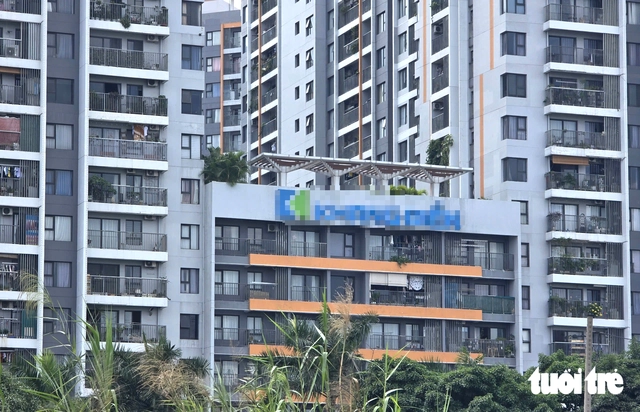
The proposal to impose a fixed service life on apartment buildings has sparked debate over whether such properties would lose value over time. Photo: Cong Trieu / Tuoi Tre
Apartment value depends on more than building lifespan
Dinh Minh Tuan, southern regional director of property platform Batdongsan.com.vn, rejected claims that apartments should be regarded as depreciating assets.
According to Tuan, data from 626 apartment projects in Ho Chi Minh City showed that 94 percent recorded price increases over the past year, while only about six percent posted slight declines.
He said apartments differ from depreciating assets such as cars because they generate rental income and retain land-use value.
Tuan added that rental returns over a building's lifespan, combined with the land-use value of properties in prime locations, could exceed the original investment even after the building reaches the end of its designed service life.
While HoREA has called for the regulation to apply only to future projects, Tuan argued that the proposal is intended to resolve issues surrounding aging apartment buildings.
"If the regulation applies only to new projects, how will authorities deal with older apartment buildings that have deteriorated without a clear legal framework?" Tuan said.
He said codifying building lifespans would accelerate inspections and redevelopment of aging apartment blocks, improve public safety, and support urban renewal.
A Ho Chi Minh City-based real estate expert told Tuoi Tre that the proposal could affect buyer sentiment in the short term.
The expert said buyers and investors would increasingly focus on construction quality, developer credibility, and long-term building management rather than the concept of perpetual ownership.
The expert added that apartment buildings have finite technical lifespans by nature and that making those limits explicit would create a clearer legal framework for the property market rather than reduce the value of apartment ownership.








Max: 1500 characters
There are no comments yet. Be the first to comment.