


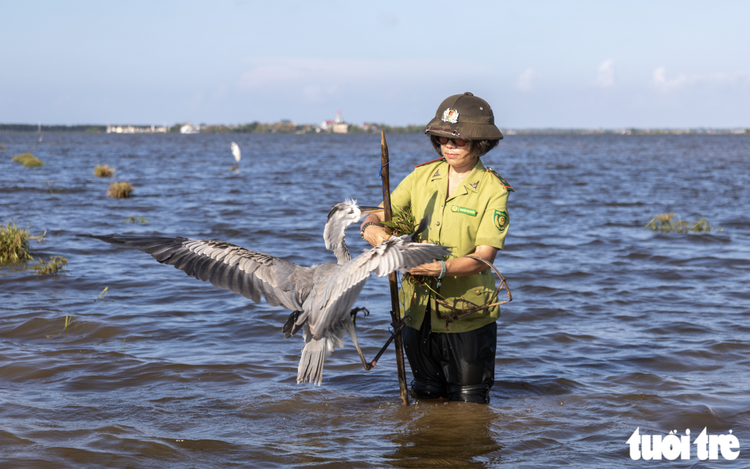
A grey heron with its eyes sewn shut and legs tied to a bamboo stake driven into the vast expanse of flooded fields, used as a live decoy to trap wild birds, in Quang Tri Province, north-central Vietnam. Photo: Hoang Tao / Tuoi Tre
Amid vast flooded fields in Quang Tri Province, located in north-central Vietnam, nearly invisible nets are strung across the landscape to trap wild birds.
Nearby, storks and herons have their eyes sewn shut and legs tied to bamboo stakes, forcing them to serve as live decoys to lure their own kind into traps.
Rangers from the Hai Lang Forest Protection Unit on Thursday waded through thigh-deep floodwaters to dismantle the traps and rescue wild birds.
At a site in Nam Hai Lang Commune, fine-mesh nets stretched across the expansive flooded fields, forming an extensive network designed to intercept wild birds.
The dark, delicate strands were suspended between rows of bamboo stakes driven into the ground, creating multiple layers of hidden barriers.
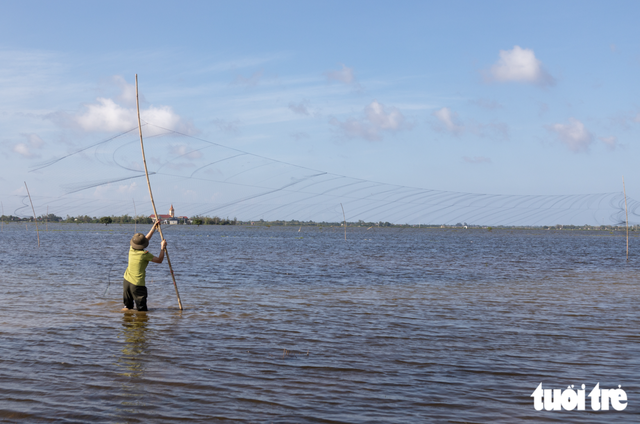
Nearly invisible nets stretch across the entire field. Photo: Hoang Tao / Tuoi Tre
From a distance, the nearly transparent nets blended into the blue sky.
Birds flying overhead or swooping down to forage can easily become entangled in the mesh.
Beside the nets, numerous live decoys were positioned to attract other birds.
Grey herons and white storks had their eyes sewn shut, while their legs were tightly bound to bamboo stakes planted in the water.
The area was also dotted with artificial grass clumps mounted on bamboo poles.
Beneath the water, the poles were anchored firmly in place, while bundles of grass were tied above the surface.
Semicircular clamp traps were placed on top.
When birds descended to feed and landed on the artificial vegetation, the traps snapped shut around their legs.
According to forest rangers, wild bird trapping becomes a recurring problem in low-lying areas of the province during the annual flood season.
Flooded fields, alluvial banks and riverside habitats provide feeding and resting grounds for numerous migratory bird species, but these same areas are exploited by hunters.
Those involved in illegal trapping employ a range of methods, including mist nets, leg-hold traps and live decoys.
Birds targeted include herons, storks, sandpipers and swifts.
The captured birds are subsequently sold or distributed for consumption.
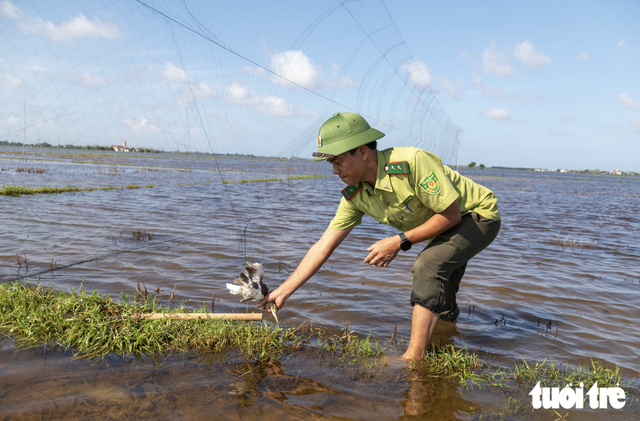
A forest ranger rescues a sandpiper entangled in an invisible net. Photo: Hoang Tao / Tuoi Tre
Stronger coordination needed to protect wild birds
Several communes such as Dien Sanh, Hai Lang, Nam Hai Lang, My Thuy and Vinh Dinh are entering the rainy and flood season, according to the unit.
This is also the time when various wild and migratory bird species arrive to feed and seek shelter.
Illegal trapping poses a serious threat to these birds' survival and damages their natural habitats.
In response, forest rangers have intensified inspections in known hotspots, conducted patrols, dismantled traps and rescued birds for release back into the wild.
Since the beginning of the year, forest rangers have carried out 13 inspection operations, releasing 90 birds of various species into their natural habitats.
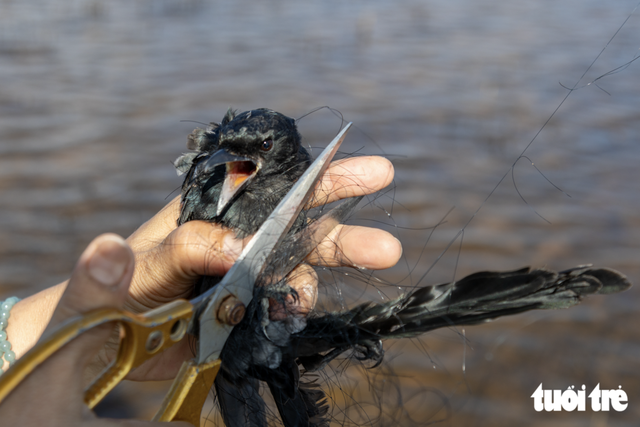
A forest ranger cuts the net to rescue a bird. Photo: Hoang Tao / Tuoi Tre
Officers have confiscated 110 leg-hold traps and removed and destroyed 5,600 meters of netting, along with 47 artificial storks made from bamboo and sheet metal, numerous bamboo stakes and other bird-trapping equipment.
Authorities have also penalized one violation, imposing a fine of VND3 million (US$116).
Beyond patrols and inspections, the forest protection unit has called on commune authorities to strengthen the management and protection of wild and migratory birds.
Public awareness campaigns should be expanded to discourage the illegal hunting, trading, transportation, possession and consumption of wild birds.
Managers of traditional markets have also been urged to prevent the sale of wild birds on their premises.
Protecting wild birds requires sustained cooperation among forest rangers, police, local authorities and the public.
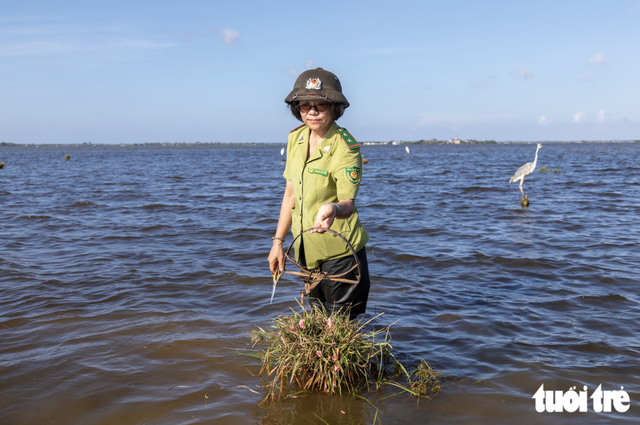
A fake grass-covered post with a clamp trap on top, and a decoy bird behind it to lure wild birds. Photo: Hoang Tao / Tuoi Tre
In Nam Hai Lang Commune, where nearly invisible nets and clamp traps remain scattered across flooded fields during the migratory season, local authorities must work proactively with forest rangers to conduct regular inspections and stamp out illegal hunting at its source.
Safeguarding the feeding and resting grounds of wild birds is essential to preserving biodiversity and ensuring that these seasonal visitors can continue to thrive in their natural habitats.
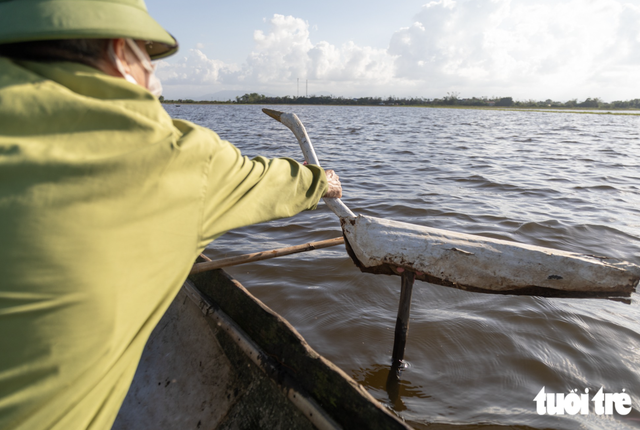
A fake stork placed in a flooded field. Photo: Hoang Tao / Tuoi Tre
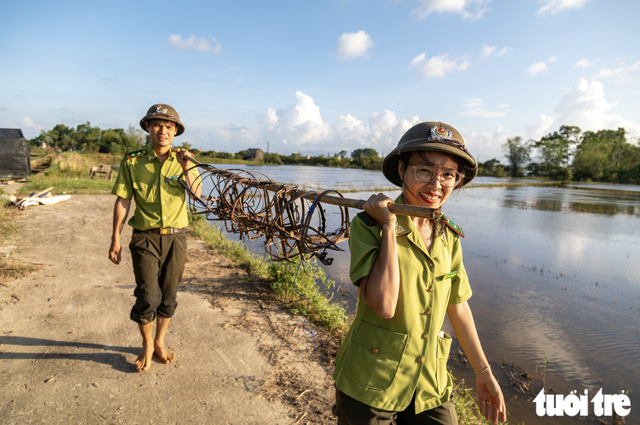
Clamping traps collected by forest rangers. Photo: Hoang Tao / Tuoi Tre
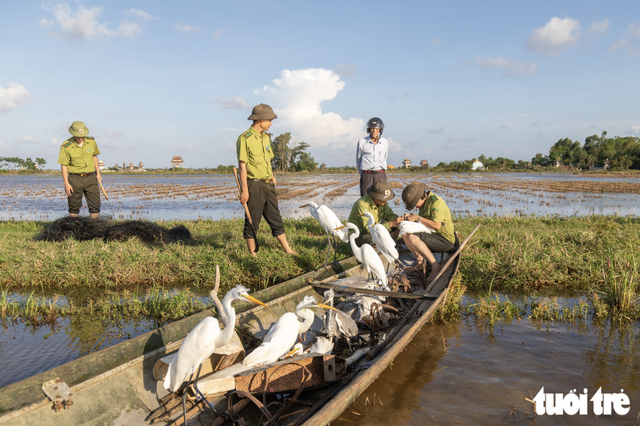
Storks and grey herons captured for use as decoys are rescued. Photo: Hoang Tao / Tuoi Tre








Max: 1500 characters
There are no comments yet. Be the first to comment.