On a busy stretch of Bach Dang Street in the ancient town of Hoi An, located in Da Nang City, central Vietnam, tourists often slow their steps outside a small workshop to watch rough bamboo roots slowly turn into smiling, contemplative faces under the hands of artisan Huynh Phuong Do.
Locals and visitors alike call him 'Do Tre,' or 'Do of the bamboo,' a nickname that has followed him for years as the man widely credited with creating Hoi An's distinctive art of bamboo-root carving.
At his modest stall at No. 26 Bach Dang Street, Do, slight in build and weathered by years of outdoor work, chisels patiently while greeting passers-by in fluent English and French.
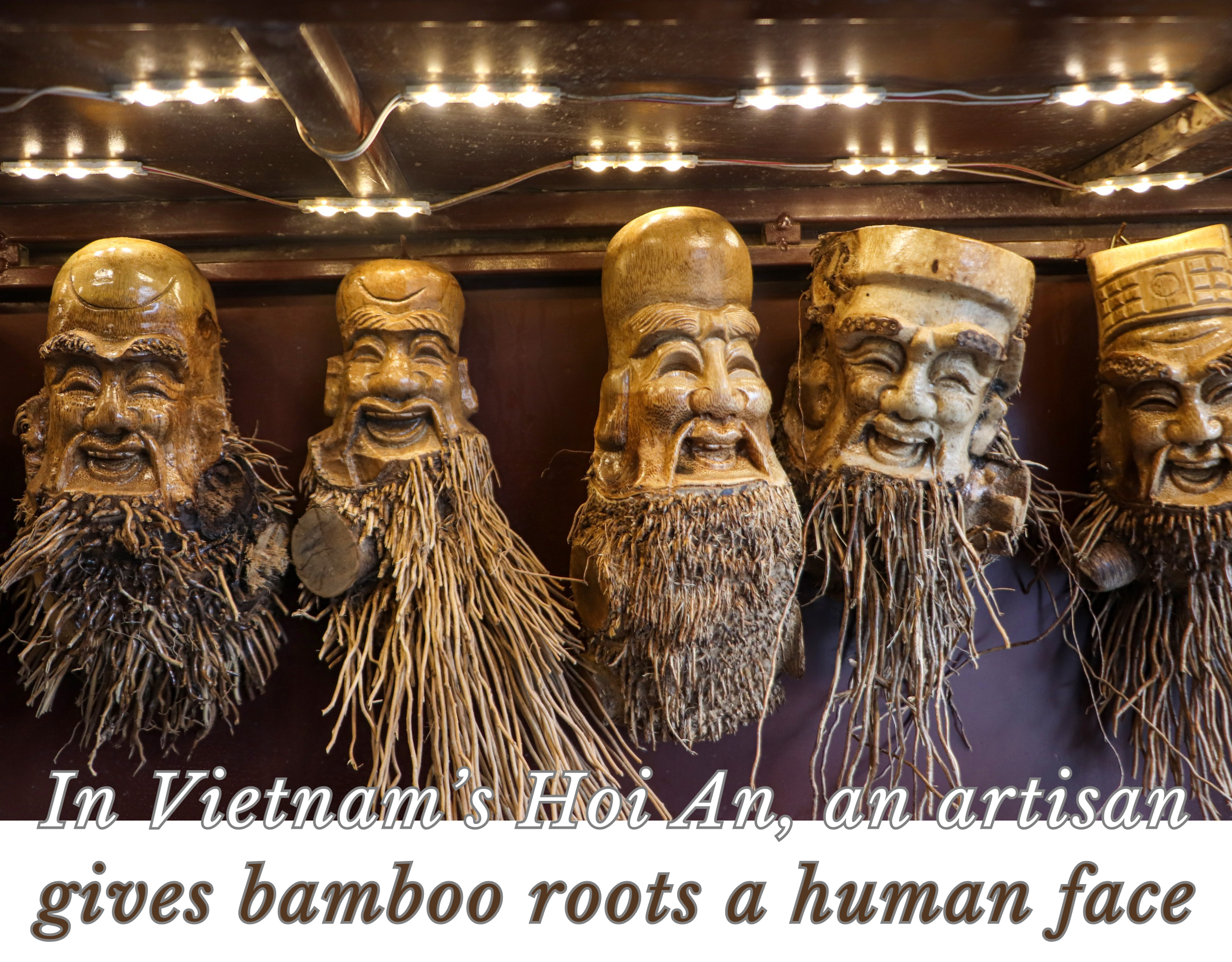
In front of him, gnarled bamboo roots, once discarded debris, become expressive figures with furrowed brows, flowing beards or faint smiles.
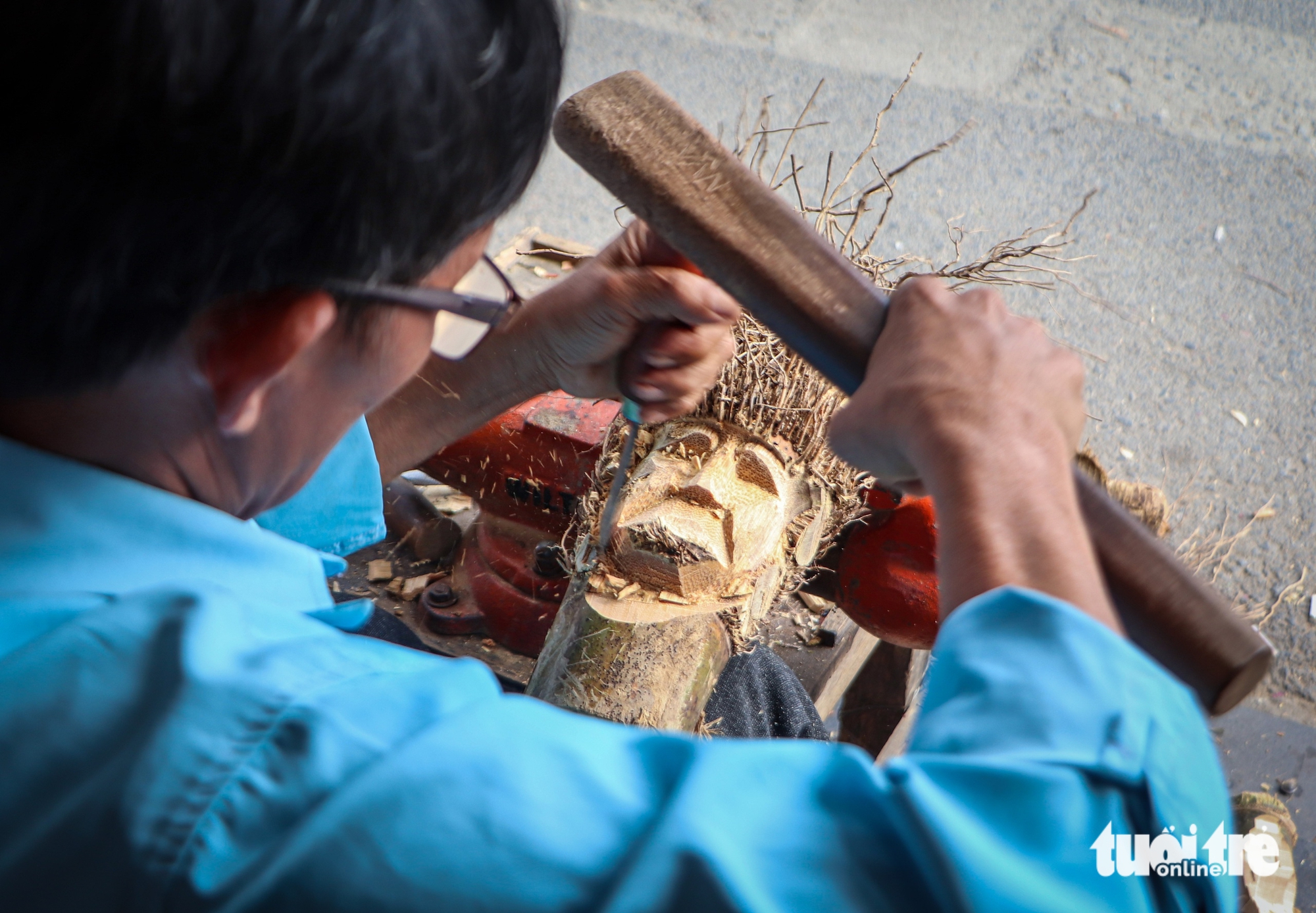
Artisan Huynh Phuong Do, known as ‘Do Tre,’ carves a bamboo root at his workshop in Hoi An, Da Nang City, central Vietnam. Photo: Thanh Nguyen / Tuoi Tre
Do traces his unusual craft back to a devastating flood in 1999, when swollen waters of the Hoai River carried uprooted bamboo to his doorstep.
With time on his hands and woodworking tools nearby, he picked up one root and began carving out of curiosity.
From that lifeless stump emerged a crude but expressive human face.
A souvenir shop soon bought the piece, opening what Do describes as an unexpected new path.
Artisan Huynh Phuong Do, known as ‘Do Tre,’ carves a bamboo root at his workshop in Hoi An, Da Nang City, central Vietnam. Photo: Thanh Nguyen / Tuoi Tre
"At first, I never thought this would become a profession. I was just doing it for fun," he recalled.
"But the more I carved, the more I felt bamboo has its own spirit."
Do began learning wood carving at age 16 in Kim Bong carpentry village, a traditional woodworking hub near Hoi An.
But he says bamboo roots present a far greater challenge.
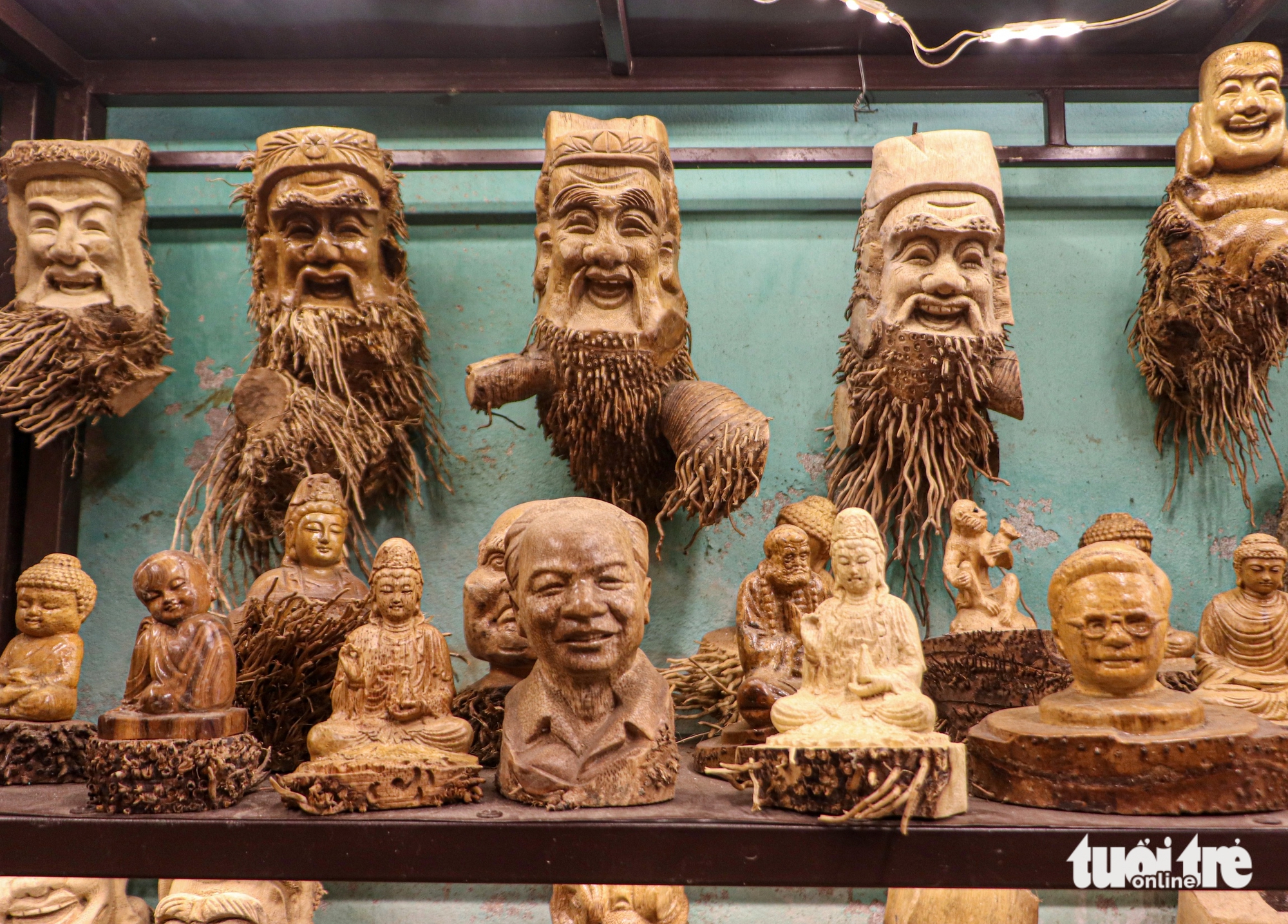
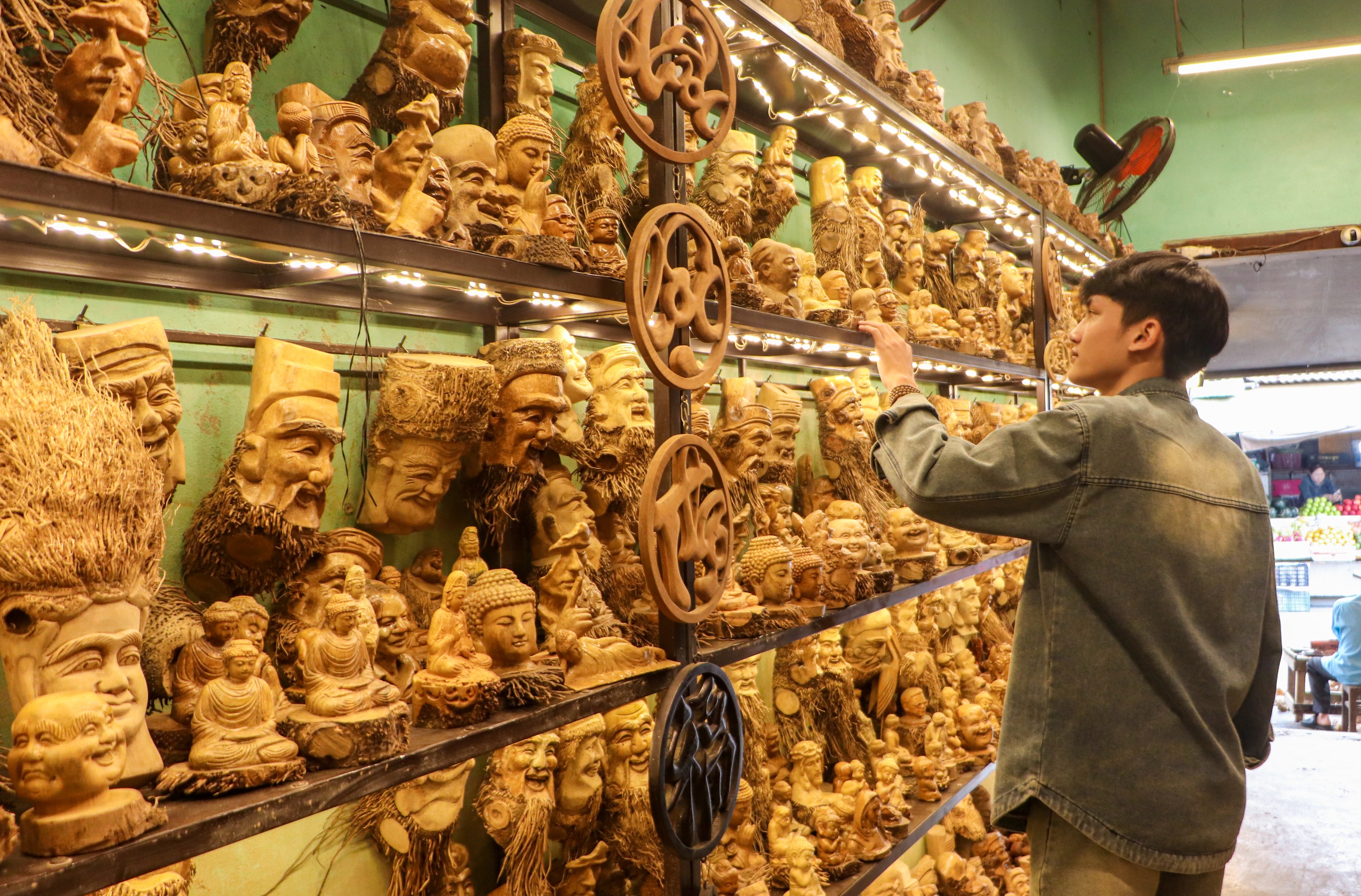
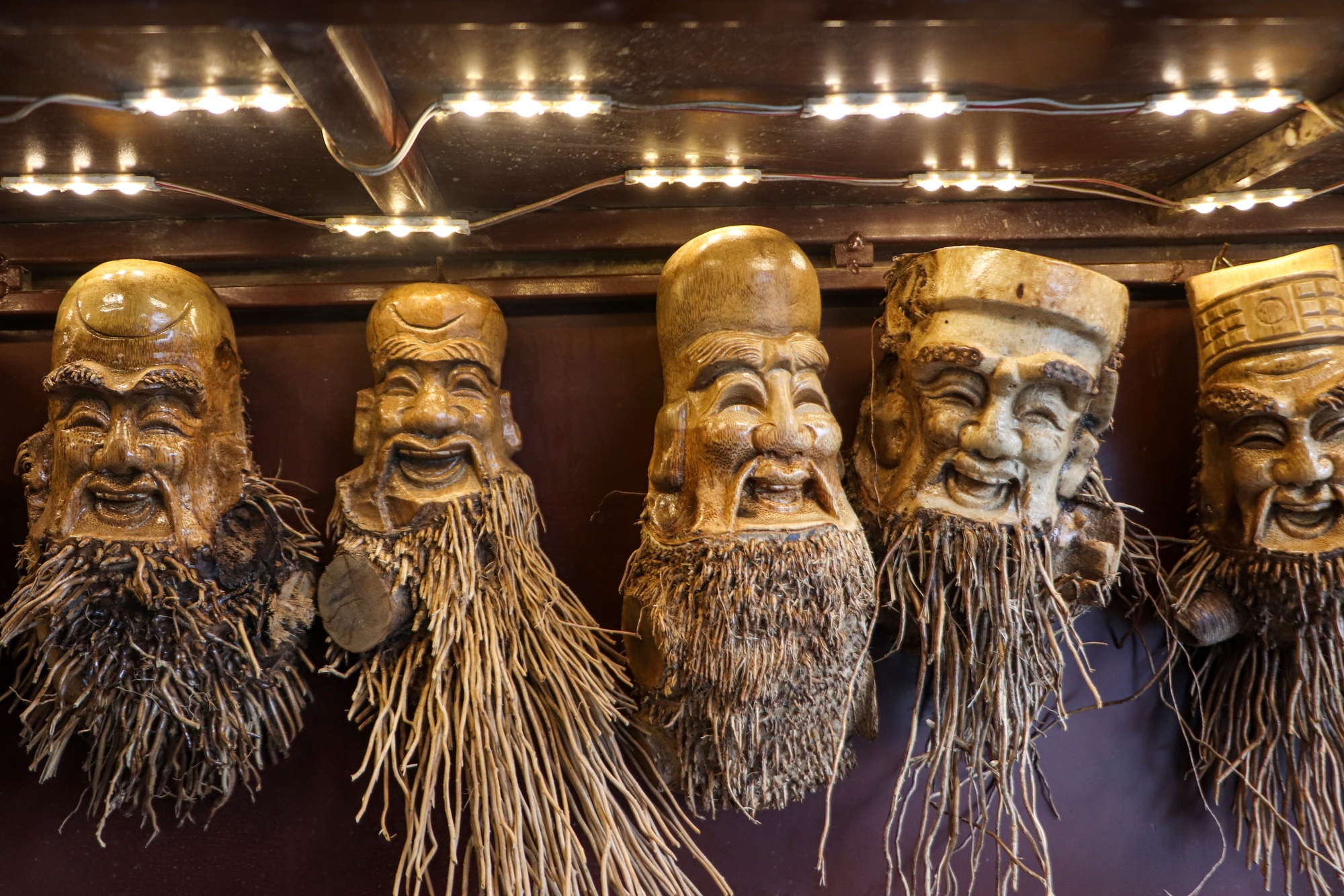
Bamboo-root and wooden sculptures created by artisan Huynh Phuong Do are displayed at his stall in Hoi An, Da Nang City, central Vietnam. Photo: Thanh Nguyen / Tuoi Tre
"Wood has grain and structure. Bamboo roots don't," he said.
"No two roots are alike. Some are long, some short, knotted or twisted.
"You have to see the character before you touch the chisel."
He added that bamboo must be harvested carefully, avoiding periods when new shoots emerge, as roots taken at the wrong time are more vulnerable to insects.
Bamboo-root and wooden sculptures created by artisan Huynh Phuong Do are displayed at his stall in Hoi An, Da Nang City, central Vietnam. Photo: Thanh Nguyen / Tuoi Tre
Each root, shaped by nature and the carver's mood, produces a one-of-a-kind result, Do said.
Watching a root on his workbench, he suddenly smiled and announced it would become Phuc, one of the three traditional deities symbolizing fortune, prosperity, and longevity in Vietnam.
That moment, recognizing the figure hidden inside, is the most important part of the process.
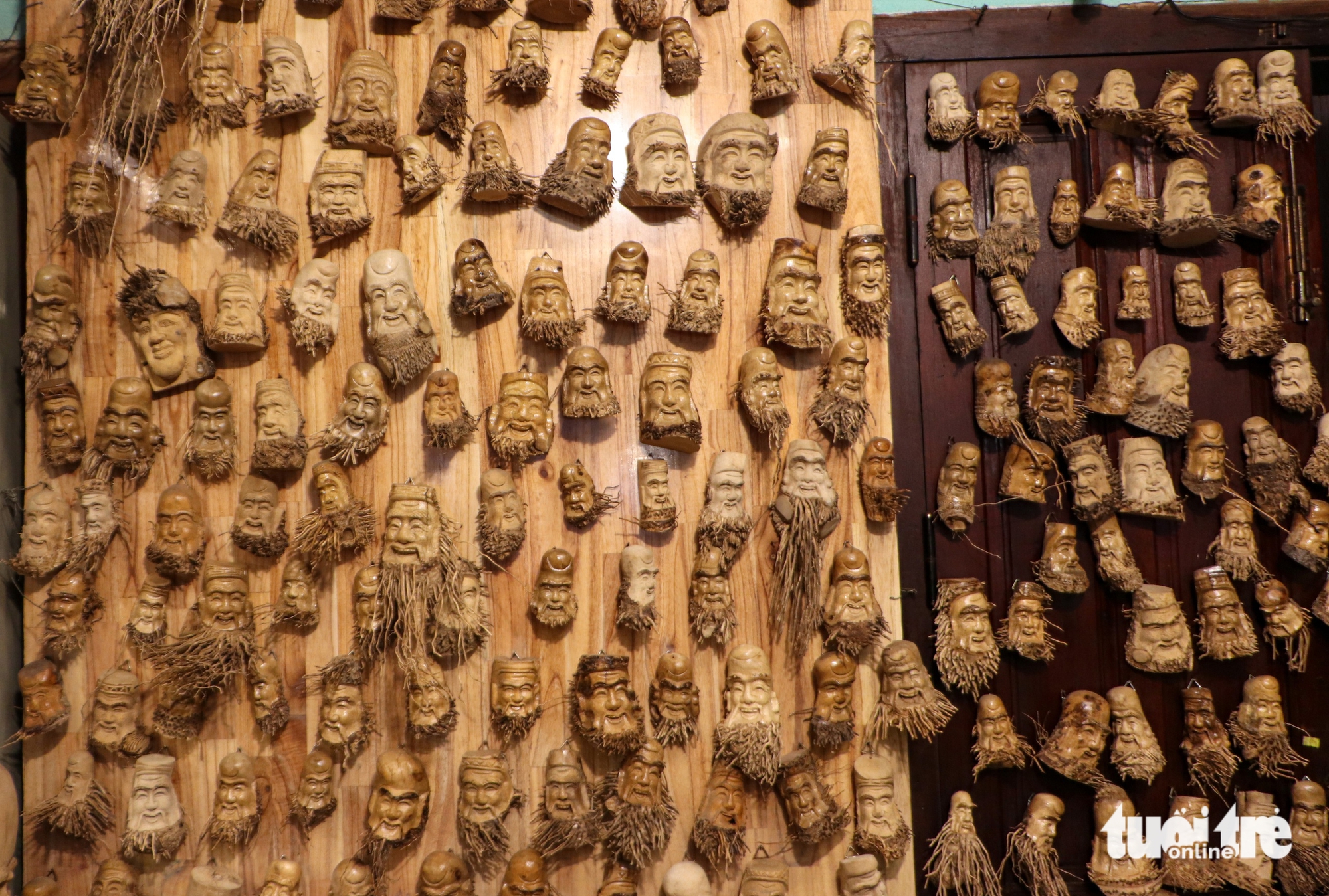
A visitor looks at bamboo-root sculptures at the stall of artisan Huynh Phuong Do in Hoi An, Da Nang City, central Vietnam. Photo: Thanh Nguyen / Tuoi Tre
From there, large chisels shape the outline, smaller tools refine wrinkles, eyes, and beards.
In less than half an hour, a face emerges from the rough surface.
Do's creations often depict familiar figures from East Asian culture, including Quan Cong, Bodhidharma, the God of Wealth, and the trio Phuc-Loc-Tho (Happiness-Prosperity-Longevity).
He leaves the bamboo unpainted, preserving its natural texture and color.
Tourists regularly gather to watch him work.
Le Huyen My, a visitor from north-central Thanh Hoa Province, said she bought a bamboo-root sculpture as a keepsake.
"I've traveled to many places, but I've never seen this kind of carving," she said.
"It's very distinctive and natural."
On a typical day, Do can complete about 15 simple pieces.
Interest in the craft has grown, drawing apprentices who now work alongside him to meet orders from souvenir shops.
Prices ranges from about VND200,000 (US$7.6) to VND500,000 ($19), while rare or unusually shaped roots can sell for up to ten times as much.
Bamboo-root and wooden sculptures created by artisan Huynh Phuong Do are displayed at his stall in Hoi An, Da Nang City, central Vietnam. Photo: Thanh Nguyen / Tuoi Tre
Many of the sculptures travel abroad in tourists' luggage, becoming small ambassadors of Hoi An's craft traditions.
Asked about his biggest wish, Do paused.
"I just hope there will be a bamboo-root carving village one day," he said.
"I'm willing to teach anyone who wants to learn.
"If this craft isn't passed on, it would be a real loss."










Max: 1500 characters
There are no comments yet. Be the first to comment.