



Long Thanh International Airport in southern Vietnam is scheduled to begin commercial operations in December 2026. Photo: ACV
The visits came as the airport in the southern city of Dong Nai is set to begin trial operations in September and commercial operations on December 1, according to the Airports Corporation of Vietnam (ACV), the airport's developer.
On August 3, Hiroyuki Masuda, vice-president for Japan, Southeast Asia, and Oceania at All Nippon Airways, led a delegation to inspect the airport. The group viewed the overall project through a scale model before touring Runway 23L and the passenger terminal.
The runway previously handled test flights operated by Vietnam Airlines, Vietjet, and Bamboo Airways during the airport’s technical opening in December 2025.
According to ACV, the visit reflected the Japanese airline’s interest in the airport’s operational capacity and long-term development potential.
The two sides also discussed possible cooperation once the airport enters service.
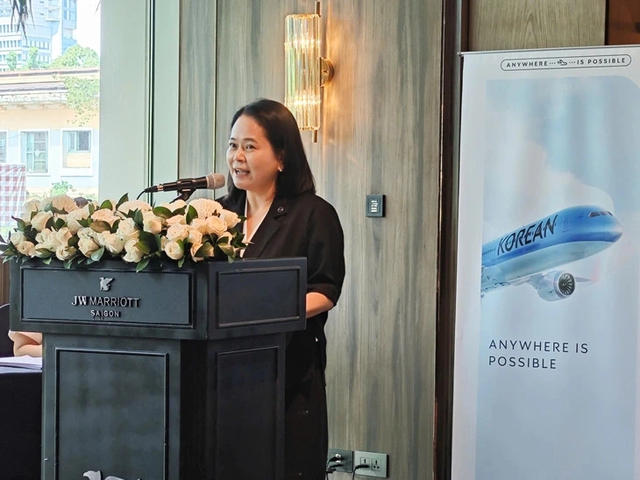
Kyoung Hee Kang, Korean Air’s country manager in Vietnam, said Vietnam currently has the largest number of Korean Air destinations in Southeast Asia. Photo: Cong Trung / Tuoi Tre
Earlier, on July 20, Choi Jung Ho, vice-president of Korean Air, inspected the passenger terminal, immigration facilities, and cargo terminal.
The airline evaluated the airport’s infrastructure as it prepares to launch passenger and cargo services between Incheon International Airport and Long Thanh.
Kyoung Hee Kang, Korean Air’s country manager in Vietnam, said the carrier is closely monitoring the project’s progress while coordinating with relevant authorities in preparation for operations.
She said the airline sees Long Thanh as having the potential to become a major aviation and logistics hub in the region.
Korean Air currently serves five destinations in Vietnam—Ho Chi Minh City, Hanoi, Da Nang, Cam Ranh, and Phu Quoc—its largest destination network in Southeast Asia.
During January-June 2026, Korean Air transported nearly 375,000 passengers between Vietnam and South Korea, up four percent year on year, while maintaining a load factor of over 90 percent.
The airline is also considering launching scheduled services to Quy Nhon, Hue, or Da Lat, where charter flights have performed relatively well. The decision will depend on market demand and airport infrastructure capacity.
In addition to passenger services, Korean Air is placing particular emphasis on Vietnam’s cargo market.
According to Kang, Hanoi is currently the airline’s largest cargo hub in Southeast Asia, with 11 dedicated cargo flights per week.
In Ho Chi Minh City, the airline operates three dedicated cargo flights while also transporting freight in the belly holds of passenger aircraft.
In 2024, Korean Air handled around 16,000 metric tons of export cargo through Ho Chi Minh City. The airline expects its cargo volume in Vietnam to reach or exceed 50,000 metric tons in 2026.
The carrier is also expanding cooperation with Vietnam Airlines in aircraft maintenance, repair, engineering, and aviation logistics.
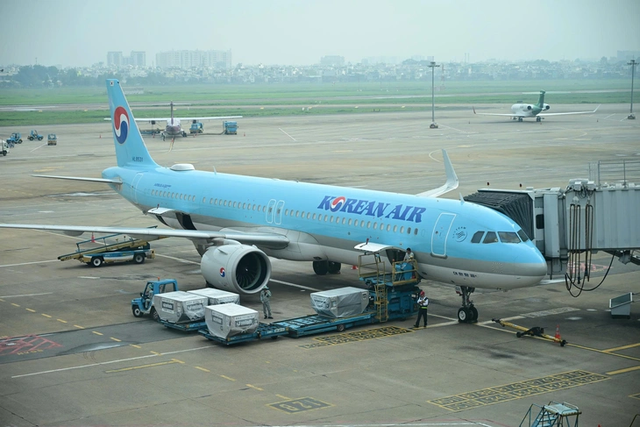
International airlines are expanding their cargo transport operations in Vietnam. Photo: Quang Dinh / Tuoi Tre
According to ACV, it is working with numerous international partners to develop 21 new international routes without direct connections to Ho Chi Minh City during the 2025-30 period.
The targeted markets include China, Taiwan, India, Sri Lanka, Malaysia, Indonesia, Bangladesh, Thailand, Europe, and the United States. The new routes are expected to generate initial passenger demand and strengthen Long Thanh’s role as a regional transit hub.
The construction of the airport’s key facilities are being accelerated to meet the target of commercial operations beginning on December 1, 2026, according to the Civil Aviation Authority of Vietnam.
ACV plans to conduct trial operations at Long Thanh International Airport over a three-month period from September through November.
Long Thanh International Airport is a national key project spanning about 5,000 hectares, with a total estimated investment of more than VND336.63 trillion (US$13 billion).
Construction began in 2020, and the airport is being developed in three phases, making it the country’s largest aviation infrastructure undertaking to date.
Once fully completed, the airport will have a total capacity of up to 100 million passengers and five million metric tons of cargo per year.








Max: 1500 characters
There are no comments yet. Be the first to comment.