


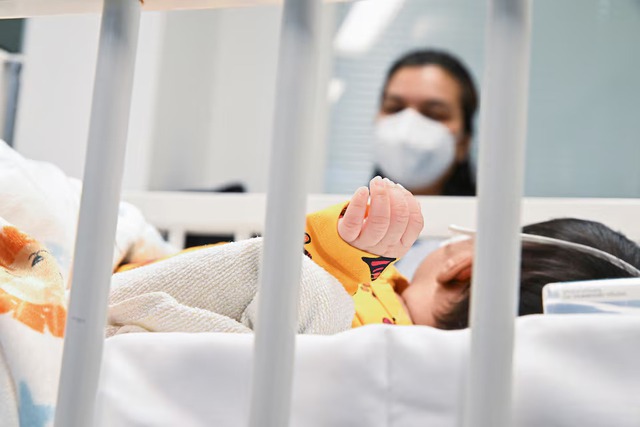
A mother watches her child in this image used as an illustration. REUTERS/Benjamin Westhoff/File Photo
Infants in Japan are believed to be infected with RSV at least once.
Symptoms are similar to those of colds, such as fever and runny nose, and the virus is transmitted through droplets or contact with contaminated hands.
The vaccine, U.S. pharmaceutical giant Pfizer Inc.'s Abrysvo, will be administered to women in their 28th to 36th weeks of pregnancy to immunize their babies, with costs primarily covered by public funds.
It will be given as a single intramuscular injection.
This will be the first maternal vaccine to be added to Japan's routine vaccination program.
Possible side effects include pain and muscle soreness at the injection site, but the vaccine is not expected to cause serious issues such as premature birth or stillbirth.
Antibody drugs administered directly to infants have also been shown to be effective in preventing RSV infections, but the current immunization law does not permit their use under the regular vaccination program.
An expert committee of the health ministry is considering a possible review of the law.
Also from April, Japan is slated to adopt more effective vaccines than those currently in use for routine vaccinations against human papillomavirus (HPV), which causes cervical cancer, and pneumococcus in the elderly.









Max: 1500 characters
There are no comments yet. Be the first to comment.