


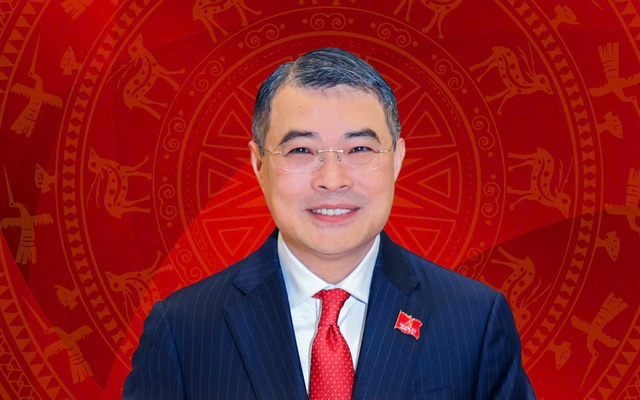
Le Minh Hung, Vietnam’s newly-elected prime minister for the 2026-31 term. Photo: Nguyen Khanh / Tuoi Tre
After the resolution was adopted with all 495 lawmakers present voting in favor, National Assembly Chairman Tran Thanh Man invited the newly-elected prime minister to take the oath of office.
Under the national flag, Hung pledged loyalty to the nation, the people, and the Constitution of the Socialist Republic of Vietnam.
He vowed to make every effort to fulfill the responsibilities entrusted to him by the Vietnamese Party, the state, and the people.
Born in 1970 in Ha Tinh Province, north-central Vietnam, Hung built much of his career in the banking sector before moving into senior leadership roles within the Communist Party of Vietnam.
His professional background includes years of service at the State Bank of Vietnam, the country’s central bank.
Ten years ago, he was appointed governor of the State Bank of Vietnam, becoming the youngest central bank governor in the institution’s history.
His tenure as governor lasted from April 2016 to October 2020, a period marked by efforts to stabilize the national financial system and strengthen economic resilience.
During those years, he oversaw flexible monetary policy aimed at stabilizing exchange rates and controlling inflation.
One of the key priorities under his leadership was addressing non-performing loans in the banking system.
Vietnam’s foreign exchange reserves also reached record levels during his term.
By the end of that period, reserves had climbed to US$92 billion, an increase of $13 billion compared with the end of 2019.
At the same time, interest rate reductions were implemented to support businesses and encourage economic activity.
Financial policies during his tenure also directed credit flows toward priority sectors such as manufacturing and business development, helping sustain enterprise growth and broader economic performance during challenging periods.








Max: 1500 characters
There are no comments yet. Be the first to comment.