


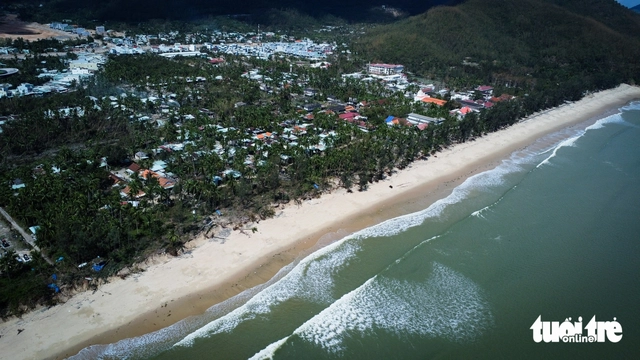
An aerial view of Quy Hoa Central Hospital of Leprosy - Dermatology and the surrounding leprosy village in Quy Nhon Nam Ward, Gia Lai Province, central Vietnam, which will be relocated for a resort megaproject. Photo: Tan Luc / Tuoi Tre
The Ministry of Health confirmed on Tuesday that it agreed with the provincial administration’s proposal to move the hospital and patient housing in Quy Nhon Nam Ward.
A new hospital site has been designated in Tuy Phuoc Commune.
Currently, the Quy Hoa leprosy village is home to about 250 families and 300 patients.
Many have lived there for generations, with descendants of former patients establishing families in the community.
The site is also historically linked to poet Han Mac Tu, who was treated there before his death and whose grave remains in the area.
The relocation is part of the Ghenh Rang-Vung Chua international coastal resort urban project, which will cover 2,878 hectares across Quy Nhon Nam, Quy Nhon Tay, and Quy Nhon Bac Wards.
The project is expected to house 40,000 residents and accommodate up to 17,260 tourists per day at peak times.
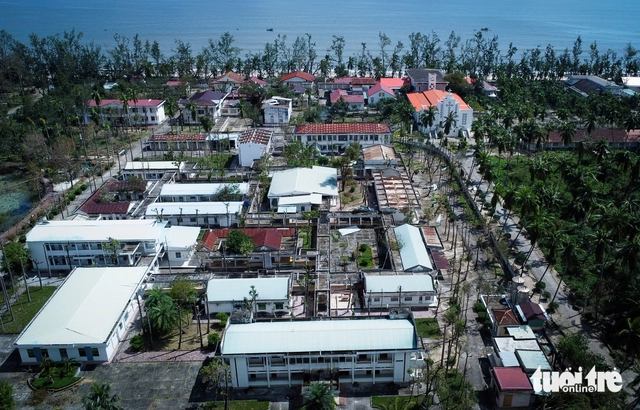
An aerial view of Quy Hoa Central Hospital of Leprosy - Dermatology in Quy Nhon Nam Ward, Gia Lai Province, central Vietnam. Photo: Tan Luc / Tuoi Tre
Provincial leaders emphasized that the relocation must ensure proper medical care and housing for patients, their families, and hospital staff.
Plans include building a new hospital, resettlement housing, and reburial facilities.
The Department of Finance has been tasked with reviewing funding sources, while the Department of Construction will oversee urban planning.
The project, considered a strategic development for Gia Lai, was highlighted during the province’s investment promotion conference in late March.
At the event, officials signed a memorandum of cooperation with the major Vietnamese property developer Sun Group, which pledged an estimated investment of VND20 trillion (US$758 million).
Authorities said the new urban area will combine cultural tourism, wellness services, and entertainment facilities, while preserving natural landscapes and historical sites.
- REFERENCE MORE








Max: 1500 characters
There are no comments yet. Be the first to comment.