


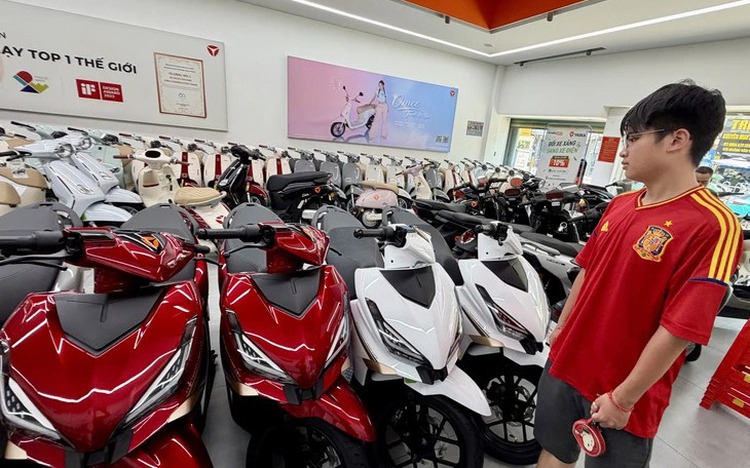
Customers view electric motorbikes on Hoang Van Thu Street in Duc Nhuan Ward, Ho Chi Minh City, at noon on July 20, 2026. Photo: Cong Trung / Tuoi Tre
Meanwhile, a service sector modifying batteries for longer range and higher power has also expanded, raising safety concerns among experts.
Parents crowd showrooms, compare prices
At a Yadea store on Hoang Van Thu Street in Duc Nhuan Ward, parents have been bringing their children in to view and test-ride bikes, with staff arranging nearly 20 models by price range.
According to the store manager, compact models with a designed speed of no more than 50 kilometers per hour are in high demand.
A Vekoo model is priced at VND19 million (US$723), including license plate registration costs, while an Osta model costs VND31 million ($1,178).
"Depending on the model and battery type, a bike can travel 60-100 kilometers per charge," the manager said, noting that parents typically ask detailed questions about speed, battery performance, and warranty terms.
Dealers say sales have picked up as parents shop for their children's vehicles ahead of the new school year, which starts in September.
A survey by Tuoi Tre (Youth) online newspaper found the student segment is mostly priced between VND12 million ($455) and VND20 million ($758), a range close to that of petrol-powered bikes under 50 cubic centimeters, the engine-size threshold below which Vietnam does not require a driver's licence.
Electric motorbike manufacturers have introduced models marketed specifically to students that do not require a driver's licence.
VinFast, for example, has added the Amio S2 to its student-oriented line-up.
The model features a compact frame, a 750-millimeter seat height, LED lighting and display, pedal assist, and a 12-liter storage compartment.
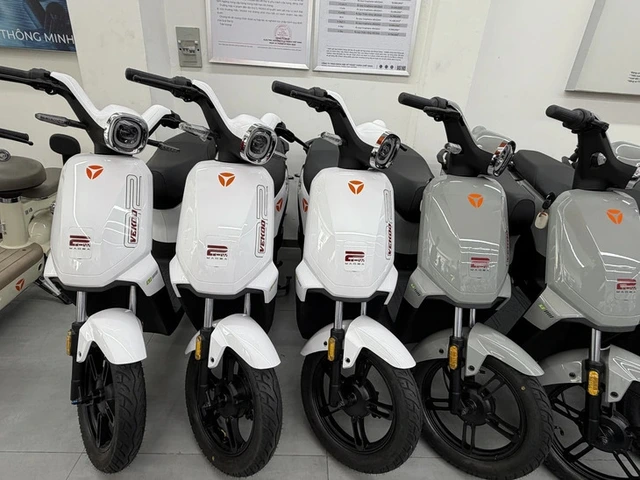
A VND19-million ($723) model that requires no driver's licence is drawing interest from parents shopping for their children ahead of the new school year. Photo: Cong Trung / Tuoi Tre
It is powered by an 800-watt motor with a maximum speed of 25 km/h and does not require a driver's licence.
The bike's LFP battery has a capacity of 1.024 kWh, providing a range of around 65 kilometers per charge with a charging time of six hours.
The Amio S2 is priced at VND12 million, including a battery and charger.
Other brands in the segment include Xmen Neo, X-Bull and ULike, priced between VND14.5 million ($551) and VND19 million, while Dibao offers more than a dozen models priced from VND14 million ($531) to VND27 million ($1,023).
Pega, Son Ha, and DK Bike also offer several models priced under VND20 million.
To attract back-to-school buyers, dealers are offering direct discounts, covering registration costs, providing free accessories, and running promotions related to batteries and charging equipment.
Most bikes are sold at between VND20 million and VND30 million ($1,137), with compact designs suited to daily commuting.
Petrol bike sales slow
By contrast, shops selling petrol-powered bikes under 50cc in Ho Chi Minh City report full inventories but fewer buyers.
The owner of one petrol motorbike retail chain said summer sales in previous years were typically sufficient to sustain the business for the rest of the year.
This year, however, following reports of a planned restriction on petrol motorbikes, many parents have become hesitant, the owner said, adding that this has also slowed sales of petrol-powered models.
Many dealers stocked up on inventory in June in anticipation of back-to-school demand and are now facing unsold stock, while still covering rental, staffing, and capital costs.
Battery modification services expand
Demand for battery modification services has increased on electric motorbike online forums, with users actively discussing pricing and methods.
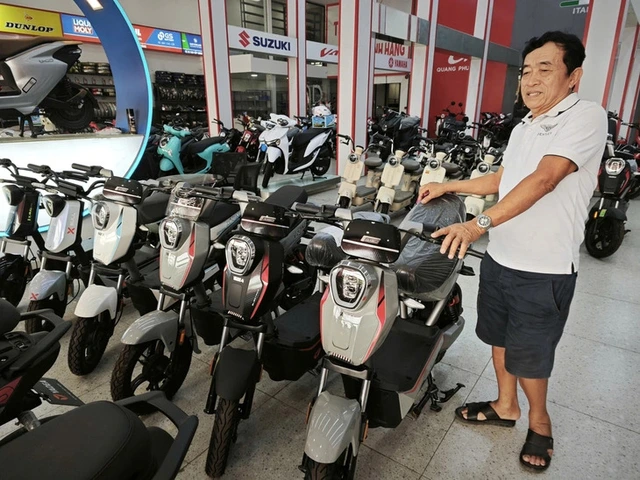
Several electric motorbike models are priced under VND11 million ($417) and require no driver's licence. Photo: Cong Trung / Tuoi Tre
Common modifications include installing higher-capacity batteries, adding a secondary battery, or altering the battery management circuit and controller, at a cost of around VND2-3 million ($76-114) .
Tien Phong, an electrical engineer at a company specializing in motorbike electrical equipment, said the battery, charger, battery management system (BMS), and motor controller are designed to function as an integrated system.
Installing a battery with higher-than-designed voltage, or allowing the controller to draw excessive current, can cause the motor, wiring, and connectors to overheat rapidly.
Undersized wiring, improvised connections, or incorrectly rated fuses further increase the risk of short circuits and damaged insulation, Phong added.
"Unauthorized battery replacement, installation of a secondary battery, or modification of the controller not only voids the warranty but can also alter the vehicle's original speed and power output," Phong said.
"When power output increases, the braking system, tires, frame and suspension, which were designed for the original configuration, may no longer meet safety requirements."
A secondary market for used electric bikes has also emerged.
Some shops purchase used bikes for VND2-3 million, refurbish them, and resell at twice the price.
Buyers face risks if such bikes lack proper documentation, have unclear origins, or have had their electrical systems previously modified.
Being labeled ‘for students’ does not make an e-bike legal to ride
The label ‘electric bike for students’ is a marketing term and does not determine whether a person under 18 is legally permitted to operate the vehicle.
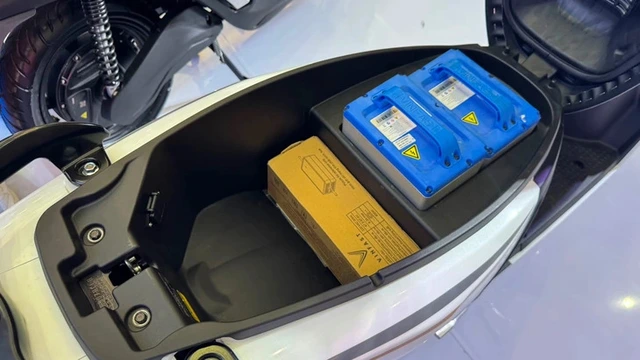
Some models come with removable batteries while others have the batteries built into the frame. Experts warn against modifying batteries, as doing so increases the risk of short circuits and damaged insulation. Photo: Cong Trung / Tuoi Tre
Electric bicycles are equipped with pedal-assist motors that cut power once the rider stops pedaling or when the bike reaches 25 km/h.
Electric mopeds have a designed speed of no more than 50 km/h and a motor power of no more than 4 kW.
Individuals aged 16 and above may operate a moped without a driver's licence, though the vehicle must be registered and display a licence plate.
Vehicles exceeding these limits fall under the electric motorcycle category, which requires users to meet corresponding age and licensing requirements.
Under Decree 238/2026/ND-CP, which takes effect on August 15, 2026, individuals aged 16 to under 18 who operate electric motorcycles with a motor power output of 4 kW or more may face fines of VND400,000-600,000 ($15-23).
Parents are advised to request documentation from dealers specifying the vehicle type, designed speed, and motor power output prior to purchase, rather than relying solely on marketing claims that a bike is suitable for students.








Max: 1500 characters
There are no comments yet. Be the first to comment.