



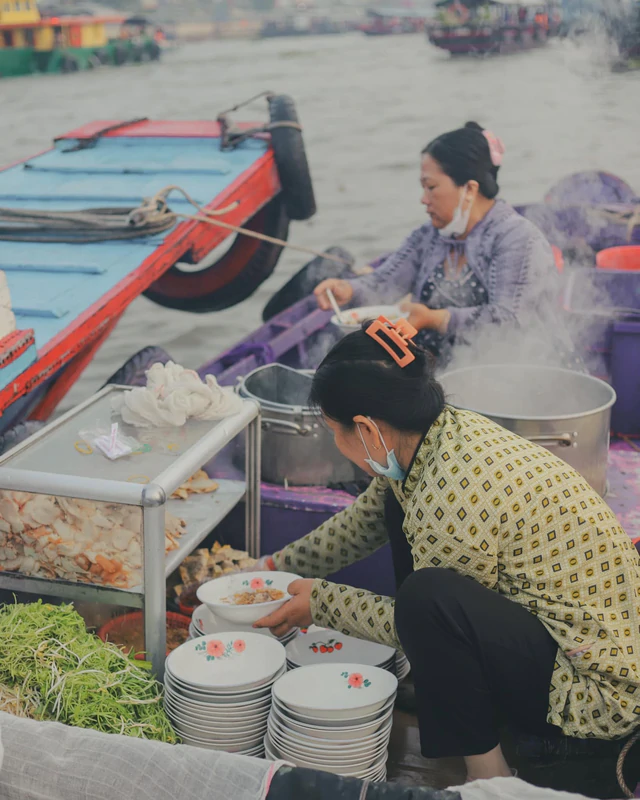
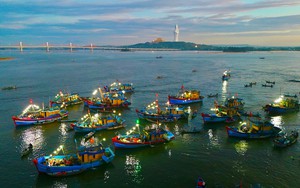
Mekong Delta floating markets were once hubs for trading and transporting agricultural products mainly by water. Photo: Nguyen Khanh Vu Khoa
According to Phan Xuan Anh, director of Saigon Boat Co., Ltd., the future of floating markets should not be viewed simply in terms of how to attract tourists.
A market must first have real trading activities and livelihoods to survive.
Tourism can provide an additional source of income, but it is difficult to replace the role of the market’s original commercial activities.
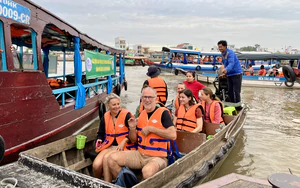
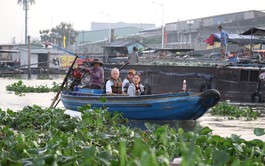
Tourism can provide an additional source of income but is unlikely to replace the role of trading activities at a market. Photo: Nguyen Truong An
According to Anh, when a traditional market becomes deserted, developing tourism is often proposed as a way to breathe new life into it.
However, this approach has its limits because tourism is seasonal.
There are periods when visitor numbers are high, but there are also months when the market is quiet.
If vendors depend largely on tourists, their income will be unstable, making it difficult to sustain the market in the long term.
“A market must first serve local people’s trading needs,” Anh said.
“Only when there is demand from local people can the market survive, and then tourists will come to experience it.”
Creating new livelihoods on the water
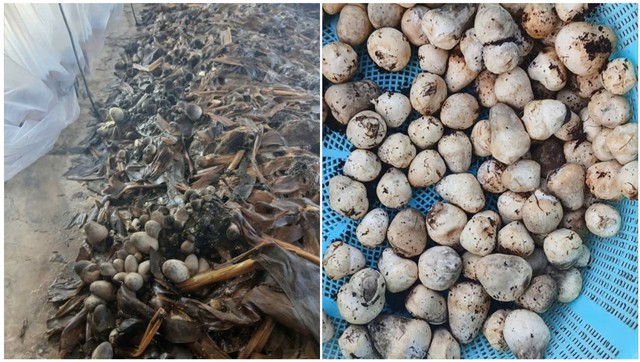
Straw mushrooms are grown on floating rafts using local materials in Tan Phong Islet, Dong Thap Province, southern Vietnam. Photo: Xuan Anh
As road transport has developed and the advantages of transporting goods by water have gradually declined, the question is where floating markets can find new sources of income.
Anh said it is necessary to find products and services that suit local natural conditions and resources, thereby creating new livelihood chains for local residents.
He cited an example in Tan Phong Islet in Dong Thap Province, where locally available materials are being used to create new products.
Water hyacinths, which grow abundantly on the river and can obstruct waterways, are collected and used as material for growing straw mushrooms on floating rafts and boats.
According to Anh, the approach creates multiple benefits at the same time.
Collecting water hyacinths helps clear the waterways, while growing and harvesting mushrooms creates additional jobs for local residents.
Older people and women who may have difficulty finding work in factories can take part in tasks such as collecting water hyacinths, preparing mushroom beds, caring for the crops and harvesting mushrooms.
Straw mushrooms have a short growing cycle, with each crop ready for harvest in about 15 days.
The mushrooms can be supplied to restaurants, eateries and households, creating a more regular market.
Tourism as added value
According to Anh, once production activities have created a source of income for local residents, tourism can take on a different role: adding value to products and experiences.
In Tan Phong, visitors can learn about the process of growing mushrooms on floating rafts, harvest them themselves and enjoy dishes made from locally grown mushrooms.
In this model, what attracts tourists is not the reconstruction of an old floating market to recreate scenes of trading, but the story of how local people make use of their river environment to create livelihoods.
“Tourism can help increase the value of products and provide additional income for local people, but it should not be expected to shoulder all the activities of a market,” Anh said.
He said that for floating markets in the Mekong Delta, preservation should not stop at keeping the images of boats, bamboo poles and trading scenes on the river.
More importantly, ways should be found to ensure that local people still have reasons to make a living on the water.
As long as boats remain a means of earning a living, activities on the river have a chance to continue.
But once local people no longer have livelihoods there, simply bringing tourists to visit will make it difficult to create a real floating market.








Max: 1500 characters
There are no comments yet. Be the first to comment.