


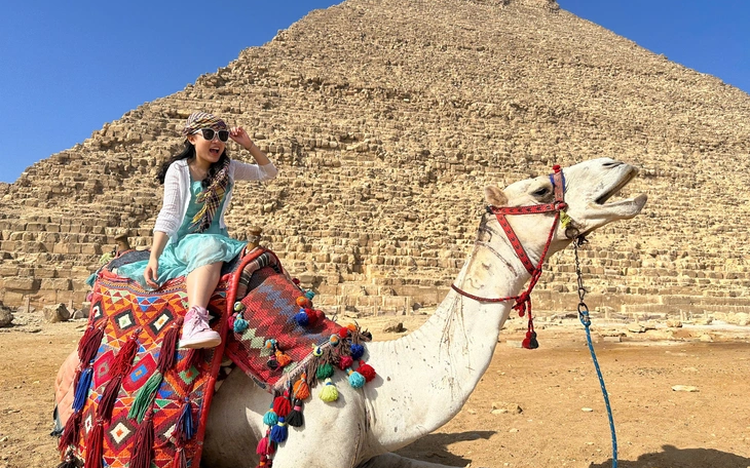
Nguyen Thi Quynh, a graduate of the Faculty of Arabic Language and Culture at the University of Languages and International Studies under Vietnam National University-Hanoi, rides a camel near the pyramids in Egypt. Photo: Supplied
Immersing in language, culture
Nguyen Thi Quynh from Bac Ninh Province, northern Vietnam, a graduate of the Faculty of Arabic Language and Culture at the University of Languages and International Studies under Vietnam National University-Hanoi, received a scholarship to study in Egypt from 2023 to late 2024.
She said she chose Egypt because she wanted to learn Arabic in a native-speaking environment.
In Egypt, Quynh attended classes taught by native Arabic-speaking lecturers while practicing the language in daily conversations with local residents.
Her class included international students from countries such as the United States, Türkiye, and Somalia, giving her opportunities to learn about different cultures.
During one classroom presentation, Quynh introduced Vietnam by wearing ao dai (Vietnamese traditional long gown) and carrying a non la (conical hat).
The presentation attracted considerable attention from classmates and lecturers, who noted the resemblance between Vietnam's conical hat and the head coverings commonly worn by local women.
Outside the classroom, Quynh visited famous Egyptian landmarks including the Pyramids of Giza, Siwa Oasis, Luxor, and Aswan.
"When I visited the pyramids, many local people immediately recognized me as a visitor and asked to take photos with me,” she recalled.
“Some even greeted me with hugs and kisses on the cheek before posting the photos on social media.”
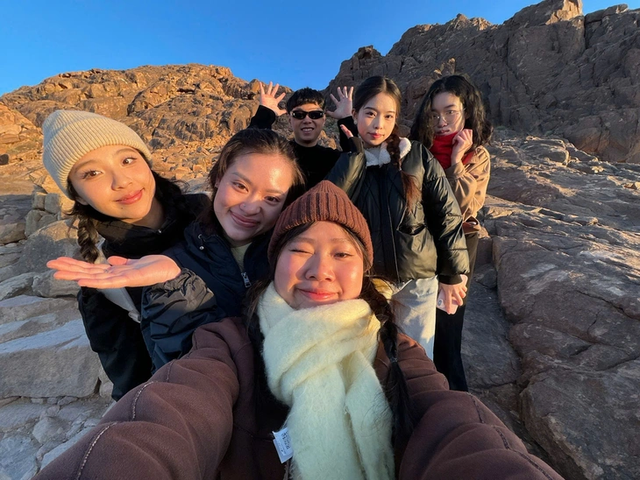
Tran Thi Nhat Linh (L) and friends visit Mount Saint Catherine, Egypt's highest peak. Photo: Supplied
Tran Thi Nhat Linh, a first-year student at the same university, was one of the eight students selected for an academic exchange program in Egypt.
She said she was impressed by the friendliness of local people.
During one outing, Linh and her friends wanted to rent scooters but they were unfamiliar with the rental procedures.
Two local residents stepped in to help them complete the rental process and waited nearly two hours until the group finished returning the vehicles.
Linh said she also chose Egypt to improve her Arabic language skills and gain a deeper understanding of the country's culture.
"I wanted to see with my own eyes the landmarks that I had previously known only through films and books," she said.
Adjusting to life in new country
Like many international students, Vu Thi Ngoc Diem from Ninh Binh Province initially faced challenges adapting to life abroad.
Now studying at Mohammed V University in Rabat, Morocco, she said language was the biggest obstacle.
"When I went to local markets, people spoke the Moroccan dialect, while I had only learned Modern Standard Arabic. I often couldn't understand what vendors were saying, so I had to rely on body language to communicate," she said.
Diem described Moroccan cuisine as a unique blend of Arab, Mediterranean, and African influences.
Among the local dishes she has tried, couscous remains her favorite.
The traditional Moroccan dish consists of steamed semolina grains served with beef, lamb, or chicken and a variety of vegetables.
"Many people assume African countries are underdeveloped, but Morocco surprised me with its modern high-speed railway system and its mix of traditional and contemporary architecture. Only after coming here did I realize that Africa is very different from what I had imagined," she said.
Advice for students who target studies in North Africa
Phan Thanh Huyen, head of the Department of Arabic Studies at the University of Social Sciences and Humanities under Vietnam National University-Ho Chi Minh City, said Egypt has long been recognized for its strengths in Arabic language education, Middle Eastern studies, history, and Islamic culture.
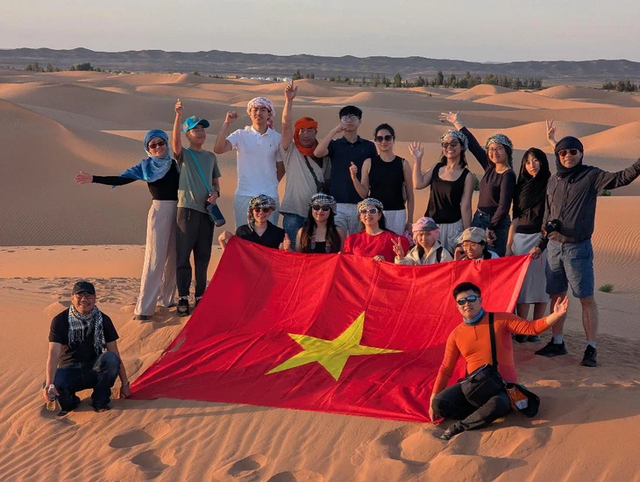
Vu Thi Ngoc Diem (top row, fourth from right) poses with members of the Vietnamese community in the Sahara Desert. Photo: Supplied
Each year, the country offers a number of scholarships for Vietnamese students to study Arabic.
She added that educational cooperation is also expanding into fields such as the halal industry, agriculture, international relations, cultural heritage preservation, and tourism.
Morocco, meanwhile, offers an education system influenced by both Arabic and French.
Vietnamese students can apply for scholarships at the undergraduate, master's, and doctoral levels in disciplines including economics, management, law, architecture, pharmacy, engineering, and agriculture.
Huyen advised students to carefully verify the medium of instruction, academic programs, dormitory conditions, living costs, and whether degrees will be recognized in Vietnam.
She also noted that the Arabic spoken in daily life in Egypt and Morocco differs significantly from the Modern Standard Arabic taught in classrooms.
Students should prepare to adapt to Islamic culture, local laws, climate, cuisine, and lifestyles, while choosing fields of study that align with their long-term career goals, particularly in sectors with growing demand for skilled workers.








Max: 1500 characters
There are no comments yet. Be the first to comment.