


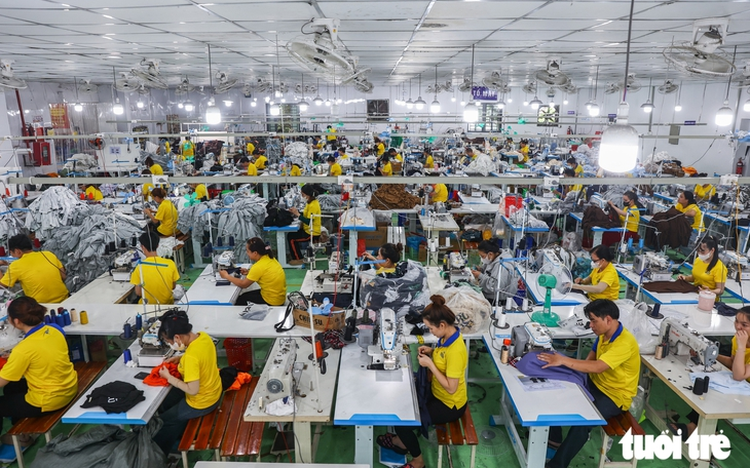
Despite nearly 39,000 businesses exiting the Ho Chi Minh City market in January-July 2026, experts said companies with sound business plans, effective use of technology and transparent finances can continue to operate successfully. Photo: Cong Trieu / Tuoi Tre
The city recorded nearly 34,100 newly established businesses during the period, up 22.81 percent year on year.
Meanwhile, around 7,500 businesses completed dissolution procedures, surging 158.66 percent. More than 31,300 temporarily suspended operations, up 10.51 percent, according to the city's January-July socioeconomic report.
Global uncertainty puts businesses under pressure
Tran Hoang Ngan, a National Assembly deputy and economic expert, told Tuoi Tre (Youth) online newspaper that businesses entering and leaving the market are wia normal part of the business cycle.
However, authorities should pay attention to unusual signs, particularly if the number of businesses exiting the market consistently exceeds the number of new businesses or if established companies with long operating histories and significant contributions to the state budget are shutting down.
Ngan said the main pressure does not come from Vietnam's domestic business environment. Vietnam is stepping up institutional reforms, cutting administrative procedures and improving conditions for investment and business operations.
The biggest challenge comes from uncertainty in the global economy.
Fluctuations in energy and logistics costs, geopolitical conflicts, and changes in tax and trade policies in major economies are making it harder for businesses to forecast orders, interest rates, exchange rates and investment returns.
Companies are also entering a new competitive environment in which digital transformation, artificial intelligence, financial and tax transparency, and stronger management capabilities are increasingly required.
Businesses unable to keep pace with these changes will face greater difficulties in competing.
Ngan also pointed to another trend: some companies may voluntarily close existing legal entities and establish new ones to take advantage of tax incentives, tax exemptions and other support policies available to newly established businesses.
Internal resilience determines who survives
Ly Thanh Tien from Ho Chi Minh City University of Technology said the departure of nearly 39,000 businesses does not necessarily contradict signs of economic recovery. It reflects an increasingly uneven recovery among different groups of businesses.
Macroeconomic indicators such as economic growth, exports and investment have shown improvement. However, cash flow, orders and competitive advantages are increasingly concentrated among businesses with stronger financial, technological and management foundations, he said.
Small and medium-sized enterprises, meanwhile, continue to face significant cash flow pressure.
Some have orders but lack working capital because payment cycles are lengthy. Meanwhile, input costs, taxes and operating expenses must be paid on time.
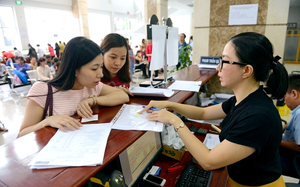

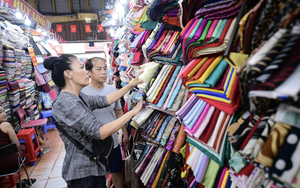
Banks are tightening risk management and suppliers are demanding clearer payment arrangements. Tax obligations must be fulfilled on schedule.
As a result, the challenge is no longer simply generating sales but maintaining a sufficiently healthy cash-flow cycle.
According to Tien, these pressures are no longer merely short-term difficulties but increasingly reflect structural changes.
Large companies are raising their requirements for green standards, traceability, environmental, social and governance practices and supply-chain transparency.
This forces smaller suppliers to strengthen their management capabilities if they want to remain in supply chains.
A common weakness among SMEs is that decisions are still based largely on experience rather than data. When difficulties arise, companies often respond by cutting costs, reducing inventories or lowering prices to retain customers.
Such measures are effective only when supported by reliable data on productivity, logistics, inventory, profit margins and consumer behavior.
Cooperation among smaller companies also remains limited. Sharing warehouses, coordinating logistics, expanding distribution channels and jointly improving management standards could help businesses reduce costs and strengthen their resilience against market volatility.
Tien said the biggest difference between companies that remain in business and those that exit the market is not the amount of capital they have or the number of orders they receive, but their internal resilience and ability to adapt to a changing environment.
Companies that have weathered the turbulence are typically prepared in advance. They have built customer databases, standardized operating processes, maintained a loyal customer base and maintained adequate cash reserves.
For enterprises, a small scale is not necessarily a disadvantage in a volatile business environment. Their flexibility can allow them to test new ideas and adjust their business models faster than larger companies.
That flexibility, however, can deliver results only when combined with modern management capabilities, data-driven decision-making and a long-term development strategy.
These factors will determine whether businesses can survive the current market shakeout and enter a new growth cycle.








Max: 1500 characters
There are no comments yet. Be the first to comment.