


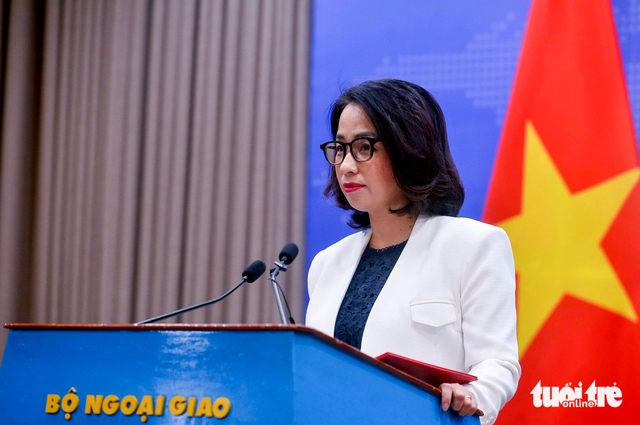
Pham Thu Hang, spokesperson of the Vietnamese Ministry of Foreign Affairs. Photo: Phuc Tai
The U.S. Trade Representative (USTR) on Thursday imposed tariffs of 10 percent and 12.5 percent on imports from 60 economies, including Vietnam, alleging that the countries failed to impose and effectively enforce a ban on goods produced with forced labor.
The 12.5-percent tariff applies to countries under investigation under Section 301 of the U.S. Trade Act of 1974.
On May 29, the USTR launched a Section 301 investigation into Vietnam concerning issues related to intellectual property rights protection and enforcement.
"The USTR's decision does not fully reflect the reality and Vietnam's efforts to prevent, reduce, and eliminate forced labor, including the prohibition on imports of products made with forced labor," Pham Thu Hang, spokesperson of the Vietnamese Ministry of Foreign Affairs, told Tuoi Tre (Youth) online newspaper.
She stressed that Vietnam strictly prohibits all forms of forced labor and complies with International Labor Organization conventions, international treaties, and free trade agreements that the country has joined.
She added that the Vietnamese government on Wednesday issued Decree No. 292/2026 banning imports of goods produced wholly or partly through forced labor.
“Vietnam will continue to work with the U.S. and urges Washington to fully assess the measures Vietnam has implemented to adjust tariffs accordingly,” Hang said.
Section 301 of the Trade Act of 1974 allows Washington to address practices deemed harmful to U.S. trade.
Regarding the Section 301 investigation, Hang previously issued statements on May 1, May 14, and May 30, 2026.
On May 1, she said protecting intellectual property rights was one of Vietnam's top priorities and a consistent policy aimed at building a transparent business environment while making science and technology, innovation, and digital transformation the main drivers of economic growth.
On May 14, she reiterated that Vietnam was committed to strictly handling all violations of intellectual property rights.
According to U.S. Trade Representative Jamieson Greer, the new tariffs are intended to pressure trading partners to strengthen enforcement of bans on imports of goods produced through forced labor.
Observers, however, said the move was part of President Donald Trump’s broader effort to maintain additional tariffs on imports.
In February this year, the U.S. Supreme Court struck down tariffs imposed by President Trump under the International Emergency Economic Powers Act.
President Trump later signed an order imposing a temporary 10-percent tariff under Section 122 of the Trade Act of 1974.
That tariff expired on July 23 (U.S. time).
The new 12.5 percent tariff effectively replaces that measure.








Max: 1500 characters
There are no comments yet. Be the first to comment.