


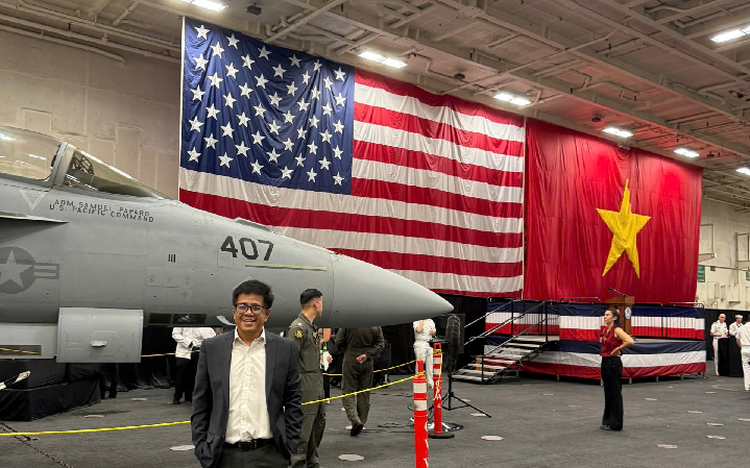
The author aboard the USS George Washington. Photo: Supplied
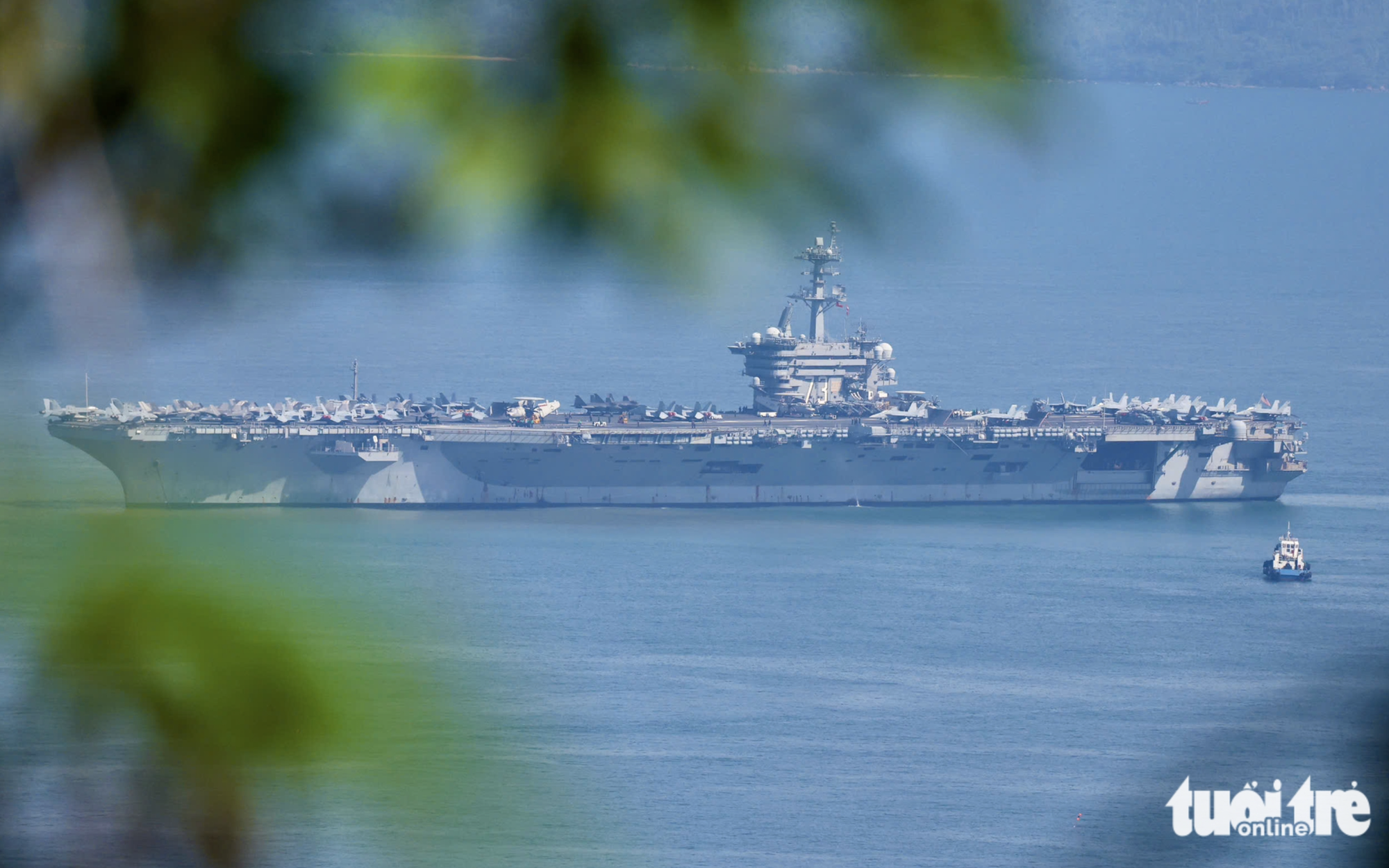
With a full-load displacement exceeding 100,000 tonnes and a length of nearly 333 meters, the George Washington is a mobile, floating military base in every sense of the word.
Yet my awe stemmed from more than just standing aboard a steel 'floating city' in the middle of the ocean; it was driven by a keen awareness of what this moment signified for Vietnam–U.S. relations.
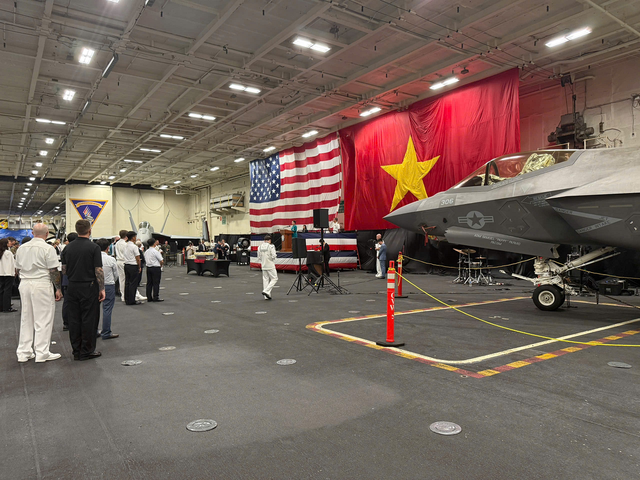
The seven-day port call (July 30–August 5, 2026) by U.S. Carrier Strike Group 5 carries profound strategic weight. Photo: Supplied
Strategic weight of seven-day port call
The seven-day port call (July 30–August 5) by U.S. Carrier Strike Group 5 carries profound strategic weight. Interestingly, my invitation arrived only a few days before the carrier’s arrival -- a deliberate caution born of experience.
During a previous planned visit, early invitations were issued only for the port call to be canceled due to sudden operational redeployments by the U.S. Navy.
As a U.S. diplomat confided, they wanted to spare invited guests the frustration of non-refundable flights and hotel bookings in Da Nang. Invitations were sent only when the stop was locked in.
Against the backdrop of heightened tensions in the Middle East, where carrier strike groups like the USS George Washington remain on constant standby for emergency redeployment, the fact that Washington maintains this week-long visit until the final minute speaks volumes about the priority it places on its partnership with Hanoi.
Observing operations aboard CVN-73 offered a first-hand look at the sheer scope of a nuclear-powered aircraft carrier. The vessel serves as a home and workplace for over 5,000 personnel, including roughly 3,200 ship crew members and nearly 2,500 assigned to the Carrier Air Wing.
Beyond showcasing technological and military prowess, a ship of this scale functions as a vital instrument of naval diplomacy, fostering mutual understanding and trust between the two nations' militaries and peoples.
This marks the fourth visit by a U.S. aircraft carrier to Vietnam, following the milestones of the USS Carl Vinson (2018), USS Theodore Roosevelt (2020), and USS Ronald Reagan (2023). However, this seven-day stay carries distinct geopolitical weight.
At a time when multiple global crisis points are competing for Washington’s attention and resources, dedicating a full week to Da Nang is a concrete reaffirmation of the United States' political commitment to deepening ties with Vietnam.
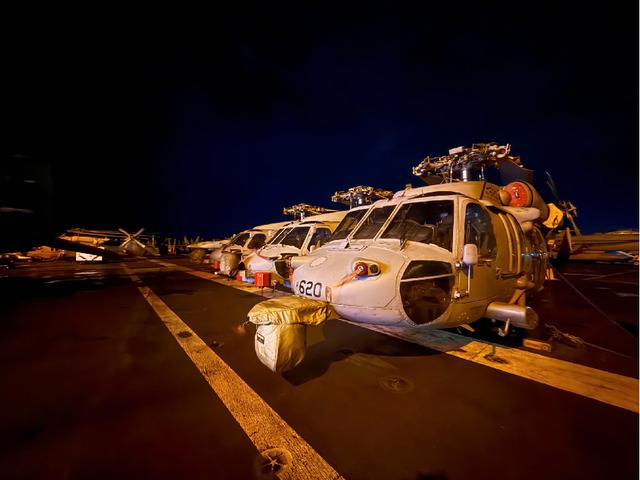
The George Washington’s arrival is not an isolated event. Photo: Supplied
A year of engagements
The USS George Washington’s arrival is not an isolated event, but rather the latest milestone in a year of steady diplomatic and security engagements. Just weeks earlier, in June 2026, Acting U.S. Secretary of the Navy Hung Cao made a working visit to Vietnam to advance bilateral naval ties.
As a high-ranking Vietnamese-American official in the U.S. administration, Cao’s discussions helped reinforce mutual trust and solidify maritime cooperation mechanisms, spanning delegation exchanges, joint training, war legacy remediation, and confidence-building measures.
This operational engagement aligns seamlessly with high-level diplomacy. On July 23, on the sidelines of the 59th ASEAN Foreign Ministers’ Meeting (AMM-59) in Manila, Vietnamese Minister of Foreign Affairs Le Hoai Trung met with U.S. Secretary of State Marco Rubio.
The top diplomats agreed to continue driving the comprehensive strategic partnership forward, addressing trade and economic differences in a spirit of goodwill, constructiveness, and mutual benefit.
From high-level strategic dialogues in Manila to defense engagements on the ground and the presence of a supercarrier in Da Nang, the two nations are demonstrating a synchronized approach to diplomacy.
Since their relations were upgraded to a comprehensive strategic partnership in 2023, Vietnam–U.S. cooperation has gained depth and predictability.
Vietnam’s proactive, consistent approach to hosting U.S. naval assets aligns with its foreign policy of independence, self-reliance, diversification, and multilateralism, while underscoring growing strategic trust between the two countries.
Beyond its bilateral significance, the presence of the USS George Washington sends a clear message about a shared commitment to peace, stability, freedom of navigation, and a rules-based international order across a free and open Indo-Pacific.
Stepping off the deck of the USS George Washington, I was left with a clear conviction: the Vietnam–U.S. relationship has reached a new level of maturity.
It is a partnership grounded in mutual respect for political systems, shared understanding, and the capacity to sustain stable cooperation even in an increasingly volatile world.








Max: 1500 characters
There are no comments yet. Be the first to comment.