


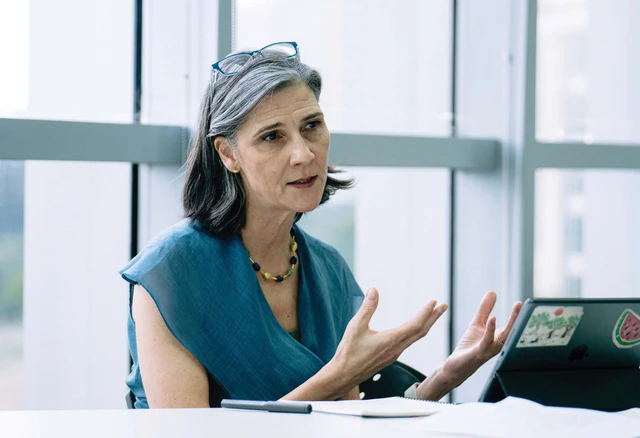
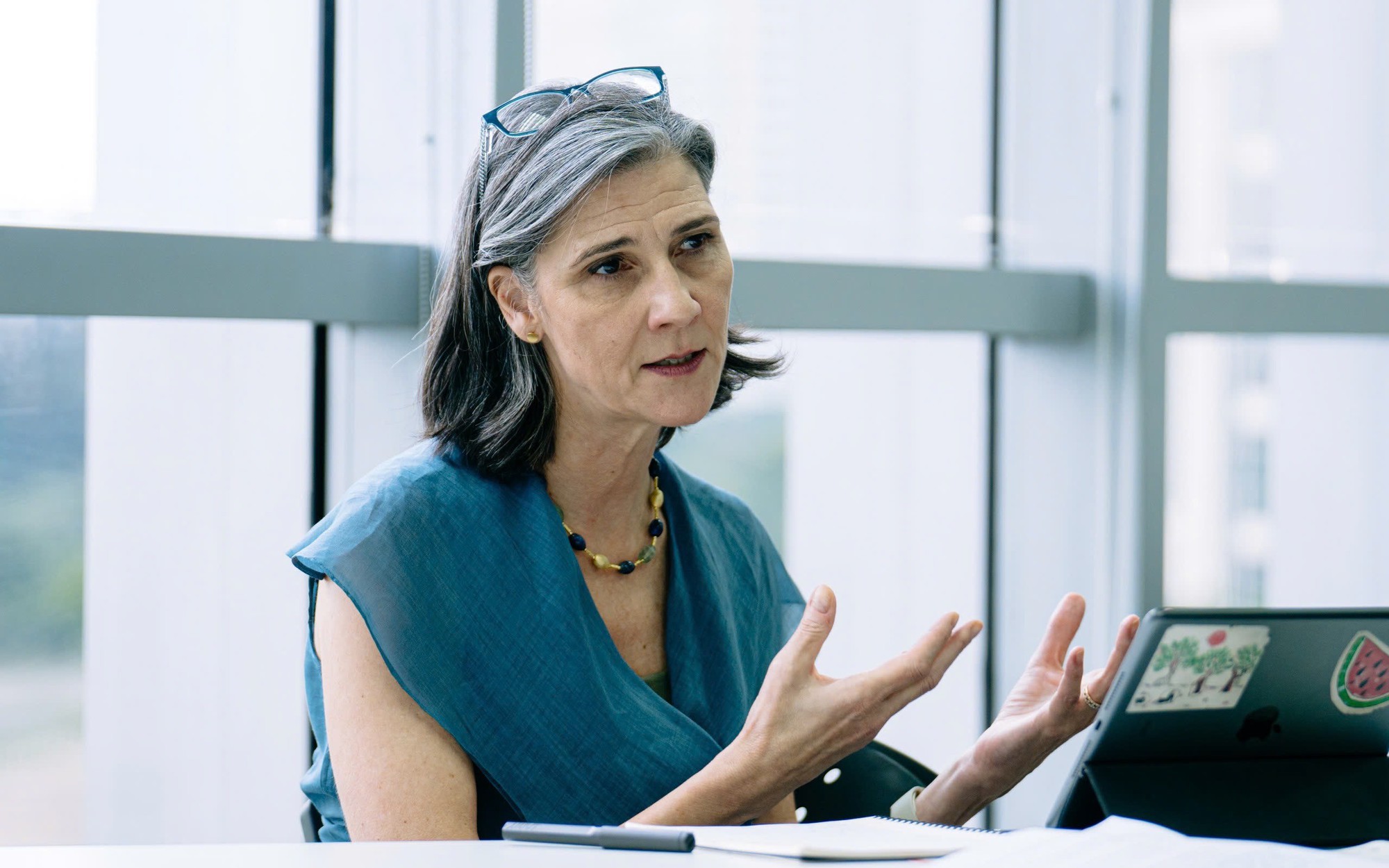
Ramla Khalidi, UNDP Resident Representative in Vietnam. Photo: Thanh Hiep / Tuoi Tre
This is not only a moment of pride. It is a moment of progress.
Because the real breakthrough lies not in representation alone, but in how representation can drive change across systems, institutions, and society.
This election reflects Vietnam’s steady journey toward greater inclusion.
Recent policy directions have gradually opened space for persons with disabilities to participate directly in public decision-making -- something not explicitly defined in the past.
It signals a broader shift toward a more inclusive development model, where diverse voices help shape laws and priorities.
In this vision, persons with disabilities are not only protected and supported.
They are empowered to contribute, to lead, and to help shape the institutions that serve them.
Arriving at this moment has required persistence and courage.
Early efforts helped pave the way.
In 2011, Nguyen Cong Hung, a young information technology specialist with severe disabilities and director of the 'Will to Live' Joint Stock Company, stepped forward to run for the National Assembly, the country’s highest legislative body.
Although he was not elected, his candidacy marked an important first step.
Later, Thach Thi Dan, a Khmer woman with a mobility impairment, served as a National Assembly delegate during the 12th and 13th terms.
While she was nominated as a representative of ethnic minority women rather than explicitly as a representative of persons with disabilities, her contributions to key legislation, including the Law on Persons with Disabilities (2010) and the Labor Code (2012), demonstrated the value and expertise that persons with disabilities bring to policy discussions.
The aspiration for representation has long been clear.
A 2021 UNDP rapid assessment found that 98.2 percent of surveyed persons with disabilities across the country expressed a desire to see their voices reflected in elected bodies.
Yet translating this aspiration into broader participation in candidacy and representation has taken time.
Not due to a lack of interest or capability, but because structural barriers persist.
These include social stigma around the capacities of persons with disabilities, limited legal frameworks that actively promote participation, and inaccessible political processes.
Polling stations and meeting halls may not be wheelchair-friendly.
Election materials are often inaccessible to persons with visual impairments.
And engagement from representative organizations remains limited.
Addressing these challenges requires sustained, collective effort — from state institutions, organizations of persons with disabilities, and society as a whole.
Because representation does not happen by chance. It requires systems that make participation possible.
Against this backdrop, the election of Assoc. Prof. Tran Manh Huy in 2026 marks a meaningful step forward.
Its importance lies not only in the outcome, but in what it reveals: a system that is evolving.
Nominated by the Vietnam Federation on Disability, his success reflects growing awareness and confidence within the community, and a broader openness to diversity within the political system.
His candidacy was further enabled by guidance under Conclusion Notice 444-TB/VPTW, signaling a more proactive approach to supporting the political participation of persons with disabilities.
This is how change happens: when institutional openness turns aspiration into representation.
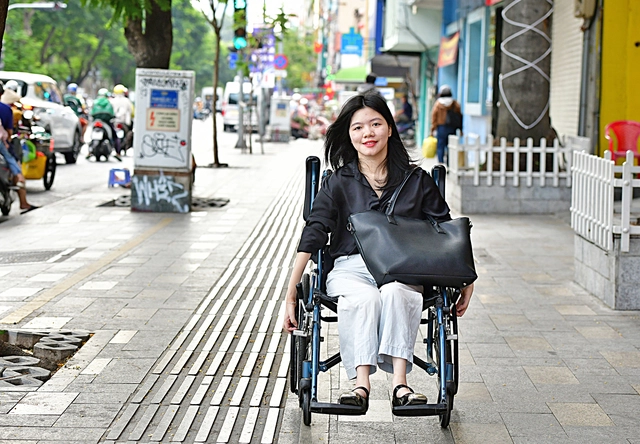
Lan Anh, an admissions consultant for technology education programs in Ho Chi Minh City, poses with her wheelchair, her constant companion, in Ho Chi Minh City, Vietnam. Photo: Duyen Phan / Tuoi Tre
Vietnam's progress echoes global experience.
Around the world the presence of persons with disabilities in parliament is not only about diversity – it is a catalyst for stronger, more inclusive governance.
When vulnerable and minority groups participate in decision-making, policies and systems evolve to better serve everyone.
In Australia, Kelly Vincent, a politician with a mobility impairment championed protections against gender-based violence, helping advance reforms that protect all women -- regardless of disability status.
At the international level, Helga Stevens, a member of the European Parliament with a hearing impairment, strengthened the recognition of sign language and disability rights.
Her work improved access to public services and social protection for the deaf community across the European Union.
These examples point to a shared lesson: when diverse perspectives are included, governance improves.
The election of a National Assembly member representing persons with disabilities creates a new opportunity for Vietnam: an opportunity to embed accessibility into legislative processes. To bring lived experience directly into policymaking. And to normalize the participation of persons with disabilities in public life.
It signals an important shift from speaking about persons with disabilities to governing with them.
Looking ahead, this milestone should translate into sustained structural change: more inclusive candidate pipelines, accessible electoral processes, and enabling legal frameworks that ensure no capable individual is left behind.
On this National Day of Persons with Disabilities, UNDP extends its warmest congratulations to the community across Vietnam.
Inclusive governance does not happen by accident.
It must be built into systems, by design. UNDP remains committed to supporting Vietnam in advancing the reforms needed to make participation of marginalized groups the norm, not the exception.
We look forward to seeing how Vietnam's evolving governance system continues to reflect and benefit from diverse voices in policymaking.









Max: 1500 characters
There are no comments yet. Be the first to comment.