
5 requirements for Ho Chi Minh City accommodation providers declaring foreigners’ temporary residence
Accommodation providers in Ho Chi Minh City must declare the temporary residence of foreign guests, even those staying for just one night, in accordance with regulations and pay particular attention to five requirements outlined by the city’s Immigration Office.
The office said the process involves more than entering information into an online system.
It also requires accommodation providers to check guests’ documents, determine whether their residence in Vietnam is lawful, and monitor them throughout their stays.
Under Vietnam’s Law on Entry, Exit, Transit, and Residence of Foreigners, temporary residence declarations must be made by the person directly managing or operating the accommodation establishment.
The requirement applies to all accommodation establishments hosting foreign nationals overnight, including hotels, guesthouses, rental houses, apartments and private homes.
Declarations are mandatory even for stays of just one night.
Responsibility lies with the property owner, the establishment’s legal representative or an authorized individual.
The immigration office has outlined five key requirements for accommodation providers:
Check original documents before accepting foreign guests
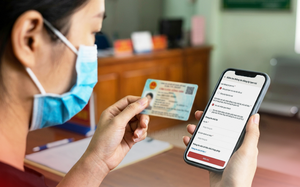
Accommodation providers must ask foreign guests to present their original passports or other valid international travel documents for inspection and verification.
They must also check original documents related to the guests’ residence in Vietnam, such as temporary residence cards, visas or temporary residence certificates, depending on the form of documentation issued.
For guests using electronic visas, accommodation providers must cross-check the information against their original passports.
They should verify guests’ full names, nationalities, passport numbers and, in particular, the periods for which they are permitted to stay in Vietnam.
Photos, photocopies or information sent by guests via phone cannot substitute for original documents.
The office also noted that a valid visa does not necessarily mean that a foreign national is permitted to stay in Vietnam until the visa’s expiry date in every case.
Accommodation providers must rely on residence information issued by the competent authorities.
Enter arrival, expected departure dates accurately
The arrival date at an accommodation establishment is the date a guest actually checks in and begins staying there, while the expected departure date is the date they plan to check out and end their stay at that establishment.
For example, a foreign guest who entered Vietnam on November 16, 2026, and is permitted to stay until December 15, but checks into a hotel on November 21 and plans to check out on November 23, must be declared with November 21 as the arrival date at the hotel and November 23 as the expected departure date.
Accommodation providers must not use the guest’s date of entry into Vietnam as the date they arrive at the accommodation establishment, or automatically enter the expiry date of their permitted stay as the expected departure date if the guest intends to stay for a shorter period.
The expected departure date must not exceed the period for which the guest is permitted to stay in Vietnam.
For instance, if a guest is permitted to stay until December 15 but wants to book a room through December 20, the accommodation provider must guide them through the procedures required under residence regulations.
It must not declare an expected departure date beyond the permitted stay period before the competent authorities have resolved the matter.
Update declarations when guests change their length of stay
When a foreign guest extends their stay, accommodation providers must recheck the permitted residence period and update the information accordingly.
If a guest checks out or moves to another accommodation establishment, the provider must update the information using the relevant system functions.
If the guest has not yet determined their departure date, the provider should discuss and establish an appropriate expected stay period, monitor the situation and update the declaration when changes occur.
Guests who wish to stay beyond their permitted residence period should be guided to contact the immigration authorities for consideration and resolution in accordance with regulations.
The office stressed that declaring or adjusting an expected departure date does not extend a foreign national’s permitted stay in Vietnam.
Submit complete, timely declarations
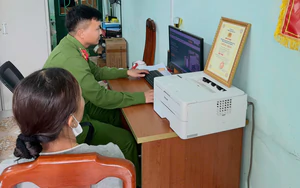
Accommodation providers can make declarations online through the Ministry of Public Security’s electronic temporary residence declaration system at https://tbltkbtt.bocongan.gov.vn.
They must submit declarations as soon as foreign guests arrive, check all information for accuracy before completing the process, and declare stays even when guests spend only one night at the establishment.
If declarations are made using temporary residence declaration forms, providers must follow the deadlines and procedures stipulated in Circular No. 87/2026/TT-BCA issued by the Ministry of Public Security.
Promptly report signs of violations
If accommodation providers discover that a foreign guest has no passport or valid international travel document, is using documents suspected of being forged, has exceeded their permitted residence period, or shows signs of violating immigration laws, they must immediately notify the nearest police agency.
They can contact the police in the ward or commune where their establishment is located for guidance on handling the case.
The immigration office also urged accommodation providers to clearly designate the individuals responsible for submitting declarations, managing system accounts and checking information entered into the system.
It said accurate and complete temporary residence declarations would help improve the management of foreign nationals, protect the lawful rights and interests of guests, and maintain security and public order in the city.
Thanh Ha / Tuoi Tre News