
6 million Vietnamese affected by rare diseases, health ministry launches action plan
One in every 15 Vietnamese suffers from a rare disease, totaling around six million people, yet diagnosis and treatment remain limited and costly, health experts said at a scientific symposium in Hanoi on Tuesday.
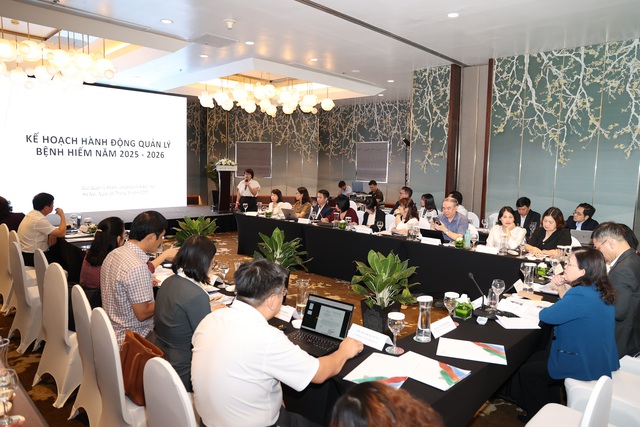
An overview of a symposium introducing Vietnam's national action plan on rare disease management for 2025-26 in Hanoi, September 16, 2025. Photo: D. Lieu / Tuoi Tre
The Ministry of Health, in coordination with the Vietnam Medical Association, organized the event to introduce a national action plan on rare disease management for 2025-26.
Experts noted that about 80 percent of rare diseases are congenital, while others involve metabolic, hematologic, immune, neurological, or oncological disorders.
Globally, more than 300 million people are affected by roughly 6,000 rare diseases, representing 3.5 to 5.9 percent of the world population.
In Vietnam, limited information, a shortage of specialized experts, and a lack of effective treatments mean that many patients face delayed diagnoses, inadequate care, and unaffordable medical expenses.
"While common diseases benefit from established medicines and resources, rare diseases pose much greater challenges, requiring close coordination among government agencies, medical institutions, and international partners," said Ha Anh Duc, head of the health ministry's Department of Medical Service Administration.
To tackle these challenges, the ministry has issued the national action plan and formed a steering committee, led by Deputy Minister Tran Van Thuan, to improve rare disease management.
The plan includes several key tasks, such as issuing an official list of rare diseases, updating diagnostic and treatment guidelines, revising regulations on orphan drugs, and strengthening international cooperation and research.
Nguyen Trong Khoa, deputy head of the Department of Medical Service Administration, said the goal is to officially recognize 30 to 40 rare diseases by the end of 2025 and publish a national list of rare diseases in 2026.
A major concern raised at the event was insurance coverage.
Currently, Vietnam's health insurance fund covers only one rare disease drug, alglucosidase alfa for Pompe disease. The drug is fully covered for children under six, whereas the coverage is only 30 percent for older patients.
"Most patients over six cannot afford the remaining 70 percent," Nguyen Khanh Phuong from the Health Strategy and Policy Institute said, urging broader financial support to improve access to treatment.
Nguyen Thi Xuyen, chairwoman of the Vietnam Medical Association, reaffirmed the association's commitment to work with the Ministry of Health and other agencies in launching rare disease management programs.
"We hope the action plan and related policies will be implemented effectively, helping improve the quality of life for people living with rare diseases," Xuyen said.
Minh Duy - Duong Lieu / Tuoi Tre News
Link nội dung: https://news.tuoitre.vn/6-million-vietnamese-affected-by-rare-diseases-health-ministry-launches-action-plan-103250917123938833.htm