
A quiet bridge: Linking Vietnam and the world
In late 2025, international technology, finance, and media corporations held working sessions with Da Nang authorities to explore investment opportunities in the city’s proposed International Financial Center. A figure familiar to overseas Vietnamese communities was among the delegation: Peter Hong (Nguyen Hong Hue).
In mid-January 2026, Hong returned from Japan to Da Nang, central Vietnam after a long journey.
He came for the launch of the Vietnam International Financial Center, an event that drew city leaders and global investors to the coastal city.
As he moved through the venue, many officials recognized him immediately, greeting him with familiar handshakes.
It was a scene he had encountered many times before.
His presence, long part of Vietnam’s economic conversations, has rarely been loud, but it has never been absent.
Within overseas Vietnamese business circles and within the finance community, he is often described as a bridge builder guided by trust and human connection.
Over the years, that role has taken many forms.
He is a member of the Central Committee of the Vietnam Fatherland Front and a former Chairman of the Association of Vietnamese Entrepreneurs Overseas.
He currently holds leadership positions at KOGI Group and Viet Sun Seven Stars Company, and serves as the Vietnam representative of the global investment group Sun Seven Stars.
Yet the story does not begin or end with titles.
Although much of his life has been spent abroad, Hong has never drifted far from Vietnam’s economic life.
He appears regularly at forums, meetings, and quiet working sessions between domestic leaders and international partners.
He rarely draws attention, but when conversations turn to long-term development and cross-border cooperation, his name surfaces naturally.
He listens more than he speaks, returning often and letting consistency do the work.
Originally from Dong Nai Province in southern Vietnam, Hong settled in Australia in 1977, where he pursued higher education and later worked in finance.
While his career took shape overseas, the idea of contributing to Vietnam stayed with him, not as ambition, but as responsibility.
That responsibility became tangible in the early 1990s, when Vietnam was still navigating economic hardship and the My Thuan bridge project, which spans the Tien River in the Mekong Delta, was just beginning.
At the time, securing international funding was one of the landmark project’s greatest obstacles.
Working at a financial organization in Australia, he became involved in connecting institutions and advocating for support.
The years of negotiation did more than turn the My Thuan Bridge from blueprint to reality.
They also shaped a defining choice in his life. On the day the bridge connected the two banks of the Tien River, he told himself that this was not only a structure, but a marker of his decision to stay connected to his homeland and contribute to the country’s development.
Looking back on that period in an interview with Tuoi Tre (Youth) newspaper, Hong recalled how difficult it was for Vietnam to access overseas funding, particularly from distant countries such as Australia.
“With my companions calling for funds for the My Thuan project, I had the opportunities to work with many government and Party leaders,” he said.
“I always expressed my wish to contribute as a Vietnamese youth who studied and worked abroad and wanted to return to help build the homeland.
"I even wrote letters to Party and state leaders and received responses.
"When the bridge was inaugurated, I told myself that no amount of income overseas could compare to dedicating my efforts to my country.”
Carrying the choice forward
Years later, that perspective continues to shape his path.
At business events and gatherings, he is known for his calm and approachable manner.
In conversations with leaders and investors, he often returns to one theme: how overseas Vietnamese can remain connected to their roots through meaningful contributions.
His recent trip to Da Nang reflected that commitment.
Even though he is not a direct investor in the Vietnam International Financial Center project in the coastal city, local leaders invited him to act as a connector, introducing global investors and major technology and financial corporations to emerging opportunities.
During a visit in mid-2025, Hong brought an American technology billionaire to meet with city leadership.
Encouraging international investors to explore Vietnam, he explained, is rarely immediate and requires patience and trust built over time.
“The person who came with me owns an ecosystem that includes financial investment, media, and digital assets,” he said.
"We met by chance in Malaysia. When he learned that I’m a Vietnamese businessman with Australian citizenship investing in technology, he agreed to visit Vietnam one day.
"When Da Nang announced its free trade zone initiative and Vietnam International Financial Center plan in mid-2025, we decided to come and learn more.”
This time, the journey came at a difficult personal moment.
Having recently undergone major cancer surgery, Hong arrived in Da Nang noticeably thinner, having lost more than ten kilograms.
His health was still fragile, yet he chose to travel as soon as the invitation arrived.
Although the visit has not yet resulted in a formal investment agreement, it reflects his ongoing effort to open doors for Vietnam.
For years, he has also built networks with business leaders in Australia and other countries, forming multinational groups interested in the country’s long-term future.
“Wherever we live, those of us who share Vietnamese roots often say the same thing,” he reflected.
"We are Vietnamese no matter where we go. If possible, we should return, see how the country has changed, and bring back whatever we can to support it.
"In the end, we all share the same origin.”
After decades of working abroad, Hong says he is continually impressed by Vietnam’s transformation.
Beyond economic growth, he sees stronger determination from the Party and the state to pursue reform through new policies and more decisive action.
For many overseas Vietnamese, each return home reveals a country that feels different from the last visit, more modern, more energetic, and increasingly confident in its direction.
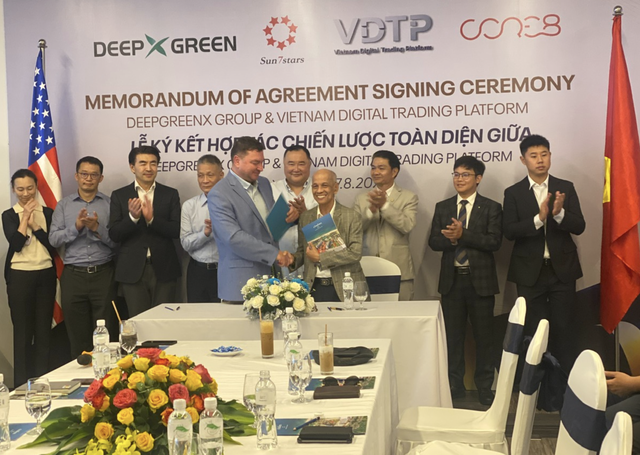
Peter Hong (R, 4th) during a meeting with partners on a visit to Da Nang, central Vietnam in 2025. Photo: B.D. / Tuoi Tre
Opening the way at Chu Lai
Long before his recent involvement in Da Nang, Hong was already present in then-Quang Nam Province, central Vietnam, during the early development of Chu Lai Open Economic Zone.
Quang Nam was amalgamated into Da Nang in July last year.
On his first visit to Chu Lai airport, he noticed the long runway stretching toward the sea and recognized its potential as an opening for regional growth.
In the years that followed, he accompanied local leaders on overseas investment promotion trips, encouraging international businesses to consider a region that was still struggling at the time.
Today, Chu Lai has grown into an important industrial and service center of central Vietnam.
Those who remember its early days often mention Hong as one of the early pioneers who helped paved the way, with little expectation of recognition.
Vietnam’s development story is told not only by policies and projects, but also by those who continue to show up across decades.
Hong’s role within it has been quiet and consistent, carried through his returns and the bridges he builds with trust and human warmth across borders.
Kel Thai - Thai Ba Dung / Tuoi Tre News
Link nội dung: https://news.tuoitre.vn/a-quiet-bridge-linking-vietnam-and-the-world-103260214155259043.htm