
Alarm raised over 35,000 cosmetic procedure complications annually in Vietnam, many linked to illegal clinics
Vietnam records around 250,000 cosmetic surgeries annually, with between 25,000 and 35,000 cases resulting in complications, experts said at a seminar held in Ho Chi Minh City on Tuesday.

Assoc. Prof. Dr. Nguyen Thanh Van, chairman of the Ho Chi Minh City Society of Plastic and Aesthetic Surgery, speaks at a seminar on the aesthetic medicine industry in Ho Chi Minh City, May 12, 2026. Photo: T.P.
The 'Safe Aesthetics Medicine: From Legal Frameworks to Standardized Medical Practice' seminar, organized by Tien Phong (Vanguard) newspaper, shed light on increasingly alarming risks in the country’s booming aesthetic medicine industry.
Assoc. Prof. Dr. Nguyen Thanh Van, chairman of the Ho Chi Minh City Society of Plastic and Aesthetic Surgery, said cosmetic surgery is a unique medical field because procedures are performed on otherwise healthy individuals with the aim of improving their appearance.
However, rising demand for beauty treatments has created mounting pressure while risks of complications remain significant, especially at unlicensed facilities.
Wide range of complications reported
Statistics show that the nose is the most common area for complications, accounting for about 42.6 percent of cases, followed by the face and breasts.
Common complications include infections, hematomas, scarring, functional deformities, vascular occlusion, necrosis, blindness caused by filler injections, pulmonary embolism, internal organ damage, and even death.
Experts warned that the trend of 'non-medicalization' in the aesthetic industry is rapidly increasing.
Many spas and beauty salons operating without licenses continue to perform invasive procedures such as filler injections, liposuction, and rhinoplasty.
Some also use materials of unclear origin, while procedures are carried out by individuals lacking medical expertise, leading to numerous serious complications.
Complications can range from minor bruising and fluid build-up to severe infections, necrosis, anaphylactic shock, multi-organ failure, or death.
Deep vein thrombosis and pulmonary embolism are especially concerning, with mortality rates exceeding 20 percent, often occurring after tummy tuck procedures.
Fat embolism syndrome following liposuction or large-volume fat grafting also carries a high risk of death.
Several severe cases have recently been reported, including a 36-year-old woman who developed generalized peritonitis after undergoing liposuction and tummy tuck procedure.
She required more than 100 days of treatment and multiple surgeries to survive, but she was left with serious long-term complications.
In another case, a 64-year-old woman died after undergoing multiple cosmetic procedures at the same time, including eyelid surgery, breast implantation, liposuction, and abdominoplasty.
Doctors determined the cause of death to be pulmonary embolism leading to multi-organ failure.
Cases involving blindness after filler injections, eyelid deformities, exposed nasal implants, and breast necrosis have also continued to emerge in recent years.
According to experts, the main causes stem from procedures performed at unlicensed facilities, treatments carried out by non-specialist practitioners, excessive use of multiple techniques during a single surgery, and inadequate emergency resuscitation capabilities.
Factors such as obesity, smoking, and underlying medical conditions also increase the risks.
Ministry of Health to tighten oversight
Dr. Dao Van Sinh, head representative of the Ministry of Health’s office in Ho Chi Minh City, said Vietnam’s aesthetic medicine industry is expanding rapidly, with a market worth billions of U.S. dollars and double-digit annual growth.
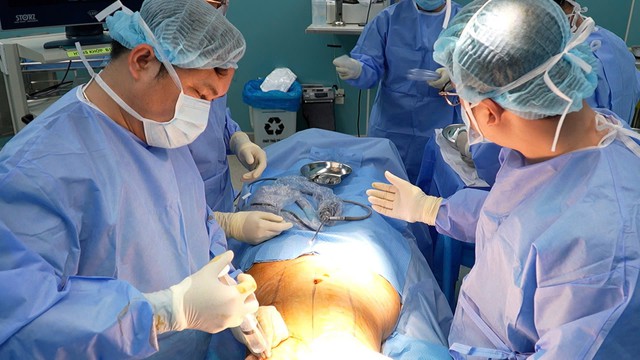
Doctors perform cosmetic surgery on a patient at Military Hospital 175 in Ho Chi Minh City. Photo courtesy of the hospital
However, the boom has also led to tens of thousands of complications each year, severely affecting people’s health, mental well-being, and finances.
In response, the Ministry of Health said it will continue tightening oversight of the sector.
Key measures include improving legal regulations on licensing and medical practice, increasing inspections, and strictly handling underground clinics, false advertising, and services operating beyond authorized professional scopes.
The health sector also plans to raise professional and ethical standards among doctors while strengthening public awareness so consumers can better understand aesthetic services and choose reputable clinics instead of relying on unverified advertisements.
Thuy Duong - Dong Nguyen / Tuoi Tre News