
Beach near Vietnam’s UNESCO-listed destination revives after $46mn erosion-control investment
Cua Dai Beach, about five kilometers east of Hoi An Ancient Town in Da Nang City, central Vietnam, has undergone a dramatic transformation following more than VND1.196 trillion (US$46 million) in investment to protect its coastline from severe erosion.
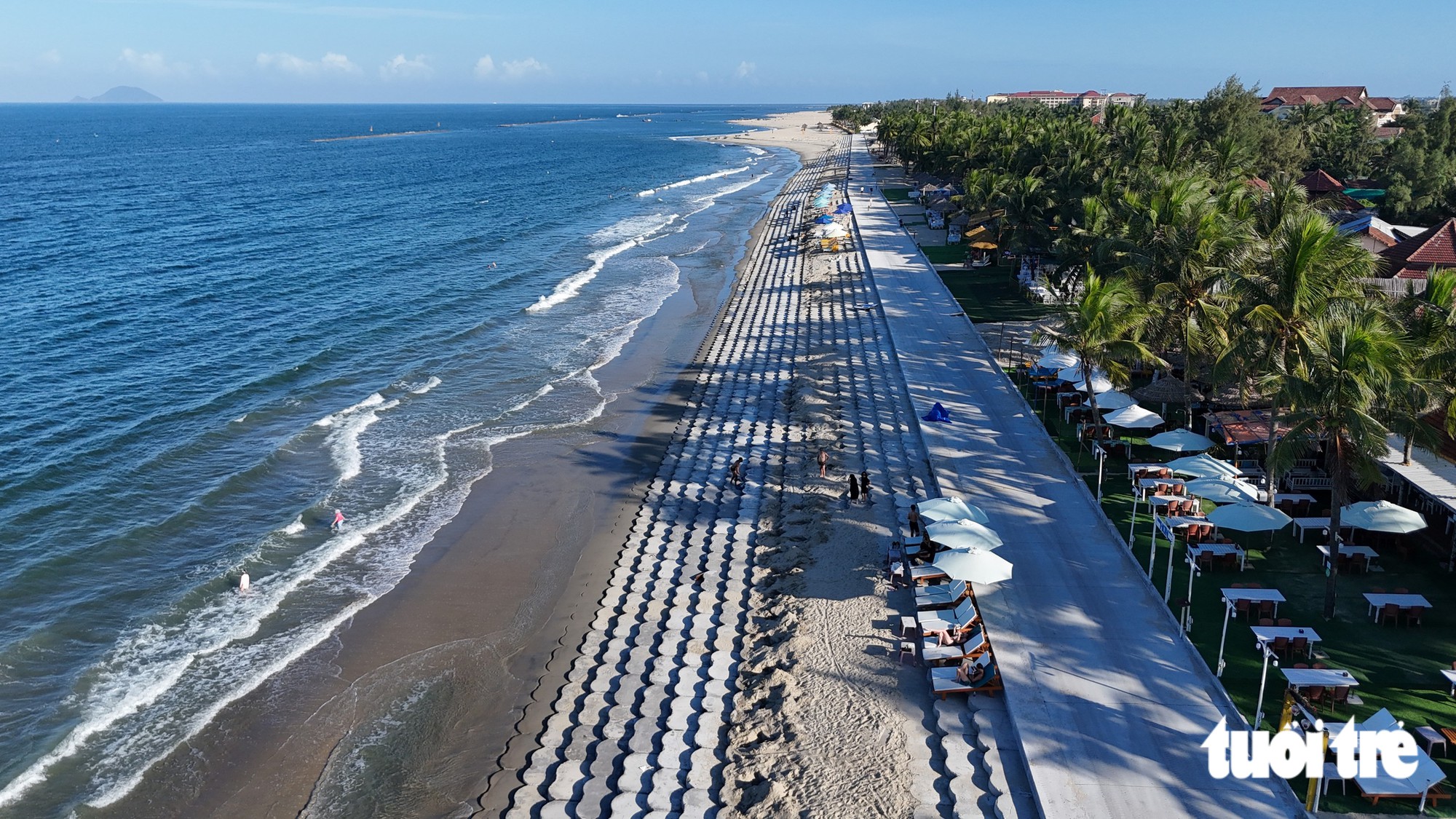
Cua Dai Beach in Da Nang City, central Vietnam showcases a dramatically renewed landscape following more than VND1.196 trillion (US$46 million) in coastal protection investments. Photo: Tran Thuong
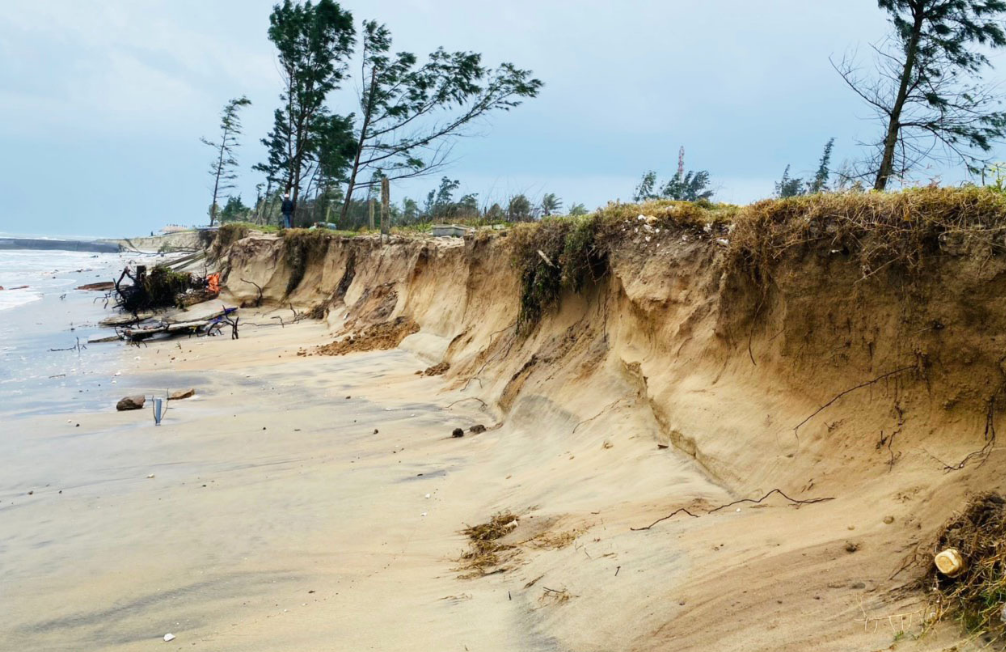
Once ranked among Asia’s 25 most beautiful beaches, Cua Dai suffered severe coastal erosion after 2014.
Large sections of sandy shoreline disappeared, coconut trees were washed away, and tourism infrastructure along the coast was heavily damaged.
The erosion not only altered the landscape but also threatened local livelihoods and tourism activities.
Over the years, local authorities implemented a series of erosion-control measures, but limited resources prevented a full recovery.
A major breakthrough came in March 2025 with the launch of the Hoi An coastal erosion prevention and sustainable protection project, valued at VND982 billion ($38 million) and financed through loans from the French Development Agency together with domestic counterpart funding.
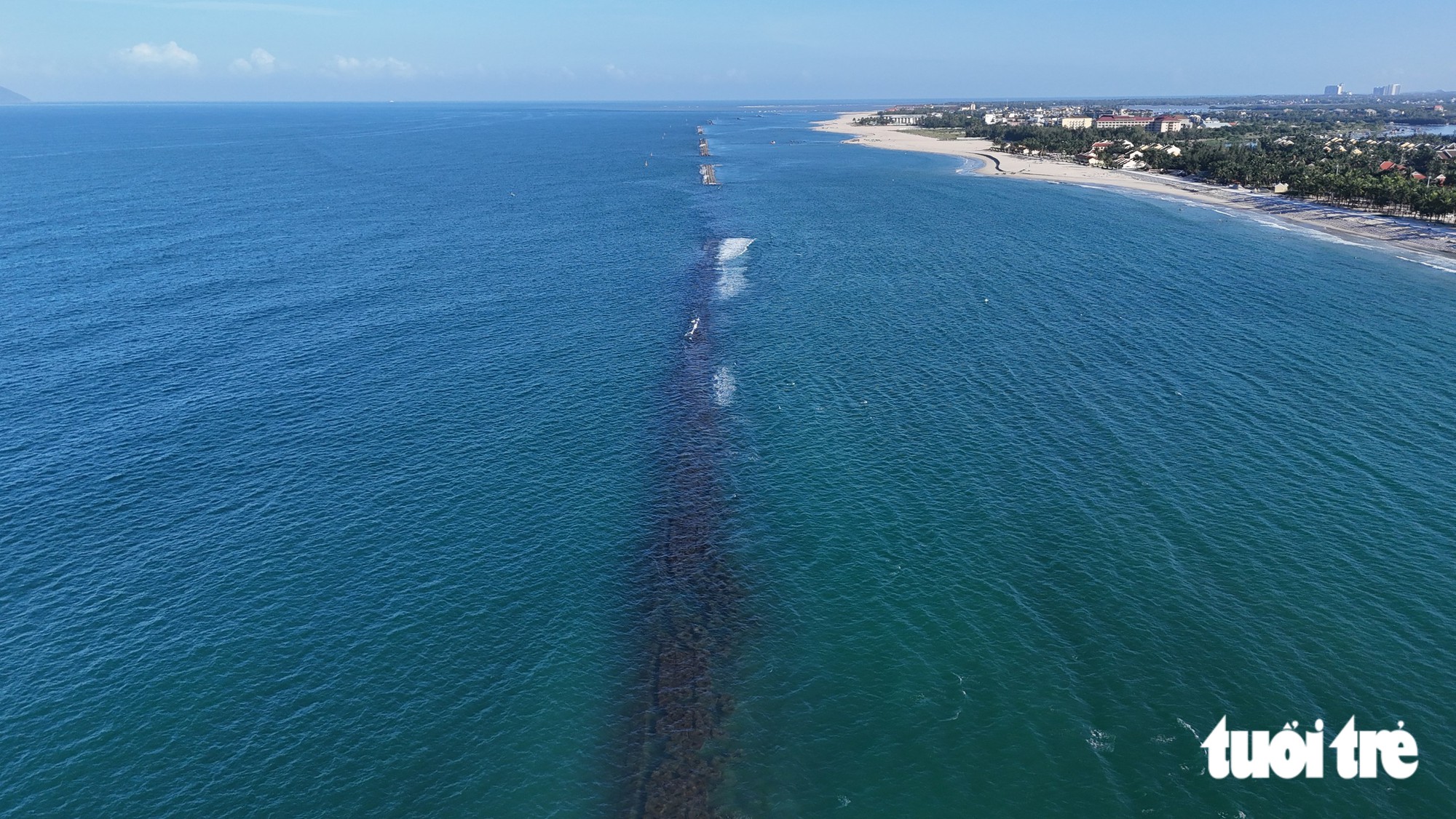
A US$46-million erosion-control project at Cua Dai Beach in Da Nang City, central Vietnam includes seven offshore breakwaters stretching more than two kilometers. Photo: Tran Thuong
The project covers some 3.4 kilometers of coastline, stretching from the river mouth near the Cham Island ferry terminal northward to the Victoria Hotel area.
A standout feature of the project is a system of seven offshore breakwaters extending more than two kilometers in total.
Positioned 250 to 300 meters from shore and running parallel to the coastline, the structures are designed to dissipate wave energy before it reaches the beach.
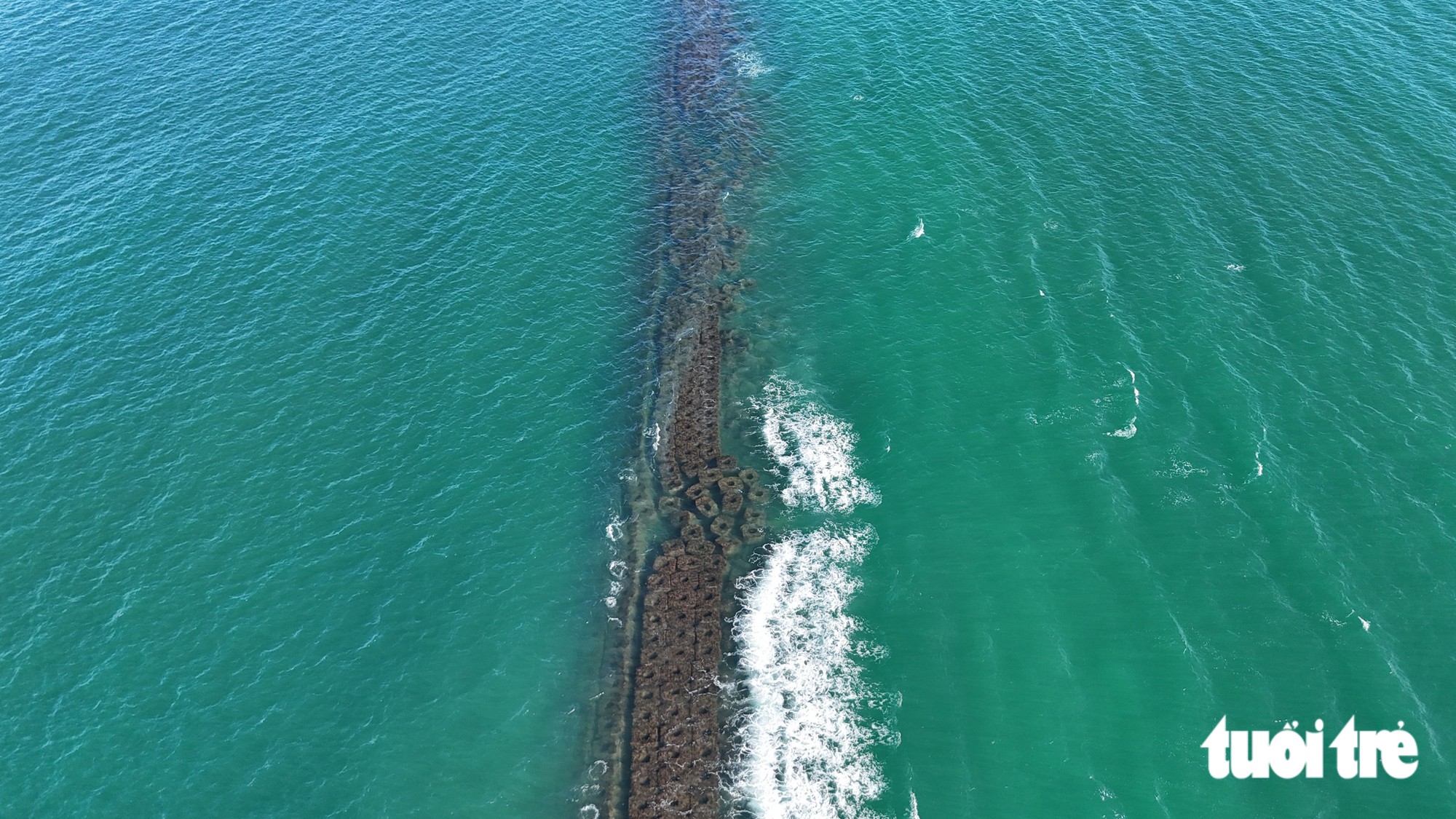
A wave-reduction barrier system at Cua Dai Beach in Da Nang City, central Vietnam is built with rock cores and massive precast concrete blocks. Photo: Tran Thuong
The project also includes six groynes extending nearly 1.5 kilometers in total, built perpendicular to the shoreline to trap sand and stabilize the beach.
The offshore barriers consist of rock foundations protected by specially designed six-metric-ton concrete armor blocks, while the groynes use combinations of rock structures, reinforced concrete, and sand-filled geotextile tubes.
Alongside the wave-reduction system, engineers restored the beach through large-scale sand replenishment.
The renovated coastline now features a dry beach area approximately 40 meters wide, a swimming beach area around 60 meters wide, and expanded recreational space for tourism and leisure activities.
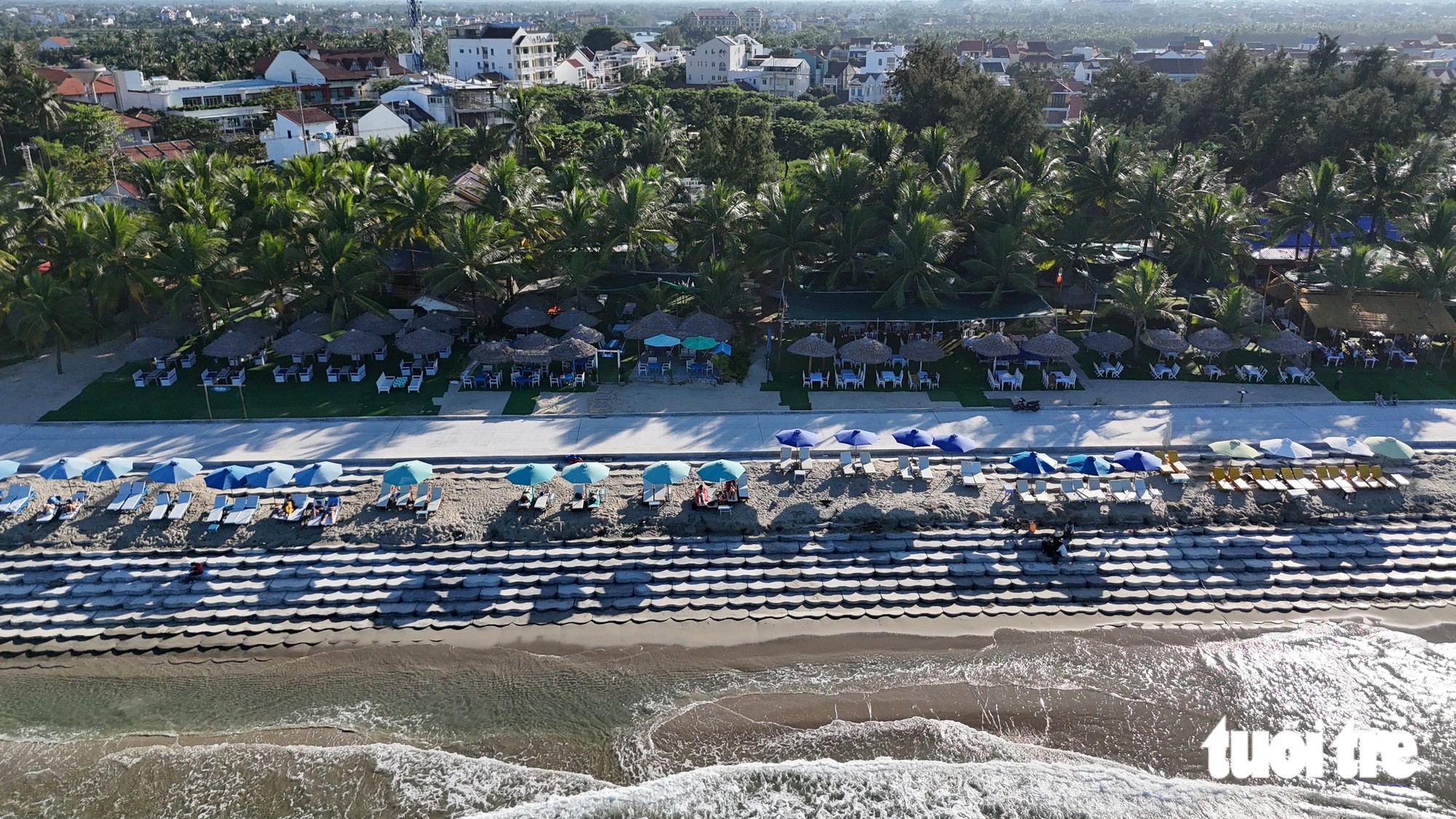
Seaside businesses are bustling again as Cua Dai Beach in Da Nang City, central Vietnam recovers after years of erosion damage. Photo: Tran Thuong
In April this year, Da Nang launched another coastal protection project worth more than VND498 billion ($19.3 million), including over VND214 billion ($8.3 million) specifically for reinforcing beaches at Cua Dai, Tan Thanh, and An Bang.
Following completion of most construction works, the results are becoming increasingly evident.
The restored coastline now features broad stretches of golden sand, rows of coconut palms, calmer waves, and a more stable shoreline.
Offshore breakwaters help reduce wave intensity, creating safer swimming conditions for visitors.
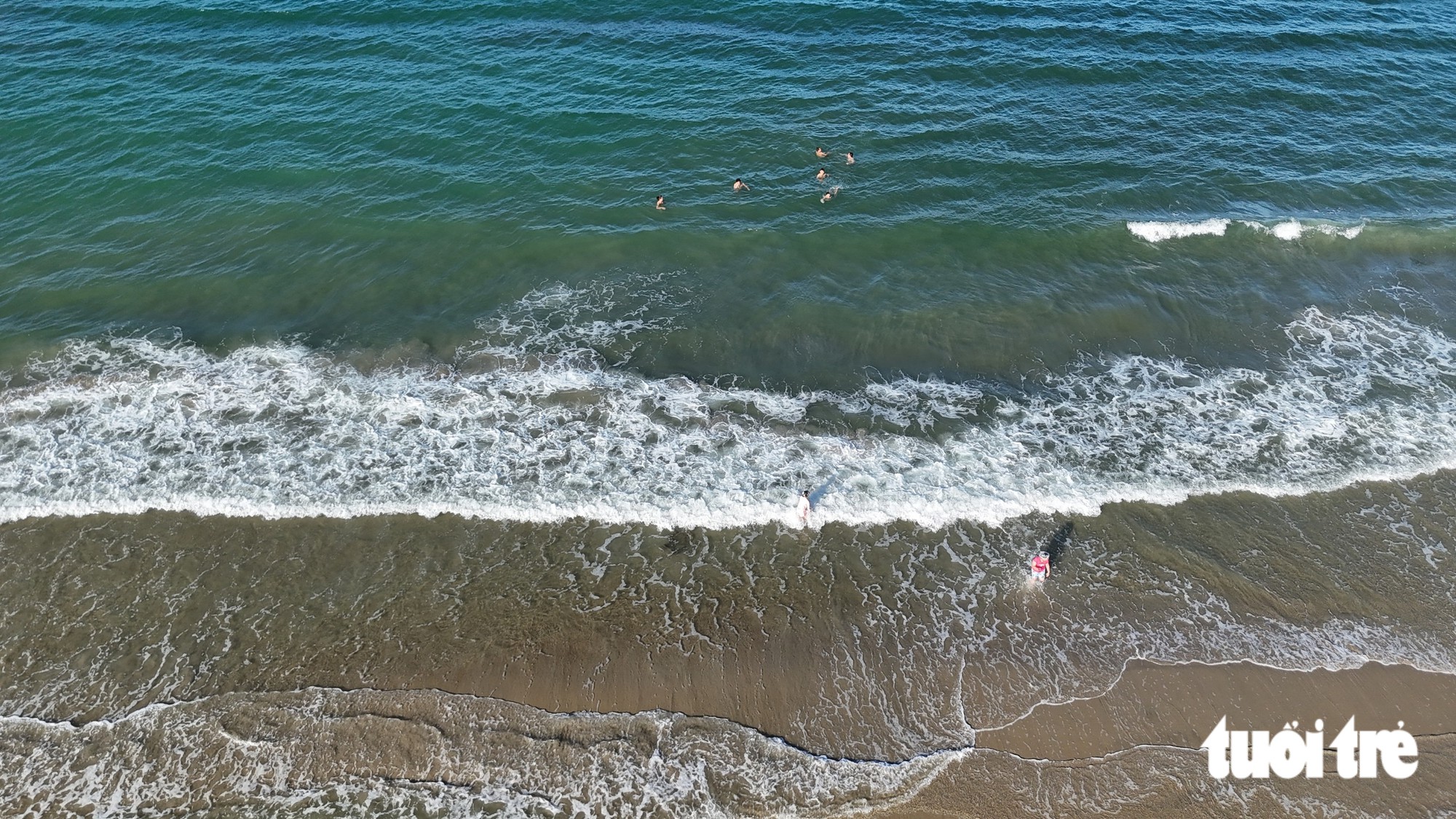
Offshore breakwaters create gentler waves and improved swimming conditions for visitors. Photo: Tran Thuong
Although it is currently the tourism low season, businesses along Cua Dai Beach have begun operating again.
Restaurants, cafes, and beach services are seeing visitors return, while both tourists and residents use the beachfront for walking, cycling, exercise, and relaxation.
Nguyen Ngoc Tan, deputy head of the Da Nang transport and agricultural project management board, said both coastal protection projects have been substantially completed and are now undergoing final acceptance and handover procedures.
The projects will not only safeguard the coastline but also help restore tourism and economic activity in an area that has struggled with erosion for more than a decade.
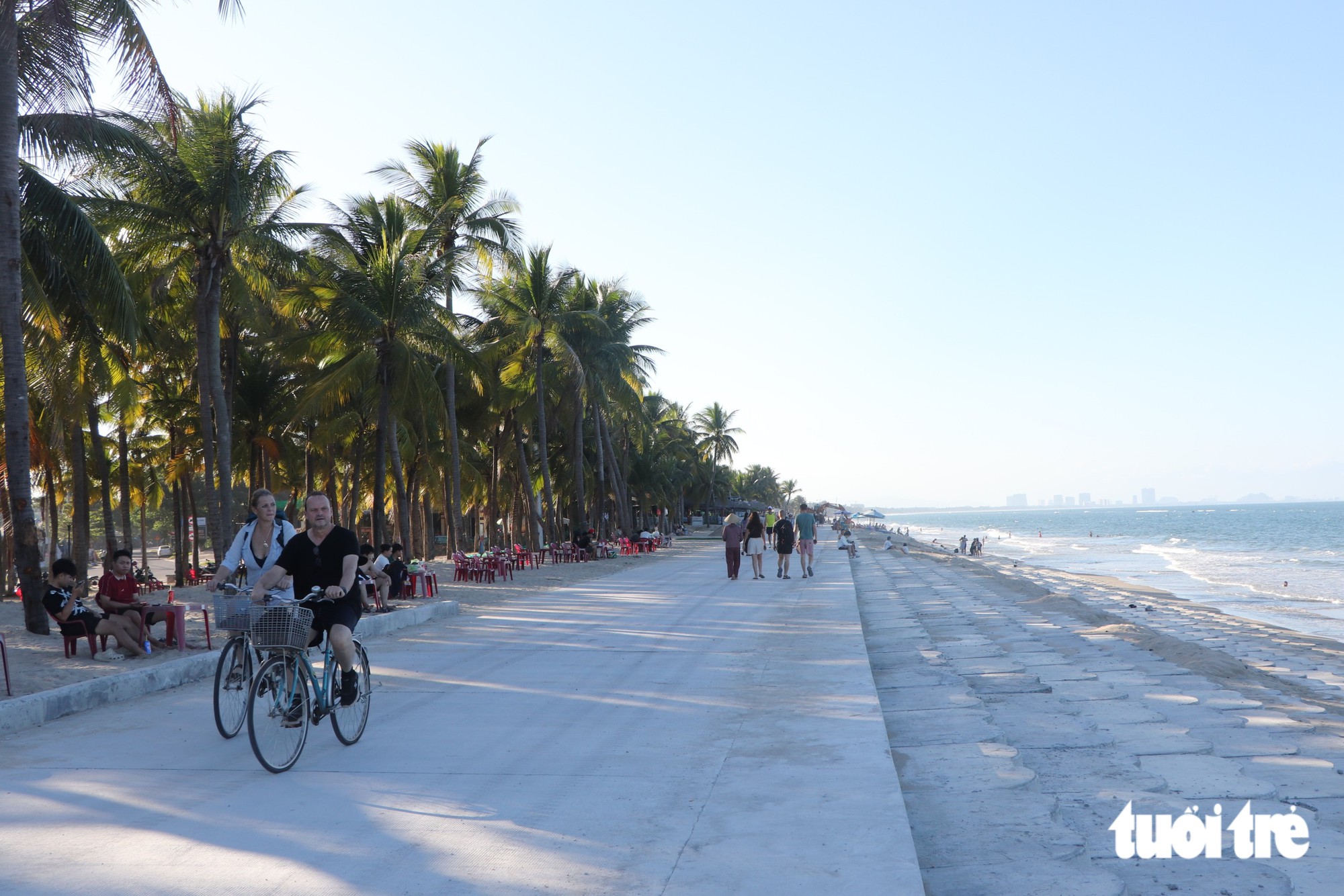
Tourists walk and cycle along Cua Dai Beach in Da Nang City, central Vietnam, enjoying the fresh coastal air. Photo: Tran Thuong
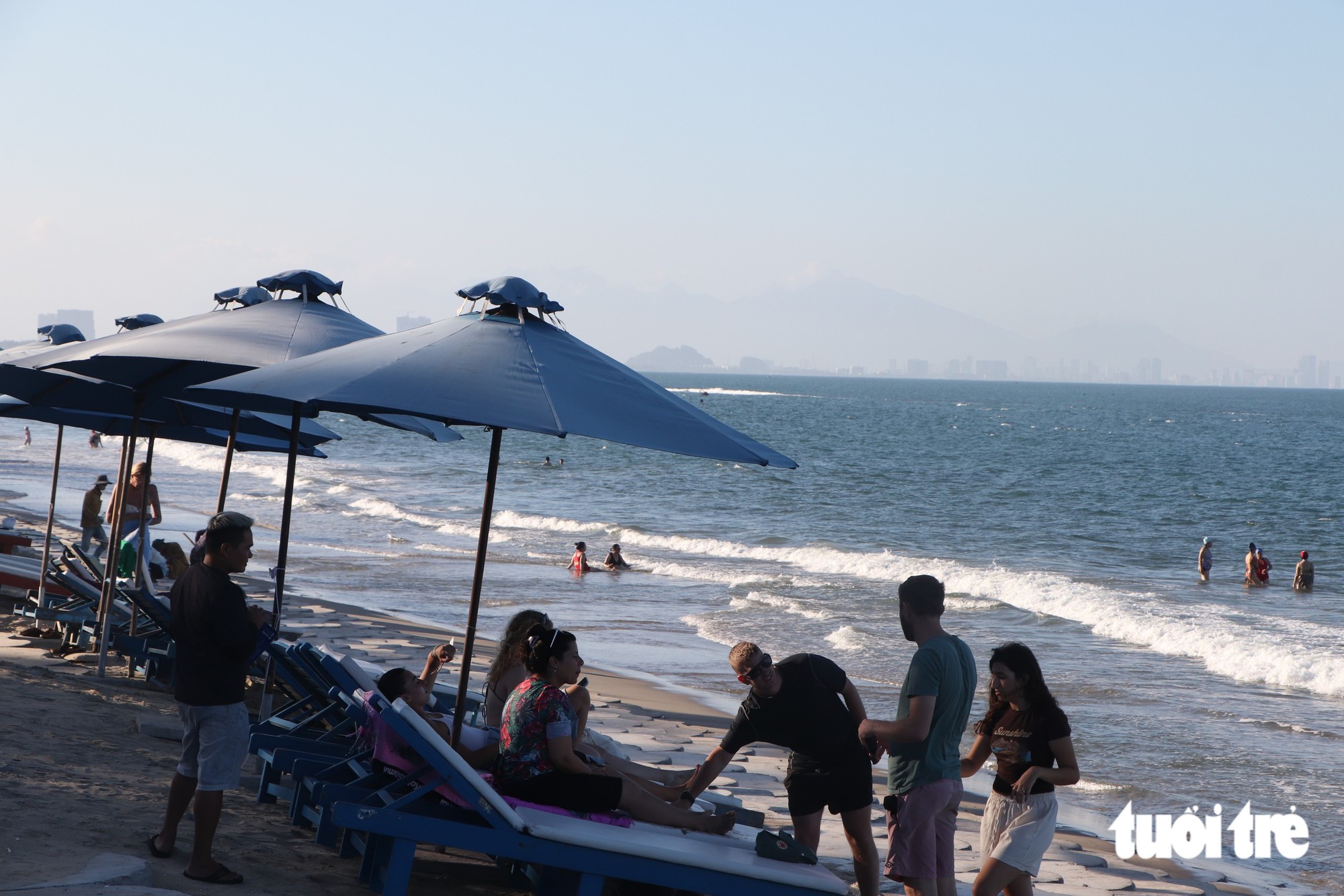
International tourists swim and relax along Cua Dai Beach in Da Nang City, central Vietnam. Photo: Tran Thuong
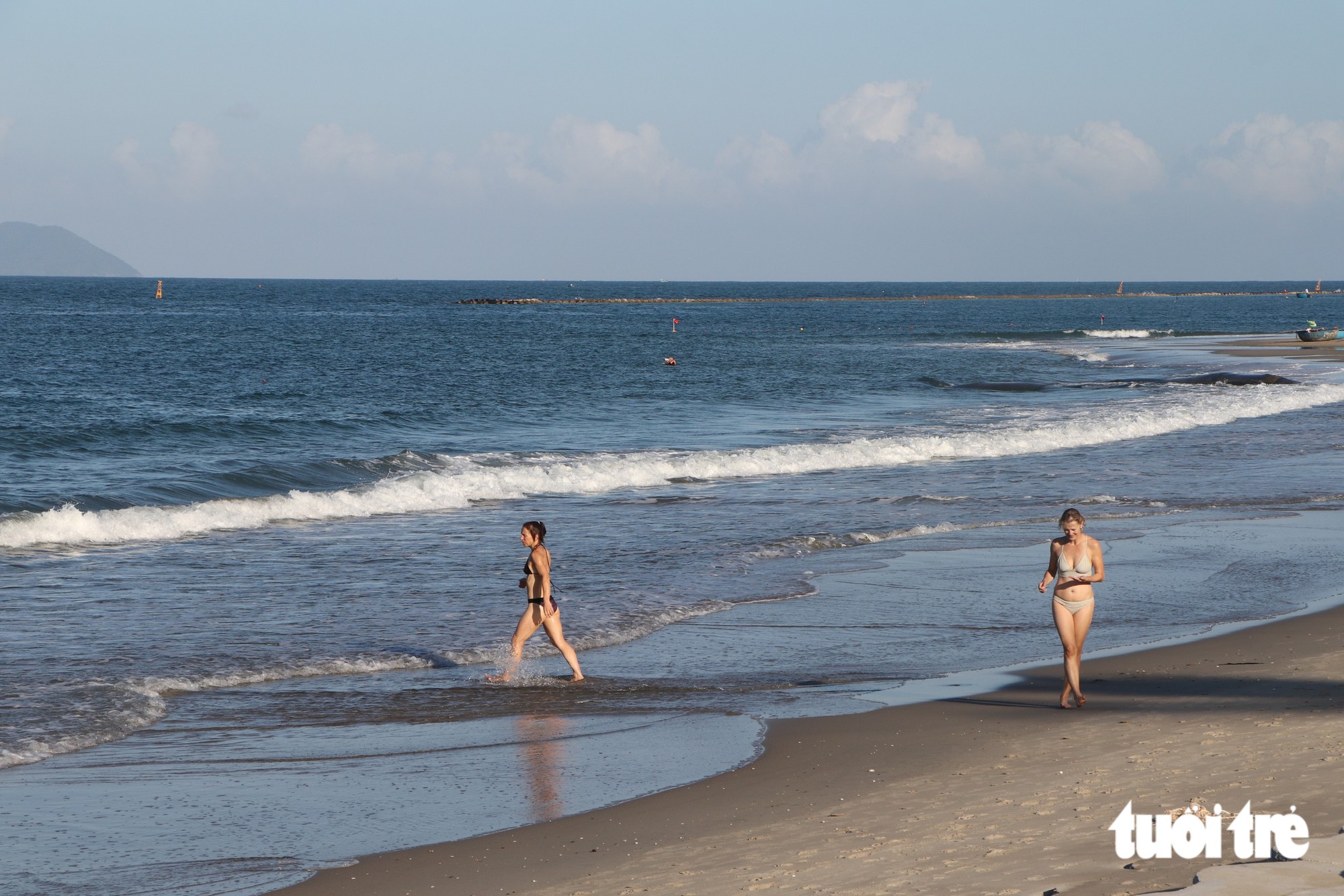
Calm waves and a gently sloping sandy shoreline stretching for more than a kilometer give visitors a sense of tranquility at Cua Dai Beach in Da Nang City, central Vietnam. Photo: Tran Thuong
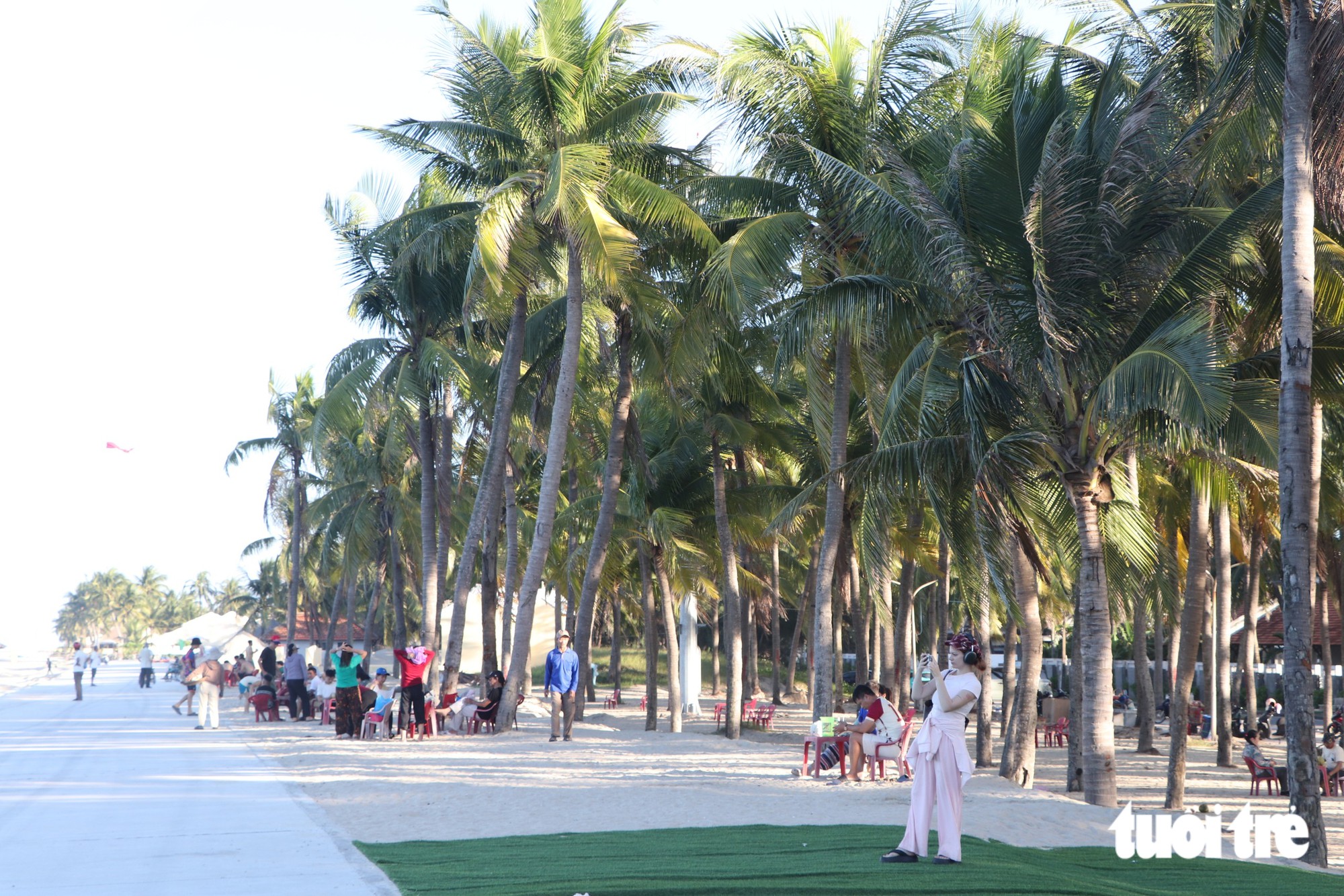
Local businesses beneath rows of coconut trees report increased visitor activity and improved incomes. Photo: Tran Thuong
Minh Duy - Tran Thuong / Tuoi Tre News