
Businesses and the journey to shaping Vietnam’s future for every child
In a new development context shaped by climate change, digital transformation and population ageing, Vietnam is increasingly recognizing investment in children as a decisive driver of national competitiveness.
Making this choice a reality will depend, in large part, on the role played by the private sector.
Philanthropy moves beyond 'giving'
For many years, action for children was largely framed within corporate social responsibility, often operating alongside – rather than within – core economic decision-making.
That framing is now evolving. As noted in an analysis by the Financial Times, social investment globally is moving away from short-term support toward more deliberate, long-term investment in systems that protect and support children, including legal frameworks, social services, education, and health.
This shift reflects a lesson reinforced by repeated crises. Where systems are weak, children are among those affected first and recover last.
Where systems are stronger and more resilient, societies as a whole are better able to withstand shocks and recover more quickly.
Development for children, therefore, is not only a moral concern; it is closely linked to social stability and sustained economic growth.
Vietnam's experience illustrates this transition. Since ratifying the United Nations Convention on the Rights of the Child in 1990, the country has progressively strengthened policies across health, nutrition, education, clean water, and child protection.
Over time, these efforts have contributed not only to improved outcomes for children, but also to the foundations of more inclusive and sustainable development.
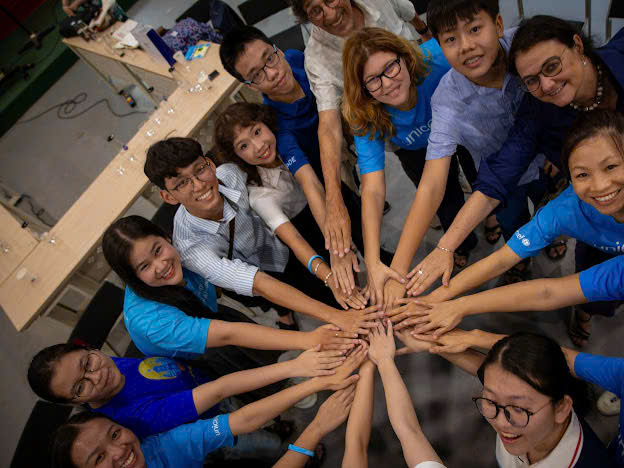
Beyond ‘giving’: working together for children
Investing in children means investing in competitiveness
Evidence from the World Bank and the Organization for Economic Co-operation and Development (OECD) consistently points to a strong relationship between investment in children and the quality of a country's future workforce.
Research by Nobel Prize-winning economist James Heckman shows that investment in early childhood development can generate returns of around 7-10 percent per year, through higher productivity and lower long-term social costs.
Experience from the Republic of Korea and Singapore highlights the close link between effective investment in children and sustainable economic growth.
This relationship is becoming particularly important as Vietnam moves rapidly into an ageing phase.
Over the coming decades, demographic change will reduce the size of the labor force while increasing the importance of skills, adaptability, and innovation.
In this context, every girl and boy who grows up healthy, educated, and supported represents not only a beneficiary of policy, but a critical asset for the future economy.
Early investment in nutrition, learning, and physical and mental well-being delivers returns that extend well beyond childhood.
Such investment helps reduce future health and social protection costs, while strengthening creativity, problem-solving, and productivity across the workforce.
These are structural gains that cannot be achieved through short-term or reactive measures alone.
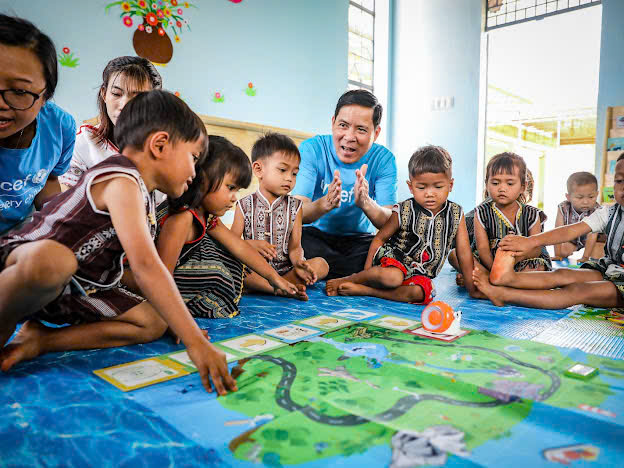
Children’s well-being underpins long-term competitiveness.
Private sector becomes partner for sustainable development
Against a backdrop of rising climate risks, rapid technological change, and demographic pressure, investing in children has once again emerged as a central pillar of long-term development strategies.
Within this landscape, UNICEF works as a systems-focused development partner, promoting a child-rights-based approach and helping connect different actors across society.
The emphasis is on strengthening long-term foundations – policies, institutions, implementation capacity, and data – so that all children, especially the most vulnerable, can access essential services equitably and sustainably.
Within these frameworks, the private sector is increasingly encouraged to integrate children's rights into business strategies, from risk management and workforce development to responsible supply chains and the digital environment. .
Globally, companies such as Unilever illustrate this shift by embedding goals related to nutrition, clean water, and safe living environments for children within their ESG approaches.
In Vietnam, Masterise Group reflects a similar direction through cooperation with UNICEF under the 'Innovation for Children' initiative, aimed at improving school sanitation and creating safe learning environments for children as part of a longer-term development vision.
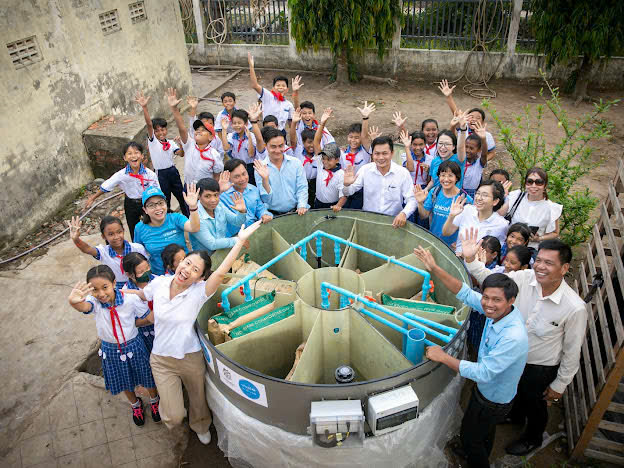
Private sector action in investing in children drives future competitiveness.
Notably, partnerships are evolving beyond one-off contributions toward co-creating solutions that link economic progress with social outcomes.
Experience shows that systems for children function best when governments, businesses, and communities act together, rather than through fragmented or isolated efforts.
Seen through this lens, investing in children goes beyond demonstrating commitment to children; it is also an investment in the long-term sustainability of businesses and in Vietnam's prosperity for every child.
Yen Viet / Tuoi Tre News
Link nội dung: https://news.tuoitre.vn/businesses-and-the-journey-to-shaping-vietnams-future-for-every-child-103251218132443104.htm