
Chinese automakers return to Vietnam: From low prices to partnerships with major local firms
After several unsuccessful attempts to establish a foothold in Vietnam, Chinese automakers are changing their approach, partnering with major local businesses to build distribution networks and strengthen after-sales services rather than relying primarily on competitive pricing.
Vietnam recorded over 14,840 first-time registrations of cars from 11 Chinese brands between January and September, said Vu Tan Cong, former secretary-general of the Vietnam Automobile Manufacturers' Association.
Many Chinese brands are operating in Vietnam such as BYD, MG, Geely, Lynk & Co, and Omoda & Jaecoo, with a product range that is considerably more diverse than in previous years.
More importantly, the business models adopted by these brands have evolved significantly compared with their earlier attempts to enter Vietnam.
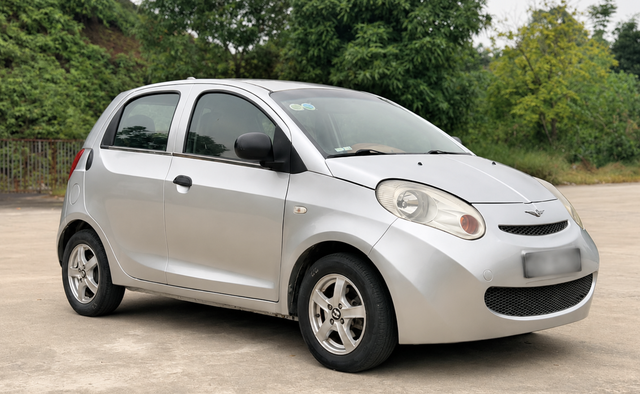
Chinese automakers initially entered Vietnam primarily with low-priced vehicles but struggled to gain a foothold. Photo: Tran Dat
Why Chinese automakers struggled in their first two attempts
Chinese automotive brands first began appearing in Vietnam in the 2000s, with names such as Chery, Lifan, Geely, and BYD.
Most vehicles were imported through relatively small distributors, with low prices serving as their primary competitive advantage.
However, Vietnamese consumers remained concerned about durability, build quality, safety, and the availability of spare parts.
Some models also attracted criticism for designs that closely resembled vehicles from other manufacturers.
When sales failed to meet expectations, several brands gradually withdrew from the market.
The closure of some distributors also undermined customers' ability to access warranty services and repairs.
Between 2017 and 2021, Chinese vehicles made another push into Vietnam, largely through private importers.
Models such as the Zotye Z8, Brilliance V7, and BAIC Beijing X7 attracted attention with eye-catching designs, extensive equipment, and competitive prices.
The Beijing X7, in particular, was reported by its importer to have received more than 1,000 orders in its first month on sale in late 2020.
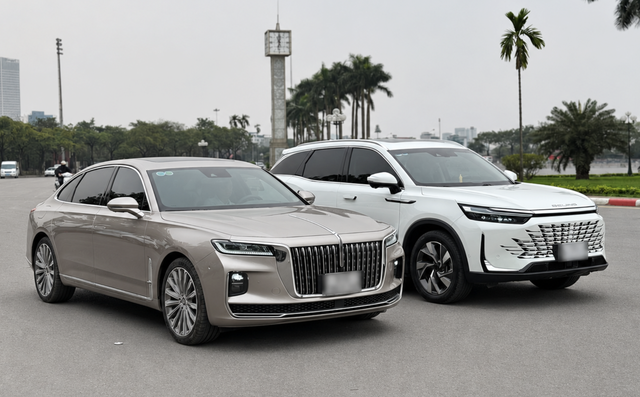
Some models once generated considerable market buzz but were later discontinued in Vietnam. Photo: Le Cong Trung Hieu
Nevertheless, initial consumer interest was not enough to ensure long-term business viability.
Some models were gradually discontinued in Vietnam, while service networks and spare-parts supplies remained limited.
"Some companies simply imported vehicles and sold them,” Cong said.
“When business became difficult, they withdrew from the market.
“When customers later needed spare parts and there was no reliable supply, they were the ones who ultimately suffered.”
This was one of the key reasons why many Chinese automotive brands failed to establish a lasting presence in Vietnam during their earlier attempts, he stressed.
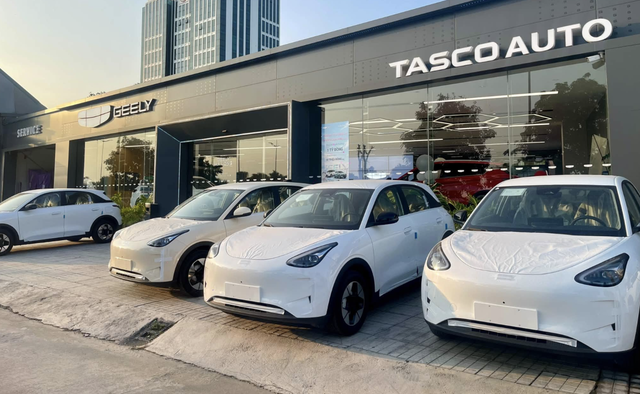
Chinese automakers are now pursuing a more sustainable path in Vietnam by partnering with major local businesses. Photo: Supplied
Chinese automakers return to Vietnam with new strategy
In their latest push into Vietnam, many Chinese automakers are choosing to partner with domestic firms that have substantial financial resources and experience in the automotive industry.
Three business models currently stand out, Cong said.
BYD has established its own company in Vietnam and is developing a dealership network.
Geely and Lynk & Co have partnered with Vietnam's auto distributor Tasco under an exclusive distribution arrangement.
Meanwhile, Omoda and Jaecoo, both brands under Chery, have formed a joint venture with Vietnamese diversified business group Geleximco and are also pursuing plans to build a manufacturing plant.
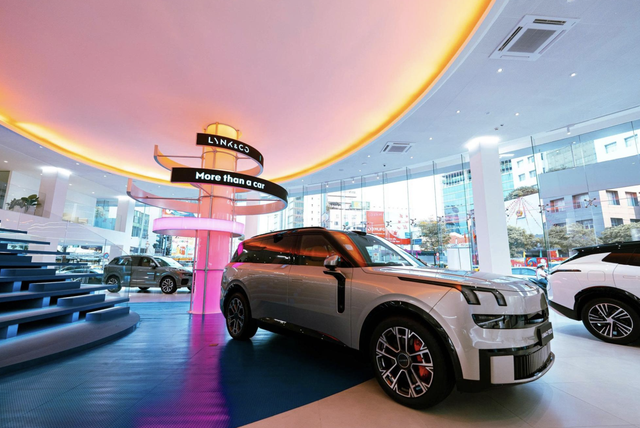
Vietnam’s Tasco brings extensive experience in managing a multi-brand automotive distribution network. Photo: Tasco
Working with local partners also gives automakers greater opportunities to tailor their products to Vietnamese consumer preferences.
Doan Anh Dung, an automotive expert who runs the Xe Cung channel, said that when distributors participate in investments from the outset, they are better positioned to make recommendations to manufacturers regarding vehicle configurations, equipment, and market launch strategies.
Typically, the Geely EX2 went on sale in Vietnam in March, some four months after its price was announced in Thailand.
According to dealerships, there were periods when prospective buyers had to register for a waiting list.
Lynk & Co has also made Vietnam its first market in Southeast Asia.
Alongside more mainstream offerings, the brand has introduced premium models such as the 08 EM-P and showcased the Lynk & Co 900.
The changes in distribution strategies are beginning to be reflected in new vehicle registration figures.
BYD recorded 4,029 vehicles during the January-September period of 2026, according to Cong.
Geely and Lynk & Co collectively registered 3,772 vehicles, while Omoda and Jaecoo reached 3,361.
Together, these three groups form a three-pronged presence among Chinese automotive brands in Vietnam, each representing a different business model.
All three also had products recognized at the Car Choice Awards 2026, including the Geely EX2, Jaecoo J5, and BYD M6.
This demonstrates that, beyond distribution scale and registration volumes, developing products that align with consumer needs is also becoming an important competitive factor.
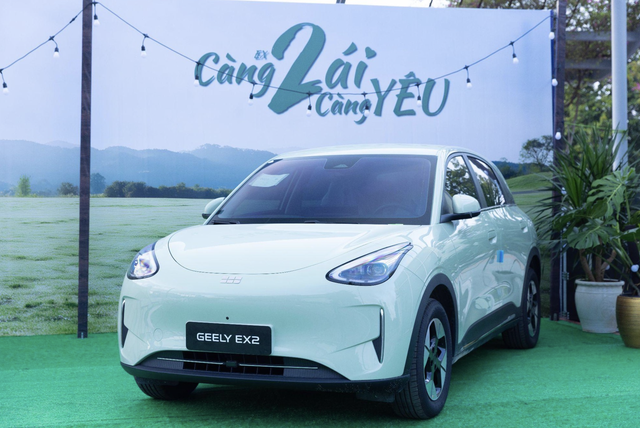
The EX2 is among the standout Chinese models recognized at the Car Choice Awards 2026. Photo: VIMS
After-sales service seen as key to long-term market presence
Beyond the vehicles themselves, after-sales service plays a crucial role in determining whether automakers can sustain their operations in Vietnam.
Buyers need reliable access to maintenance, repairs, and spare parts throughout the ownership period.
Cong said when an importer exits the market because its business is no longer viable, customers may face difficulties obtaining replacement components.
Therefore, automakers need to work with distributors that have sufficient resources to invest in dealership networks, spare-parts warehouses, and after-sales service infrastructure.
However, the financial strength and scale of a distributor alone cannot guarantee success.
Long-term viability will also depend on choosing the right products, expanding service networks, and ensuring a consistent supply of spare parts throughout the vehicle ownership cycle.
Tieu Bac - Minh Son / Tuoi Tre News