
Da Nang eyes low-altitude economy to drive new growth
Authorities in Da Nang City, central Vietnam are proposing a pilot scheme to develop its low-altitude economy, aiming to create new growth drivers by leveraging its geographical advantages, infrastructure, and technological capabilities.
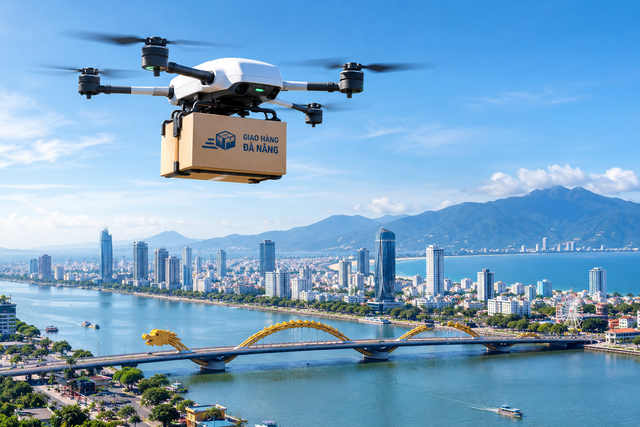
Da Nang aims to have at least three low-altitude flight service applications by 2028. Photoo: AI-generated
Under the draft scheme, the city plans to designate four areas for unmanned aerial vehicles, which could be used for cargo transportation, tourism, agriculture, urban management, and search and rescue operations.
Da Nang seeks to capitalize on emerging industry
Tran Ngoc Thach, deputy director of the Da Nang Department of Science and Technology, told Tuoi Tre (Youth) online newspaper that the city had proactively developed the pilot scheme to expand its development space, create new industries and markets, and help achieve its double-digit economic growth target.
The city is well positioned to explore the sector thanks to its diverse geographical features, including urban areas, coastlines, rivers, islands, hills and forests, as well as areas vulnerable to landslides, flash floods, and forest fires.
These conditions offer opportunities to test various UAV applications while presenting practical challenges that could be addressed through technology.
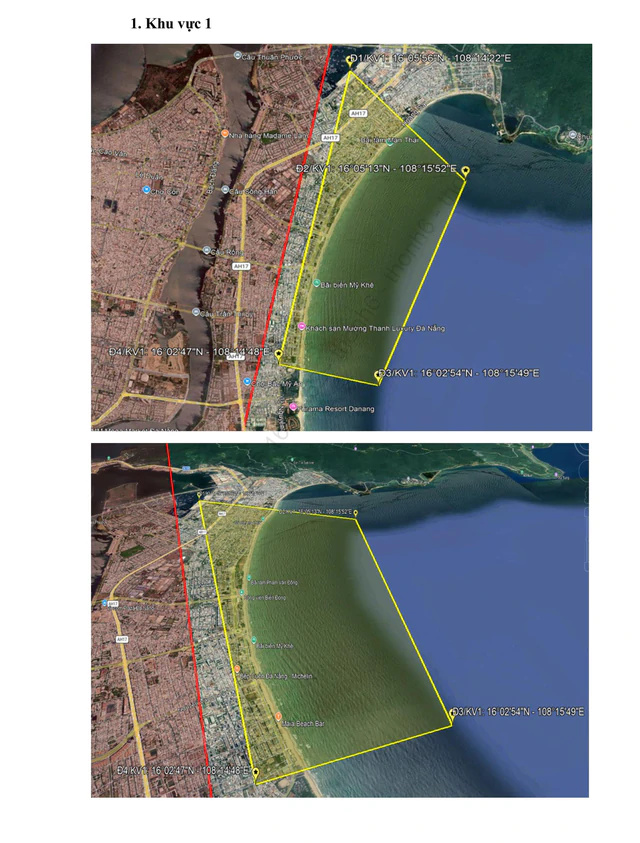
One of four low-altitude airspace zones designated by Da Nang for trial operations, allowing organizations, associations, and clubs that own and use aircraft to operate there. Photo: Screenshot
The city also has airports, seaports, logistics centers, a hi-tech park, and digital technology zones, providing a foundation for connecting UAV operations with transportation, services, and technology manufacturing, Thach said.
Da Nang is developing related sectors, including semiconductor chip technology, artificial intelligence, smart cities, and digital transformation.
Another advantage is the availability of special policy mechanisms and plans for controlled testing of new technologies.
Products across the low-altitude economy value chain are considered strategic technologies and require time for testing to assess their feasibility and effectiveness before official deployment, he added.
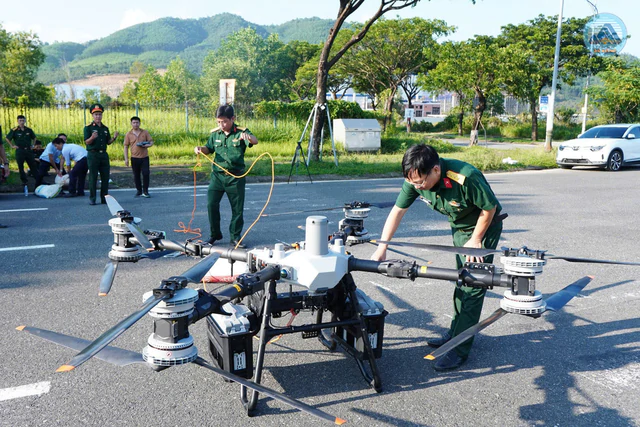
Da Nang tests a heavy-payload aircraft. Photo: Quang Cuong / Tuoi Tre
Public sector to act as first customer
According to the department, the low-altitude economy involves more than developing or owning UAVs.
Its economic value also comes from infrastructure, control software, data, flight management platforms, services and the markets built around the technology.
Focusing solely on purchasing or manufacturing equipment without developing a service market and a business ecosystem would limit the sector's potential to generate substantial economic value.
The draft scheme therefore prioritizes testing applications that address practical needs, including logistics and last-mile delivery, tourism and cultural promotion, healthcare, search and rescue, agriculture, and urban infrastructure and environmental management.
Under the proposed approach, the public sector would establish policy mechanisms, infrastructure and shared data while acting as the first customer by commissioning businesses to provide services that address real-world needs.
Thach said that companies would select technologies, operate services and take responsibility for their commercial performance.
For example, UAVs could be studied for short-distance cargo delivery, surveillance of hard-to-reach areas, disaster risk assessments and data collection for urban management.
At a recent consultation on the draft scheme, experts said the sector would require close coordination among authorities responsible for national defense, security and aviation.
They proposed that the city clearly define flight zones and corridors, licensing procedures, monitoring systems and the responsibilities of relevant parties.
Under the proposed roadmap, Da Nang plans to deploy at least three low-altitude flight service applications between late 2026 and early 2028.
The city also aims to attract businesses to participate in trials and prepare for investment in facilities for UAV research, manufacturing, training and testing to serve central Vietnam.
What is the low-altitude economy?
The low-altitude economy is a sector covering commercial activities and services conducted in relatively low-altitude airspace, often defined in some policy frameworks as below 1,000 meters (3,280 feet) above ground level.
The industry generally consists of three components: aircraft such as eVTOLs, autonomous drones, helicopters, and airships; supporting infrastructure including vertiports, charging stations, and air traffic management systems; and services such as passenger transport, cargo delivery, emergency response, tourism, and surveillance.
UAVs, commonly known as drones, are a key part of this ecosystem. Operating without a pilot on board, they can be remotely controlled or programmed to fly autonomously.
Their applications range from logistics and agriculture to infrastructure inspection, environmental monitoring, emergency response, and urban services, making UAVs one of the key technologies underpinning the development of the low-altitude economy.
The Ky - Truong Trung / Tuoi Tre News
Link nội dung: https://news.tuoitre.vn/da-nang-eyes-low-altitude-economy-to-drive-new-growth-103261021205616962.htm