
Danish maritime group seeks Vietnamese partners to build electric tugboats
Danish maritime group Svitzer is seeking Vietnamese shipbuilding partners for upcoming projects, including electric tugboats, as Vietnam and Denmark explore cooperation in shipbuilding, supporting industries, technology transfer, and green maritime workforce development.
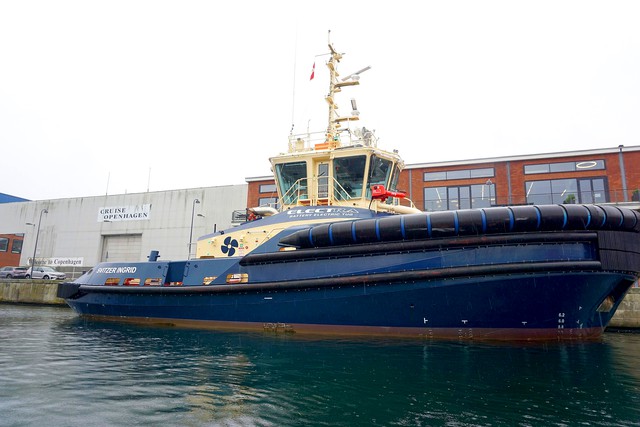
Svitzer’s electric tugboat is docked at a port in Copenhagen, Denmark. Photo: Nghi Vu / Tuoi Tre
Denmark has one of the world's leading maritime industries, with strengths in shipping, technology, and emissions-reduction solutions.
Danish maritime businesses and experts said Vietnam had significant potential for cooperation due to its shipbuilding capabilities, manufacturing capacity, and developing port network.
Their assessment came during Vietnamese Party General Secretary and State President To Lam's state visit to Denmark from October 19 to 21.
Svitzer surveys Vietnamese shipyards
Jakob Diemer, Svitzer's technical director, said Vietnam had a strong foundation for participating in tugboat construction projects.
"Vietnam is already a maritime nation, with a very good position, and does not need to relearn the basics of operating seagoing vessels," Diemer said.
Speaking to Vietnamese media, Diemer said Svitzer was surveying Vietnamese shipyards and hoped to invite several companies to bid for upcoming projects.
The projects could include electric and conventional tugboats, as well as the company's 29-meter TRAnsVerse vessel design.
Svitzer works with shipyards in several countries and typically sends experts to supervise production and help local partners meet technical requirements, Diemer said.

Local businesses could also have opportunities to supply electrical equipment, control systems, and related services, he said.
Svitzer currently operates more than 500 tugboats worldwide.
For its electric tugboat Svitzer Ingrid, the company aims to conduct around 90 percent of the operations using battery power.
Diemer said Vietnam also had potential for deploying electric tugboats at its seaports.
Svitzer hopes to expand its cooperation with Vietnam beyond shipbuilding to providing tugboat services in the country in the future, he said.
However, high initial investment costs and the lack of charging infrastructure at ports remain challenges to the wider adoption of electric tugboats.
Svitzer's search for Vietnamese partners could create further opportunities for cooperation between the two countries in shipbuilding, supporting industries, and green maritime workforce development.
Green transition creates new economic opportunities
Dang Thi Que, a business growth partner at Svitzer, said the green transition should not only reduce emission but also deliver economic benefits.
Que told Tuoi Tre (Youth) online newspaper that when a green solution proves commercially viable, the experience and implementation capabilities behind it can also become exportable assets for Danish businesses.
Svitzer's electric tugboats are one example of such a solution.
These vessels assist larger ships in entering and leaving ports and use electricity instead of diesel to reduce emissions during operations.
However, the transition to electric tugboats requires more than replacing a conventional system with an electric one.
Electric tugboat operations also require charging infrastructure, electricity supplies, supportive policies, coordination with ports and customers willing to pay for the service.
Que said Vietnam and Denmark had complementary strengths in the maritime sector.
Denmark has experience in green maritime technology, while Vietnam has shipbuilding capabilities, manufacturing capacity, and a technical workforce.
Que said cooperation should not be limited to introducing Danish technology to Vietnam.
Vietnamese businesses could participate in shipbuilding, equipment supply, technical services, and vessel operations.
"The important thing is to combine Denmark's experience and technology with Vietnam's manufacturing and operational capabilities and market knowledge, so that both sides benefit," Que said.
Que also said career opportunities in the maritime industry were more diverse than many people might expect.
Although she does not have a technical background, she said the industry also needs professionals in business, finance, and operations.
Practical cooperation projects could give young Vietnamese professionals more opportunities to learn, gain experience, and develop their expertise, she said.
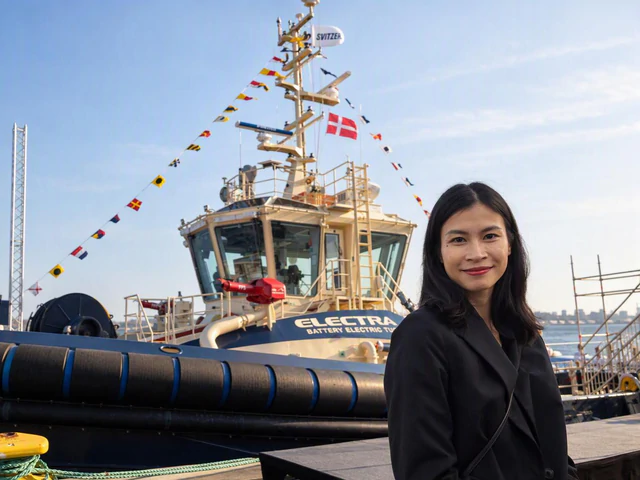
Dang Thi Que, a Vietnamese business growth partner at Danish maritime group Svitzer. Photo: Supplied
Vietnam could become a green energy supply hub
Pernille Dahlgaard, impact director at the Mærsk Mc-Kinney Møller Center for Zero Carbon Shipping in Denmark, said Vietnam had significant advantages in the global maritime industry's green transition.
She cited the country's renewable energy potential and developing shipbuilding capacity as key strengths.
Shipping accounts for around 80 percent of goods transported worldwide and approximately three percent of global emissions.
Reducing emissions from the sector will therefore create demand for green electricity, alternative fuels, and new maritime technologies.
"Vietnam has significant potential for green energy, particularly wind and solar power. This presents an opportunity to accelerate production to meet the maritime industry's future energy needs," Dahlgaard said.
Vietnam could accelerate port electrification and develop shore power systems that allow vessels to connect to electricity supplies while docked.
The country could also prepare infrastructure for alternative fuels, Dahlgaard said.
The Ky - Nghi Vu / Tuoi Tre News
Link nội dung: https://news.tuoitre.vn/danish-maritime-group-seeks-vietnamese-partners-to-build-electric-tugboats-103261020113536468.htm