
‘Discarded’ part of pomelo helps Vietnam create globally praised dessert
The bitter white pith of pomelo, a part that might otherwise be thrown away, is put to good use by Vietnamese people to create a unique dessert once praised by food website TasteAtlas.
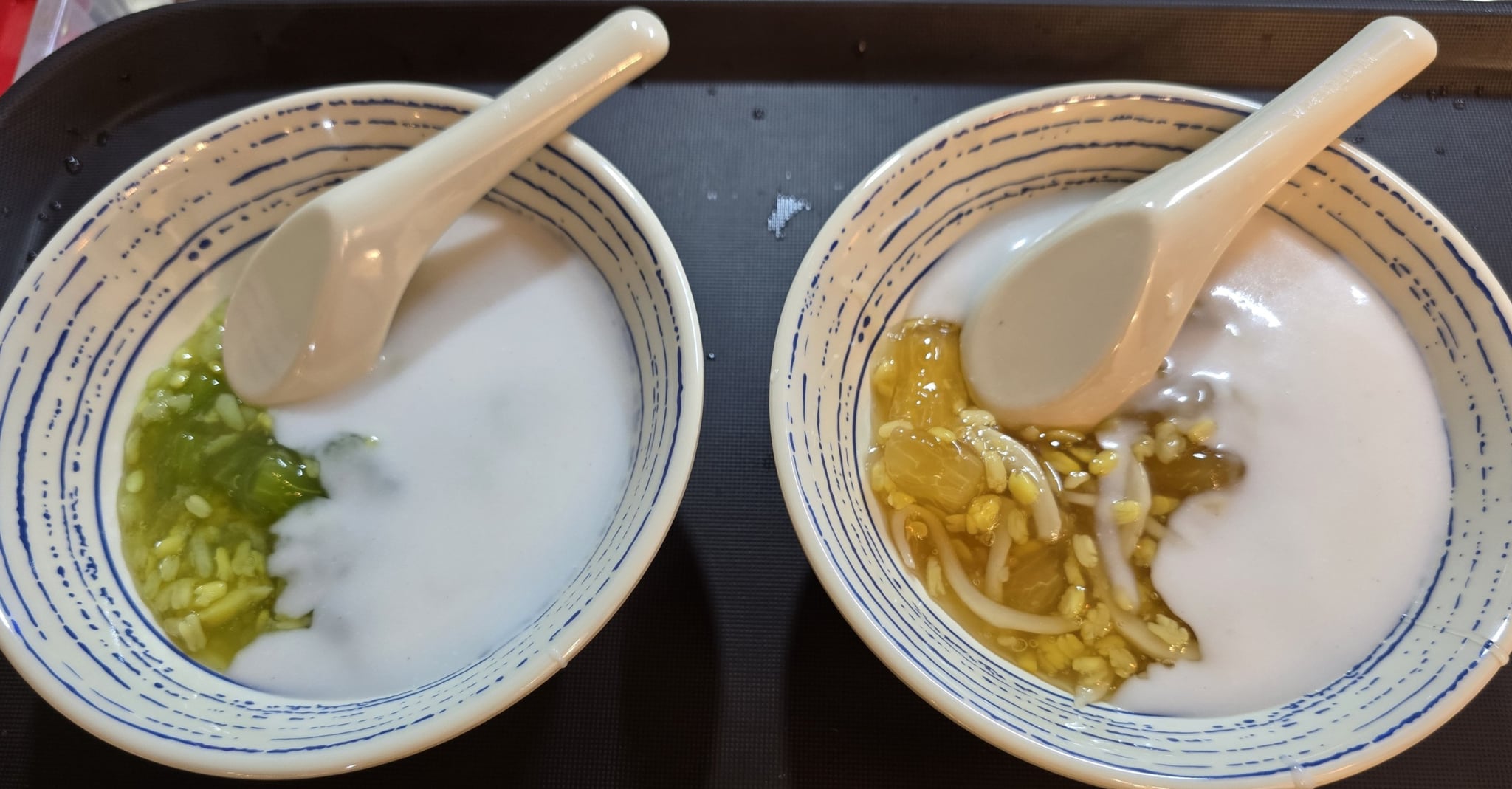
Traditional 'che buoi' is golden yellow, while the version with 'com' has a refreshing green color. Photo: Hoang Le / Tuoi Tre
Pomelo sweet soup, or che buoi, originated in Vietnam’s southwestern region.
It is a popular rustic dessert featuring the gentle sweetness of palm sugar, tender mung beans, and the best part: chewy, crunchy pomelo pith cubes. All combined with rich coconut milk.
Coconut milk is one of the indispensable ingredients in 'che buoi.' Video: Hoang Le / Tuoi Tre
In July, Croatia-based online food guide TasteAtlas listed che buoi among the 100 best-rated dishes from around the world, alongside banh bo (Vietnamese honeycomb cake) and com dua tep rang (coconut steamed rice with baby shrimp).
Art of making che buoi
The preparation of the pomelo pith is crucial to making good che buoi, as improper processing can leave the white pith bitter or make it too soft.
Ngoc Thuy, who has spent years researching and making che buoi using the famous Tan Trieu pomelo variety, shared her technique.
After removing the green skin, the pomelo pith is cut into bite-sized pieces, soaked in salted water, then kneaded and squeezed thoroughly.
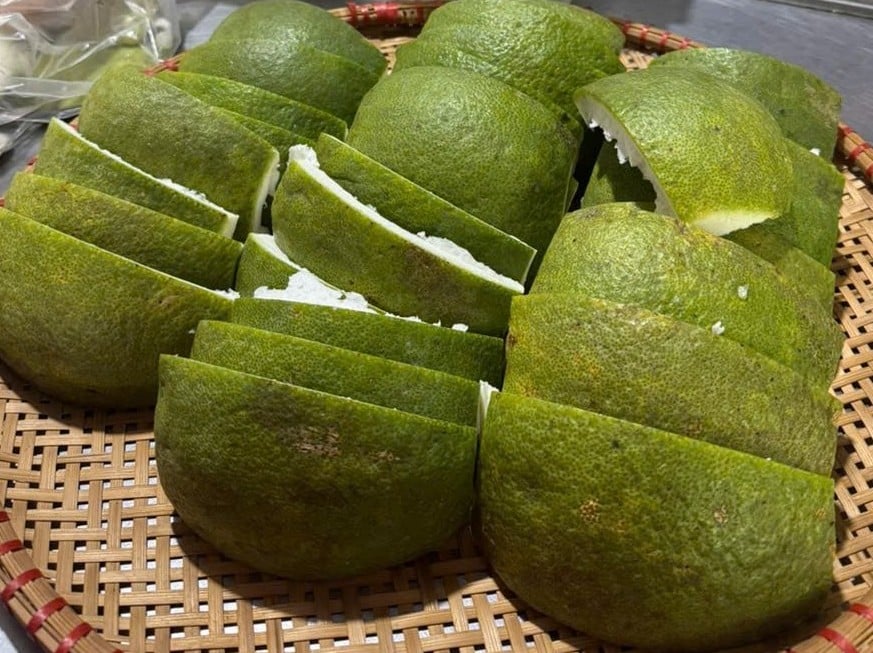
Pomelo is peeled before it is processed to make 'che buoi.' Photo: Supplied
It is then briefly blanched in boiling water before being kneaded and squeezed another three or four times.
This step requires patience to remove the bitterness while preserving the pith’s crunch.
After being processed, the pomelo pith is coated with tapioca starch before being cooked.
Mung beans, another key ingredient in che buoi, are soaked until soft and then steamed.
Next, water is boiled with pandan leaves and palm sugar or sugarcane molasses.
A small amount of tapioca starch is mixed with water and gradually poured into the pot while stirring continuously to thicken the syrup.
The steamed mung beans and blanched pomelo pith are then added to the pot and stirred together.
The mixture is brought back to a boil for one to two minutes before the heat is turned off.
When served, the sweet soup is topped with coconut milk and shredded coconut.
At Thuy’s Tan Trieu pomelo sweet soup shop on To Vinh Dien Street in Dong Hoa Ward, Ho Chi Minh City, customers can choose between two varieties.
Besides the traditional version, there is also Tan Trieu pomelo sweet soup with com, a northern Vietnamese young green rice specialty, which gives the dessert a refreshing green color and a distinctive flavor.
The preparation of the com version differs slightly.
After the pomelo pith is cleaned, it is soaked in concentrated pandan leaf juice to give it a green color.
Lotus seeds and com are added during cooking to create its distinctive flavor.
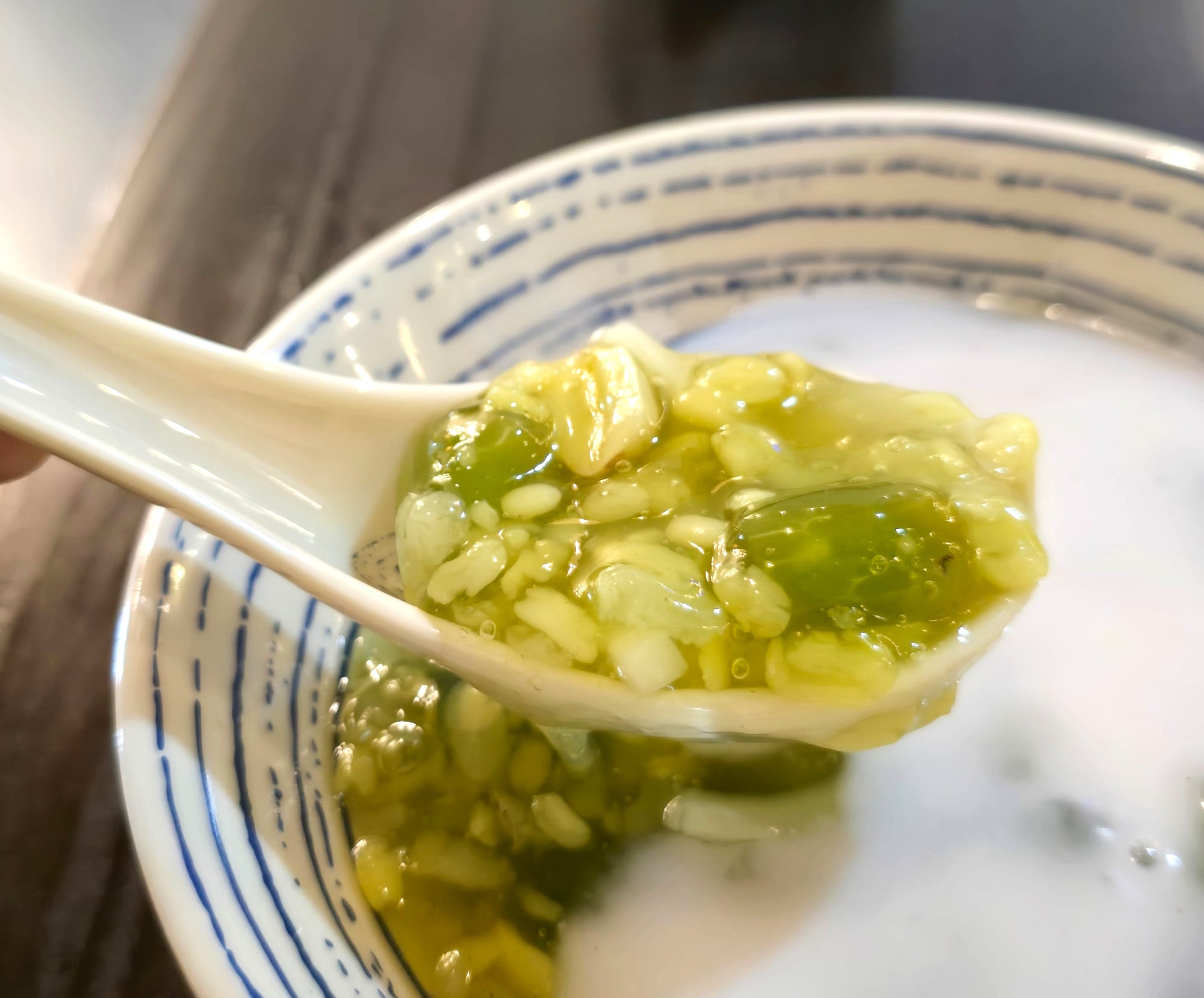
'Che buoi' with 'com' combines the fragrant scent of 'com' with the nutty flavor of lotus seeds. Photo: Hoang Le / Tuoi Tre
Dream to expand Tan Trieu pomelo brand
Ngoc Thuy was born and raised in the Tan Trieu pomelo-growing region of Dong Nai City, where she also married and settled.
She hopes to bring the familiar fruit of her hometown closer to diners through traditional dishes as well as new culinary creations.
Ngoc Thuy serves 'che buoi' to customers. Video: Hoang Le
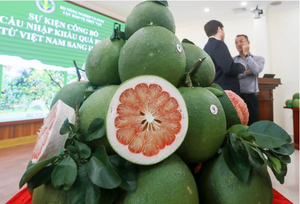
Tan Trieu pomelo has long been known for its naturally sweet flavor, juicy flesh, and distinctive aroma.
Besides being eaten fresh, pomelos are used by local residents to make a wide range of dishes and beverages.
As a chef, Thuy incorporates Tan Trieu pomelo into various dishes, including pomelo salad, chicken steamed inside a pomelo, and dishes made from pomelo pith.
Beyond che buoi, pomelo pith can be sliced into strips, coated with flour and deep-fried for a crispy snack.
Meanwhile, finely shredded pomelo pith can also be mixed with flour to make banh canh, a noodle dish that Thuy says offers health benefits.
Pomelo leaves are also used to wrap grilled meat or marinate chicken, lending a distinctive aroma to the dishes.
Thuy said she incorporates Tan Trieu pomelo into her cooking as a way of continuing the work of previous generations and telling the story of her hometown through food.
She hopes to introduce the flavor and value of Tan Trieu pomelo to a wider audience, so that the local specialty can become known beyond its home region and reach diners elsewhere.
Hoang Le - Dong Nguyen / Tuoi Tre News
Link nội dung: https://news.tuoitre.vn/discarded-part-of-pomelo-helps-vietnam-create-globally-praised-dessert-103260816175327227.htm