
Down 10kg of food in 30 minutes or pay: Vietnamese doctor warns against turning eating into a dangerous game
A giant spring roll-eating challenge with a prize for finishing within 30 minutes in Ho Chi Minh City has sparked debate on social media, as a doctor warns that consuming large amounts of food in a short time can pose serious health risks.
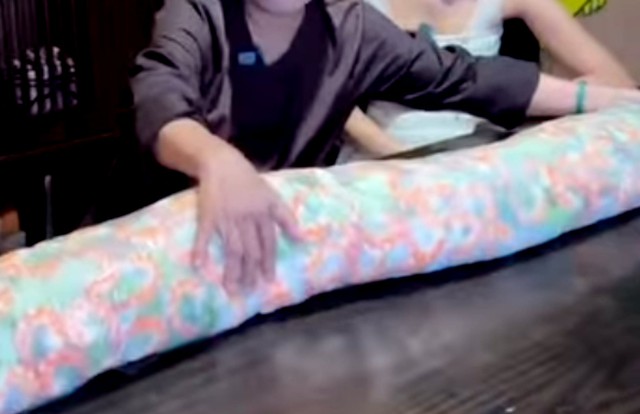
A giant 10kg spring roll-eating challenge has sparked controversy on social media in Vietnam. Photo: Screenshot
The challenge, offered by a restaurant in downtown Ho Chi Minh City, involved a spring roll around two meters long containing 3kg of pork, 3kg of shrimp, and 4kg of vegetables and rice vermicelli.
Under the rules, participants who could finish the entire roll within 30 minutes would win VND5 million (US$193).
Those who failed would have to pay VND3 million ($115) to cover the cost of ingredients.
The challenge has drawn mixed reactions, as the pressure to finish such a huge amount of food, combined with the financial penalty for failing, could push participants to ignore their body's limits.
Oversized food challenges are not new. However, the scale of this spring roll challenge has raised questions about whether it is realistically achievable from the outset.
Previously, some other eateries had also offered prizes to customers who could finish giant bowls of noodles within a set time.
In July, a bun bo (spicy beef noodles) shop in Ho Chi Minh City challenged customers to finish a bowl containing 1.2kg of toppings, 800g of rice vermicelli, 200g of vegetables, and one liter of broth within 30 minutes for a VND3 million prize.
Those who failed forfeited a VND500,000 ($19.3) deposit.
Participants who finished the bowl and consumed an additional 20g of chili sauce could win VND4 million ($154).
In 2022, a pho restaurant in the city offered VND1 million ($38) to anyone who could finish a giant bowl within 20 minutes.
The bowl contained 800g of rice noodles and 400g of toppings, equivalent to about four large special bowls. Those who failed had to pay VND290,000 ($11).
How dangerous can it be?
Nguyen Huy Hoang, a doctor with the Vietnam Society of Underwater and Hyperbaric Medicine, said forcing the body to take in large amounts of food in a short time can lead to dangerous medical emergencies.
Racing against the clock can cause participants to chew inadequately, swallow large pieces of food or continue eating despite nausea and abdominal pain.
Eating while talking, breathing rapidly or trying to swallow too quickly can also increase the risk of choking and food entering the airway.
If food blocks the airway, the person may be unable to speak, cough effectively or breathe, and may even lose consciousness.
Emergency services should be called, and appropriate first aid provided. The person should not be forced to drink water or swallow more food.
According to Dr. Hoang, the sensation of fullness is part of the body's mechanism for regulating food intake.
As the stomach expands, nerve signals help tell the brain when to slow down or stop eating.
"However, time pressure, prize money and the reluctance to lose money can lead participants to ignore these signals,” Dr. Hoang said.
“There is no single amount of food that is safe for everyone.
"Eating speed, the type of food and a person's health all affect the risk.”
Hoang added that consuming too much food in a short period can cause severe stomach distension, leading to abdominal pain, bloating, nausea or vomiting.
In severe cases, the distension can impair blood flow to the stomach wall, causing ischemia, tissue death, and even stomach perforation or rupture.
These complications are rare and do not occur in every case of overeating, he added.
Having eaten large amounts of food before without problems does not mean doing so again will be safe, the doctor also noted.
Another dangerous misconception is that participants can vomit and then continue the challenge.
Forceful, repeated vomiting can tear the lining where the esophagus meets the stomach, causing blood to appear in the vomit.
In more serious cases, the esophagus can rupture through its full thickness, allowing digestive fluids to leak into the chest cavity.
Severe chest pain after vomiting, difficulty breathing or rapid deterioration are symptoms that require emergency medical care.
Deliberately inducing vomiting to continue eating can increase the risk of injury.
Also, drinking excessive amounts of water in a short time is not a solution either. It can cause hyponatremia, with symptoms ranging from headache and nausea to confusion, seizures and, in severe cases, coma.
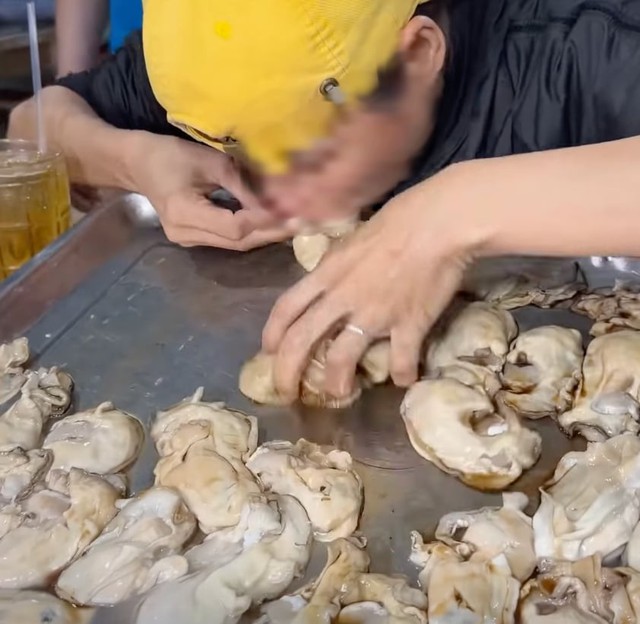
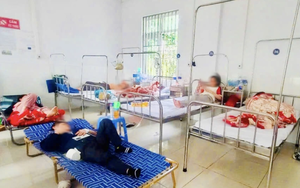
A social media eating challenge involves large quantities of food in Vietnam. Photo: Screenshot
Don't turn eating into a dangerous game
Dr. Hoang cautioned against exaggerating the risks by claiming that everyone who takes part in eating challenges will suffer stomach rupture or sudden death.
However, the risks of choking, acute gastric dilatation, vomiting-related injuries, and electrolyte imbalances are sufficient reasons not to encourage people to force themselves to eat excessively.
Anyone who develops severe abdominal or chest pain, rapidly worsening abdominal distension, persistent vomiting, bloody vomit, difficulty breathing, fainting or confusion after overeating needs urgent medical assessment.
If the airway is blocked, emergency services must be called and first aid provided immediately.
Responsibility does not rest solely with participants. Restaurants, event hosts and people watching eating activities, should not encourage the participants to keep eating when they show signs of distress.
Any eating event should have someone trained in first aid and a plan for contacting emergency services.
Duong Lieu - Dong Nguyen / Tuoi Tre News