
Expert calls for balance of growth, heritage in Vietnam’s Mekong Delta
New expressways in southern Vietnam’s Mekong Delta are transforming travel and boosting economic growth, but they also raise concerns about preserving the region’s unique river-based culture and long-standing community connections, according to archaeologist Nguyen Thi Hau.
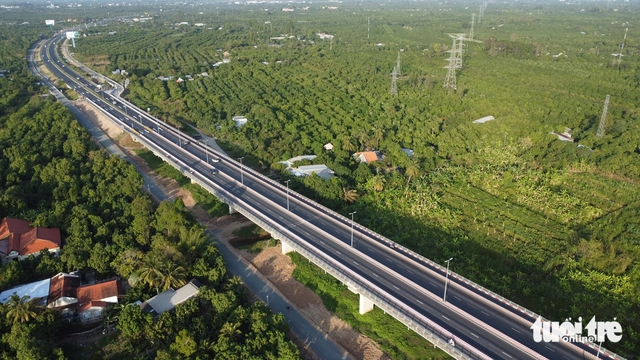
A drone view of the Cao Lanh-Lo Te Expressway in southern Vietnam’s Mekong Delta. Photo: Mau Truong / Tuoi Tre
Frequent trips to the Mekong Delta in recent years have become faster and more convenient thanks to newly-built expressways.
These projects are more than transportation upgrades, they are reshaping the cultural and social fabric of a region historically defined by waterways.
For generations, life in the delta has revolved around rivers.
Waterways have served not only as vital resources for agriculture but also as the backbone of trade, communication, and daily life.
Floating markets, riverside villages, traditional craft communities, and religious sites together form a distinctive cultural ecosystem where interactions are slow but deeply rooted in community ties.
The emergence of expressways has shortened distances between urban areas, facilitating faster movement of people and goods.
However, this shift also risks weakening traditional social bonds.
In the past, traveling by boat or along local roads meant moving through familiar rural landscapes and small towns, where people naturally connected with one another and developed a strong sense of belonging.
Today, elevated expresways and direct routes cut across fields and bypass villages, reducing opportunities for spontaneous encounters.
With modern bridges replacing ferries and river crossings, fewer travelers stop at small riverside markets or roadside eateries.
At the same time, logistics has evolved.
Goods are now being moved by truck on expressways in larger volumes and at much higher speeds.
Supermarkets and shopping malls are expanding, while small-scale river trading is gradually declining.
This transition not merely reflects economic progress but also signals the erosion of cultural spaces and memories tied to river life.
Despite these challenges, infrastructure improvements have undeniably brought significant benefits.
The upgraded transportation network has enhanced mobility, supported economic development, and opened new opportunities for the delta.
Faster connections to major economic hubs allow agricultural products to reach markets more efficiently, while also attracting investment and boosting tourism.
The key issue, however, lies not in development itself but in how infrastructure integrates with existing cultural and social structures.
Modernization should not come at the cost of losing regional identity.
Sustainable development in the Mekong Delta requires preserving and revitalizing river-based economic and cultural spaces while creating new models of tourism and commerce linked to local heritage.
A balanced approach combining modern road systems with traditional waterways could help maintain the region’s character.
Expressways should be seen as part of a broader cultural ecosystem rather than standalone economic projects.
Achieving this balance will require collaboration among planners, cultural experts, sociologists, and local communities.
Only then can the Mekong Delta continue to grow economically while preserving the cultural depth and identity that define Vietnam’s riverine heartland.
* This article was originally written in Vietnamese by Dr. Nguyen Thi Hau and translated by Tuoi Tre News.
Tuoi Tre News
Link nội dung: https://news.tuoitre.vn/expert-calls-for-balance-of-growth-heritage-in-vietnams-mekong-delta-103260407144759787.htm