
Feeding wild monkeys in Vietnam: When misplaced kindness causes lasting harm
Following the recent incident of a foreign visitor wrapping ripe bananas around his body to approach and feed wild monkeys on Son Tra Peninsula in Da Nang City, central Vietnam, wildlife an expert has warned that such actions, regardless of intent, can inflict serious and long-term damage on wild monkey populations.
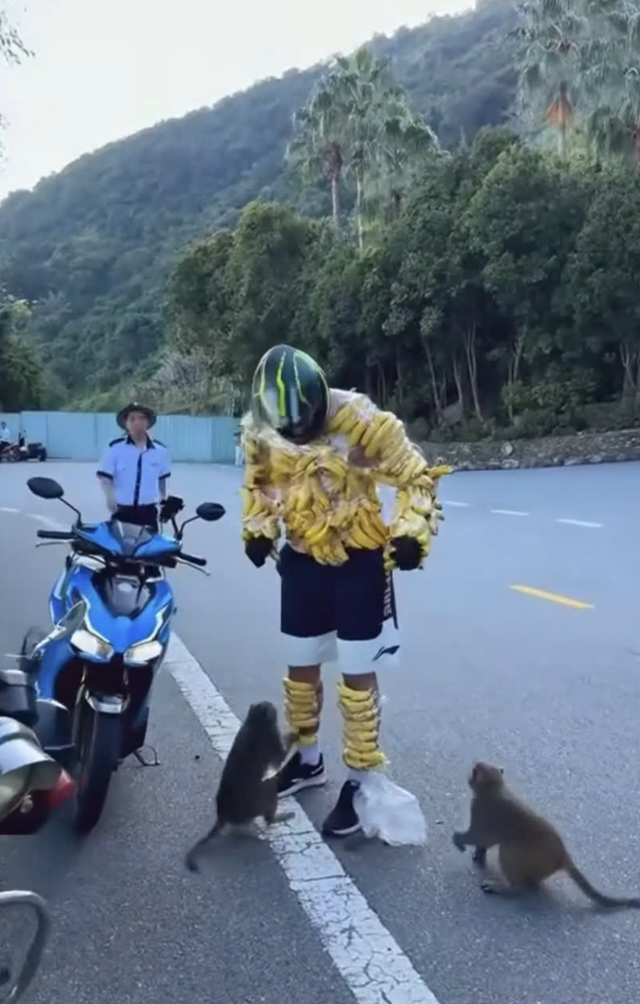
A still image shows a foreigner wrapped in ripe bananas approaching wild monkeys on Son Tra Peninsula in Da Nang City, central Vietnam.
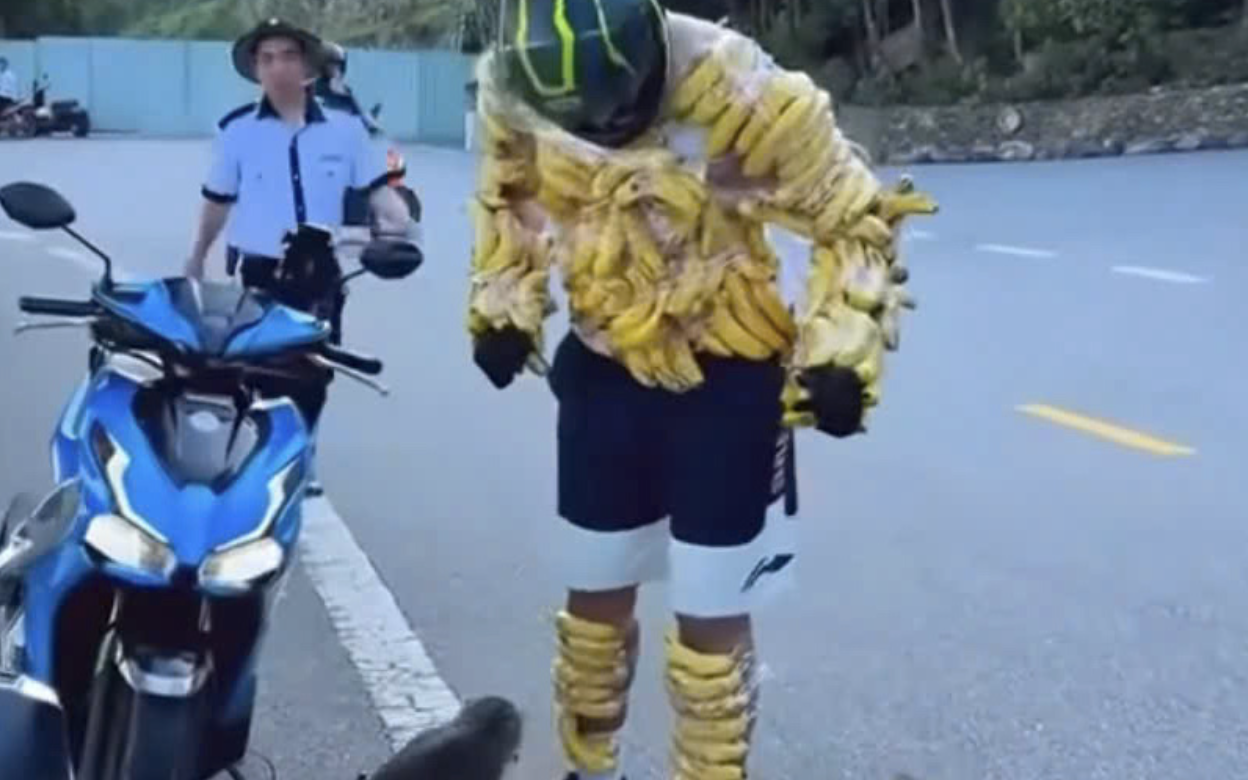
A few days ago, a video went viral, showing a foreign man strapping bunches of yellow bananas around his waist, arms, and legs before entering an area inhabited by wild monkeys on Son Tra Mountain.
The incident ignited an uproar about human behavior toward wildlife.
Tran Huu Vy, director of GreenViet, a biodiversity conservation center, said that feeding wild animals is fundamentally harmful.
Having spent many years involved in wildlife conservation and primate protection on Son Tra Mountain, Vy said he has repeatedly raised alarms about the persistent practice of feeding monkeys, yet the situation has shown little improvement.
Son Tra Peninsula is often described as a ‘precious gem’ of Da Nang, boasting rich biodiversity and offering rare, easy access to primary forest and wildlife.
However, an alarming reality has taken hold: tourists and local residents frequently feed wild monkeys, often out of affection or curiosity.
What may seem like a harmless or compassionate act is, in fact, undermining both wildlife and human safety.
“The greatest harm caused by feeding monkeys is the loss of their natural instincts, especially their ability to forage for food,” Vy explained.
In the wild, monkeys must search for leaves, fruits, and other natural food sources to survive.
When they become accustomed to receiving food from humans, this instinct erodes, replaced by a habit of waiting passively for handouts.
More troubling is that this behavioral change can be passed down through generations.
Baby monkeys no longer learn essential survival skills such as climbing and foraging from their parents.
Instead, they learn to rely on humans for food, becoming fully dependent and effectively domesticated, losing their status as wild animals.
Health consequences are also significant as many people feed monkeys processed or artificial foods intended for humans, which are far too rich for a monkey’s digestive system.
This can lead to obesity and other health problems.
“Overweight monkeys tend to become lethargic, timid, and less capable of withstanding harsh natural conditions,” Vy warned.
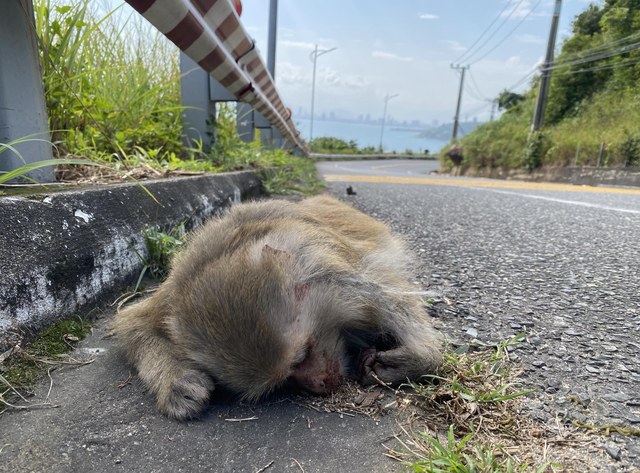
A monkey is injured in a traffic accident on the road leading to Son Tra Peninsula in Da Nang City, central Vietnam. Photo: Ngoc Truc
Close and frequent contact with humans has also led to escalating conflicts, according to Vy.
While visitors may initially enjoy watching monkeys take food, the animals can become aggressive when their expectations are not met, resulting in scratching, biting or snatching belongings.
Such incidents damage the peaceful nature-based experience that Son Tra Peninsula is known for.
“We have recorded cases of monkeys descending into residential areas at the foot of the mountain, stealing fruit from household altars and food from inside homes,” Vy said.
Additionally, monkeys' waiting for food along roads poses serious traffic hazards.
There have been incidents in which monkeys were injured or killed by vehicles, or accidents occurred when drivers tried to avoid them.
Vy stressed that addressing the problem requires more than awareness campaigns.
He called for firm measures and clear legal sanctions, including administrative fines for feeding monkeys on Son Tra Peninsula, alongside warning signs and consistent enforcement.
He also emphasized the need to strictly control human food sources.
Businesses operating on the peninsula should be required to prevent monkeys from accessing food, while worship sites and shrines must be managed to stop monkeys from taking offerings.
“The ultimate goal is to ensure monkeys no longer associate humans with food and return to the forest and reclaim their natural behaviors,” he added.
Tieu Bac - Truong Trung / Tuoi Tre News
Link nội dung: https://news.tuoitre.vn/feeding-wild-monkeys-in-vietnam-when-misplaced-kindness-causes-lasting-harm-103260121131347991.htm