
Female consuls general explore Vietnamese culture in Ho Chi Minh City
Female consuls general and diplomatic staff in Ho Chi Minh City have taken part in a cultural program featuring a museum tour, water puppetry, and traditional cuisine, in an initiative aimed at promoting Vietnam’s cultural values and strengthening ties with the international community.
On Tuesday, the Ho Chi Minh City Department of Foreign Affairs hosted a cultural program for female consuls general, wives of consuls general, and female staff working at foreign representative missions in the city.
The event, held at the Ho Chi Minh City History Museum in Saigon Ward, was part of the city's activities marking International Women's Day (March 8), while also promoting Vietnamese culture through traditional art forms.
As part of the program, members of the consular corps toured the museum, gaining insights into Vietnam's historical development through its exhibitions and valuable artifacts.
Beyond presenting Vietnam's past, the exhibition space also highlighted cultural intersections between Vietnam and other countries in the region.
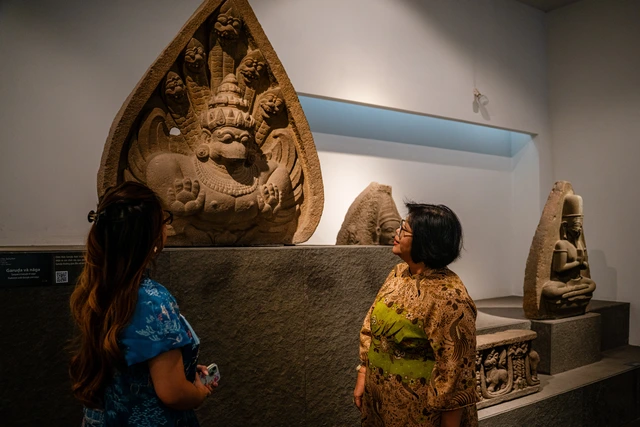
Indonesian Consul General Carolina Tinangon (R) is particularly surprised to see a Garuda statue at the Ho Chi Minh City History Museum. Photo: Ngoc Duc / Tuoi Tre
At the Champa cultural display, Indonesian Consul General in Ho Chi Minh City Carolina Tinangon was particularly amazed upon encountering a statue of the Garuda, the national emblem of her home country.
The statue was excavated by a French archeologist from the remnants of the Thap Lon (Grand Tower) heritage site in Tra Kieu of Quang Nam, the former capital of the Champa Kingdom, in the early 20th century.
Quang Nam was merged into Da Nang City following an administrative restructuring in July 2025.
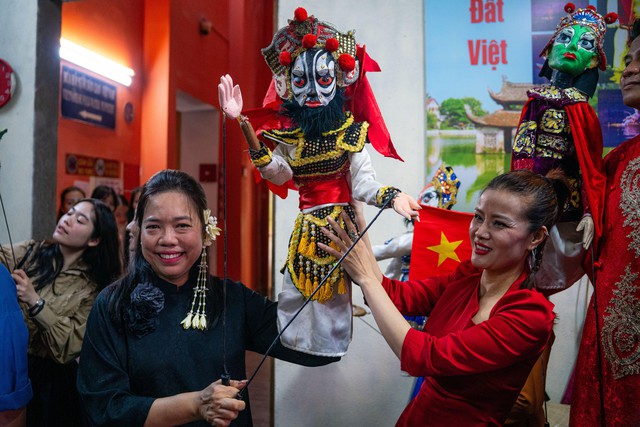
Consul General of Thailand in Ho Chi Minh City Wiraka Moodhitaporn (L) gets her hands-on experience with a Vietnamese traditional puppet. Photo: Ngoc Duc / Tuoi Tre
Tinangon told Tuoi Tre (Youth) newspaper, "I enjoy the history museum because I got to learn the history from the old times of Vietnam.
"I was surprised to see a Garuda statue here, and we are very honored by the fact that there is a Garuda statue in this museum.
"I think countries within Southeast Asia share many similarities in terms of culture and history. For instance, the tradition of venerating statues is something that also exists within our national institutions. Culturally, we also share common practices such as similar rural livelihoods."
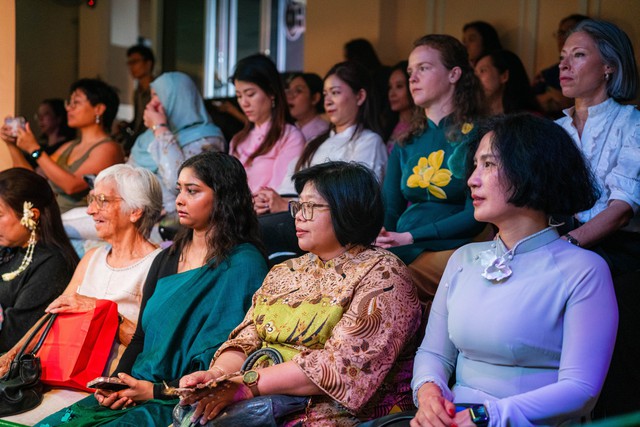
Members of the consular corps take part in the cultural program in Ho Chi Minh City. Photo: Ngoc Duc / Tuoi Tre
Upon observing the deep-rooted influence of Buddhism on Vietnamese culture from an early age, Consul General of Thailand in Ho Chi Minh City, Wiraka Moodhitaporn, reflected on the cultural similarities between the two countries.
Speaking to Tuoi Tre News, Wiraka said, “Our countries are indeed very close, particularly in terms of culture.
"While the majority of Thai people practice Theravada Buddhism and most Vietnamese follow Mahayana Buddhism, I believe we can still appreciate and celebrate our shared Buddhist heritage.
"There are also similarities in our cuisine and music that further connect us.
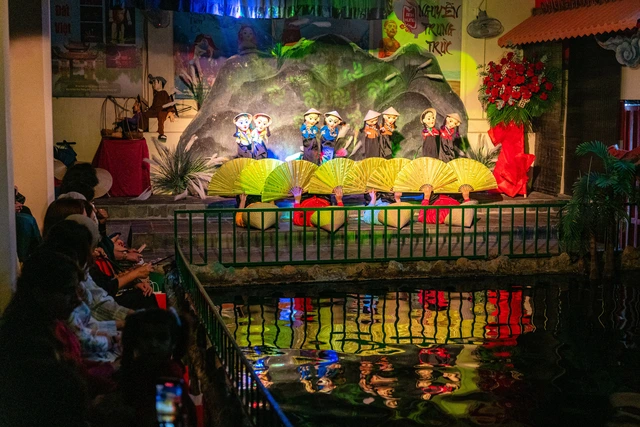
Members of the consular corps watch a water puppetry performance. Photo: Ngoc Duc / Tuoi Tre
"This is what I find truly beautiful about our cultures and the way culture, religion, food, and music bring people together. I believe both of our countries are strongly committed to fostering people-to-people connections.”
The performance opened with 'Harvest Season,' which offered snapshots of rural life through scenes of buffalo herding and singing, reflecting the optimism and diligence of Vietnamese farmers.
This was followed by 'The Essence of Vietnam,' a piece that expanded the cultural narrative with mythical imagery of dragons, lions, and phoenixes, combined with lively music and folk stories, portraying the richness of Vietnamese spiritual life.
Following the performance, Wiraka added that she was particularly intrigued by the similarities between Vietnamese and Thai puppetry.
“In Thailand, there is a form of classical puppetry in which performers manipulate the puppets while dancing alongside them. It is also very well known, and I very much enjoyed seeing the different styles of puppetry here,” she noted.
Meanwhile, Tinangon emphasized that Southeast Asian countries share many cultural and historical commonalities, such as rural lifestyles.
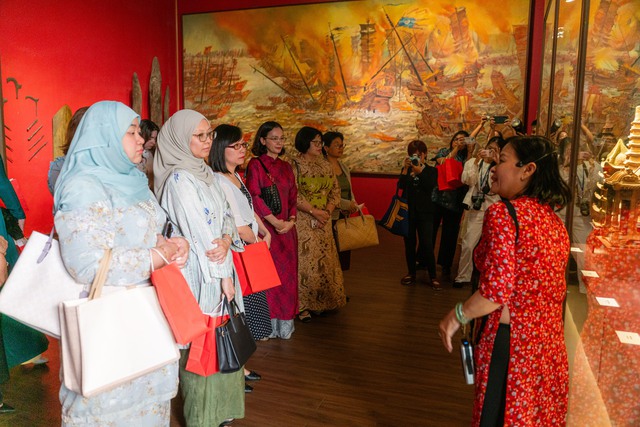
Members of the consular corps listen to a presentation on Vietnamese history at the History Museum in Ho Chi Minh City. Photo: Ngoc Duc / Tuoi Tre
"There is also the duck dance, which is deeply rooted in rural life and truly captures the spirit of people living in the countryside. It's very interesting to see," she said.
Speaking at the event, deputy director of Ho Chi Minh City Department of Foreign Affairs Nguyen Minh Que expressed his appreciation for the companionship of female consuls general, their spouses, and female staff at foreign representative missions.
He expressed hope that the experiences from the program would foster a sense of closeness and affection toward Vietnam, its people, and Ho Chi Minh City.
Ngoc Duc - Xuan Thao / Tuoi Tre News
Link nội dung: https://news.tuoitre.vn/female-consuls-general-explore-vietnamese-culture-in-ho-chi-minh-city-10326032512525771.htm