
FIFA ASEAN Cup rights: Is $3M worth the price?
The broadcasting landscape in Southeast Asia is facing a high-stakes stand-off. FIFA’s reported asking price of US$3 million for the broadcasting rights to the 2026 FIFA ASEAN Cup has caught local networks off guard.
In nations like Vietnam and Thailand, domestic broadcasters have yet to close a deal, sparking concerns that fans might face a television blackout for the tournament scheduled to run from September 24 to October 3.
Speaking to Tuoi Tre (Youth) online newspaper, a sports broadcasting expert called the $3 million price tag for a tournament featuring national teams ranked outside the world's top 90 is excessive.
However, an examination of commercial valuation and regional football dynamics reveals why FIFA set this figure, and why the competition itself represents a major structural shift in Southeast Asian sports.
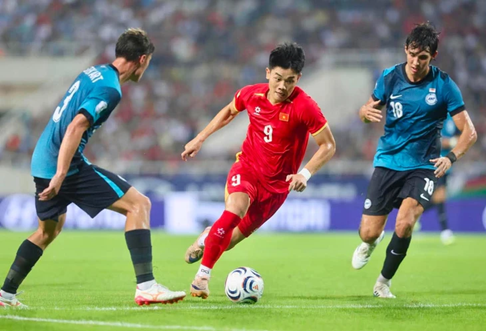
FIFA ASEAN Cup 2026 broadcast rights are reportedly valued at $3 million. Photo: Nguyen Khanh / Tuoi Tre
Understanding the tournament: FIFA ASEAN Cup vs. AFF Championship
To understand the valuation, it is essential to distinguish the newly-created FIFA ASEAN Cup from the traditional AFF Championship, historically known as the Tiger Cup or Suzuki Cup.
While both tournaments center on Southeast Asian nations, the traditional AFF Championship is organized by the ASEAN Football Federation (AFF).
Because it often falls outside official FIFA international match windows, European and Asian clubs are under no obligation to release players, frequently leaving national teams to compete with secondary squads.
In contrast, the inaugural 2026 FIFA ASEAN Cup is directly established, managed, and branded by FIFA. Crucially, the tournament takes place during the official FIFA Days window, legally obligating clubs worldwide to release players.
This ensures that countries can field their full-strength 'A' squads. Furthermore, matches directly count toward official FIFA World Rankings, giving the competition unprecedented sporting legitimacy.
Quality vs. engagement
Despite the prestige of FIFA's backing, local networks see a clear gap between the price tag and market realism.
On one hand, the competitive level of participating national teams remains outside the global top 90, lagging behind the technical standards of marquee international events like the UEFA Euro, Copa América, or AFC Asian Cup.

The Vietnamese national team is set to compete in the top division of the FIFA ASEAN Cup 2026. Photo: Anh Khoa
Additionally, the tournament features only 20 total matches across two divisions, with 13 matches in Division 1 and seven in Division 2. At $3 million, networks would pay approximately $150,000 per match, a higher per-match rate than what was paid in certain regional markets for World Cup fixtures.
However, broadcast experts point out that sports television value in Southeast Asia is governed by audience engagement, not FIFA rank numbers alone.
To local audiences, a fiercely contested regional derby -- such as Vietnam vs. Thailand or Indonesia vs. Malaysia -- draws far higher domestic viewership and advertising interest than neutral group-stage games between even world-class foreign powerhouses.
Broadcasters pay for rating points and localized social media dominance, both of which regional rivalries consistently deliver.
Behind the price tag
FIFA’s commercial valuation relies on unique strategic and demographic advantages. Beyond Southeast Asia’s population of nearly 700 million, the 2026 tournament structure incorporates India, expanding the potential footprint to over two billion people, roughly one-third of the global population.
To support the event, FIFA has allocated a total prize pool exceeding $4 million, including a $125,000 baseline participation fee per team, a $1,000,000 top prize for Division 1, and $300,000 for Division 2, demonstrating heavy organizational investment.
Furthermore, centralized host locations -- Indonesia for Division 1 and Hong Kong for Division 2 -- are designed to maintain broadcast production standards and simplify logistics.
The competition features a two-tiered structure aimed at maintaining competitive balance.
In Division 1, hosted in Indonesia, Group A features Indonesia, India, Malaysia, and Singapore, while Group B consists of Vietnam, Thailand, the Philippines, and Pakistan.
In Division 2, hosted in Hong Kong, Group A includes Hong Kong, Myanmar, and Brunei, while Group B comprises Cambodia, Laos, and Timor-Leste.
Despite the ambitious set-up, the inaugural roll-out has faced organizational confusion and public debate. Introducing a new FIFA-led tournament alongside existing regional schedules has created friction among federations, club managers, and media buyers who are trying to gauge the commercial return on investment.
Media rights experts suggest that the $3 million figure functions primarily as an initial benchmark or opening anchor price.
Historically, FIFA sets elevated baseline targets to test buyer sentiment across different territories before opening negotiations to reflect realistic advertising recovery. As the late September kick-off approaches, broadcasters in Vietnam, Thailand, and neighboring countries are continuing negotiations.
While current numbers present a formidable hurdle, history suggests a commercial compromise will likely be reached to ensure fans across the region can watch their national teams compete on FIFA's newest official stage.
Parallel stand-off: The 2026 FIFA World Cup
This high-stakes tug-of-war over the ASEAN Cup mirrors a broader, region-wide stand-off involving FIFA’s crown jewel: the 2026 FIFA World Cup broadcast rights.
Across Southeast Asia, negotiations for the 2026 World Cup hit similar impasses as FIFA demanded record-high fee packages, driving local television networks and private media syndicates into prolonged bargaining tactics.
Broadcasters in Thailand, Vietnam, and Indonesia have increasingly formed joint bidding consortiums or simply held off until the last possible moment to force price concessions.
In previous World Cup cycles, governments and private conglomerates stepped in at the eleventh hour to subsidize inflated broadcast costs.
However, with shifting advertising models, rising inflation, and tighter corporate budgets, regional networks are signaling that they will no longer accept FIFA's sky-high baseline valuations without significant discounts.
Illustrating the region's intense demand for FIFA content, 10 ASEAN neighbors secured 2026 World Cup broadcasting rights ahead of time, whereas Thailand remained the sole holdout until its company, Jasmine International (JAS), managed to land the World Cup broadcast rights at the last minute following prolonged negotiations.
Hoai Du - Hai Minh / Tuoi Tre News
Link nội dung: https://news.tuoitre.vn/fifa-asean-cup-rights-is-3m-worth-the-price-103260813092923746.htm