
Foreign tourists visit villages, experience farmwork in Vietnam's Central Highlands
In the first days of this lunar year, foreign visitors have been heading to ancient villages, climbing onto rumbling tractors bound for the fields, and cooking simple meals over open fires beneath towering forest canopies in Vietnam’s Central Highlands region.
Ako Dhong Village, located in Buon Ma Thuot Ward in Dak Lak Province, welcomed a steady stream of travelers, with many of them from overseas, on the sixth day of this first lunar month and the final day of the nine-day Tet holiday, which ran from February 14 to February 22.
Long admired for its strong communal bonds and carefully preserved cultural space, the village has become a compelling destination for those seeking an unvarnished start to the new year.
Clusters of traditional Ede ethnic stilt houses stretch beneath the shade of large trees.
Behind them stand modern brick homes, yet the characteristic courtyards, wooden fences, and winding footpaths remain intact, preserving the rhythm and layout of village life.
Early in the year, the atmosphere is unhurried, with sunlight, a cool highland breeze, and the faint aroma of coffee.
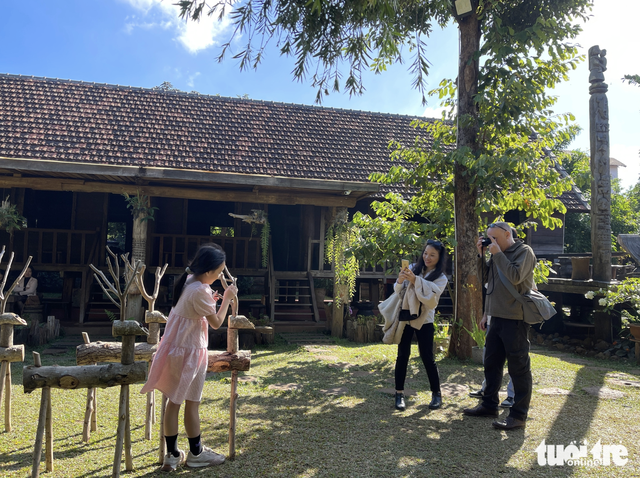
Tourists take photos in Ako Dhong Village, Buon Ma Thuot Ward, Dak Lak Province, located Vietnam’s Central Highlands. Photo: Tam An / Tuoi Tre
Visitors are excited to savor the bitter eggplant dish and bamboo-tube rice dipped in chili salt along Tran Nhat Duat Street, which runs through the heart of the village, as well as sip ruou can (a type of traditional wine of some ethnic groups in Vietnam, consumed directly from the jugs by long tubes) inside stilt houses.
Some families open their yards to create traditional brocade weaving, coffee roasting, and grinding spaces, inviting guests to join in.
Riccardo, a traveler from Italy, chose to ring in the new year in Vietnam in search of something unfamiliar.
What struck him most was not festivity but tranquility and the sincerity of the villagers.
Village elder Y Nuer Nie said that at the beginning of the year, many visitors came to learn about Ede ethnic life, taste traditional dishes, and explore stilt house architecture.
They were drawn to the greenery and the chance to sit and drink coffee at leisure, he said.
The influx has made the village livelier, but daily routines remain largely unchanged.
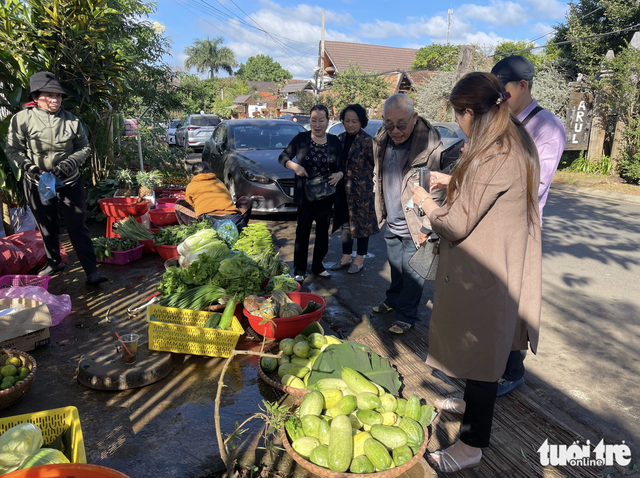
Small stalls lining the ancient village, offering homegrown specialties, attract numerous visitors. Photo: Tam An
Riding tractors to the fields
Beyond sightseeing, many foreign visitors have opted to accompany villagers to their fields to participate in farmwork.
Under the early dry-season sun, tractors carry passengers from the village to hillside plots.
The roar of engines mingles with bursts of laughter, forming a scene that is at once rustic and vibrant.
The ride is far from luxurious, but it offers something more valuable: a glimpse of daily life.
Visitors pick cassava leaves, bitter eggplants and wild greens, light fires and cook meals right in the fields.
In Tuor Village, Hoa Phu Commune, families have begun offering homestays in traditional stilt houses.
Hosts like H’Belly have learnt English by themselves to welcome foreigners.
She explained that community-driven tourism is a collective effort in which the entire village participates and benefits while safeguarding its heritage.
Each household contributes something such as free-range chicken, forest vegetables, coffee, and brocade textiles to create a fuller experience.
“Integration does not mean changing who we are. It means preserving our values better,” she said.
French traveler Mercler Olivier described the tractor ride as a highlight of his trip to Vietnam.
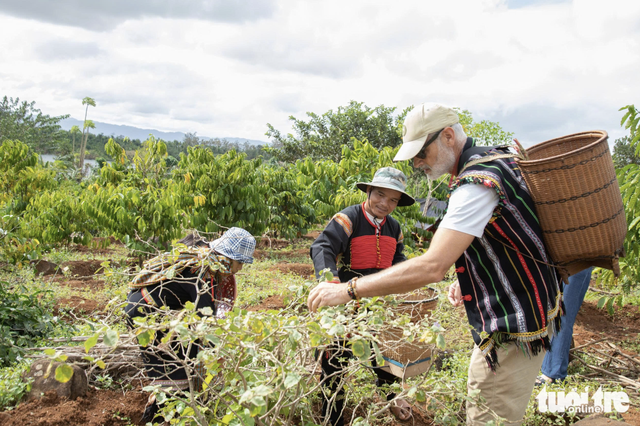
International visitors pick bitter eggplant and male papaya flowers, pull up lemongrass, and gather wild greens to prepare a meal. Photo: Tam An
Vo Kim, a Vietnamese-American visitor, said she was captivated by the authenticity and close-knit spirit of the community.
Another French guest, Mercler Claire, expressed admiration for the prominent role Ede women play in both family life and production.
Tour guide Y Tien Nie Kdam, who has led tours for years, observed that villagers have grown more confident over time.
The essential balance lies in ensuring that visitors understand and respect local culture while residents continue living at their natural pace, he said.
In Chuah Village, H’Dor Enuol’s family, four generations under one stilt roof, still weaves brocade and maintains long-standing customs.
When guests arrive, all her family members join in to offer visitors a range of tourism experiences.
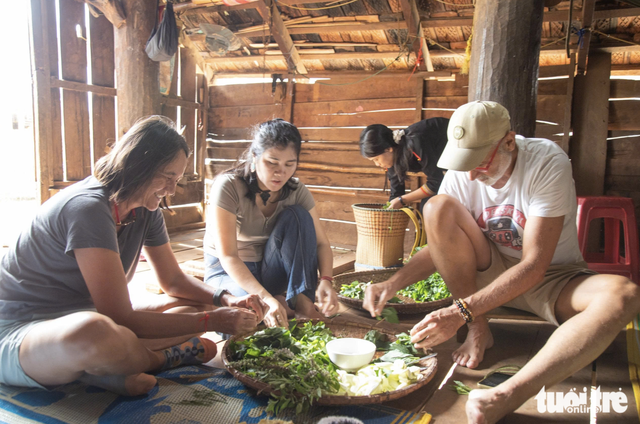
French tourists experience the daily life of villagers in Dak Lak Province, Vietnam. Photo: Tam An
Tran Hong Tien, director of the Dak Lak Department of Culture, Sports, and Tourism, said that community-based tourism offers a suitable path forward, generating livelihoods while affirming residents’ central role in the integration process.
From tractor rides to hillside fields and meals of bitter eggplant and cassava leaves to the echo of gongs in stilt houses at night, Dak Lak is carving out its own direction.
Villages carry their Central Highlands identity with pride, connecting with travelers through values that are simple yet enduring.
The province has more than 200,000 hectares of Robusta coffee.
The harvest season, from November to February, draws visitors eager to pick, roast, and grind beans on site.
Many farm owners around Buon Ma Thuot have launched garden-based tourism models, reporting income increases of 10-15 percent, particularly during the post-Tet flowering season and the year-end harvest.
Tieu Bac - Tam An / Tuoi Tre News
Link nội dung: https://news.tuoitre.vn/foreign-tourists-visit-villages-experience-farmwork-in-vietnams-central-highlands-103260222142113664.htm