
From Russian vodka to Vietnamese kombucha: Ivan Fomenko’s journey to building life in Vietnam
Without a background in business or formal culinary training, Russian Ivan Fomenko came to kombucha largely by chance, sparked by an idea from his ex-girlfriend and a simple motivation: finding a way to earn a living in Vietnam.
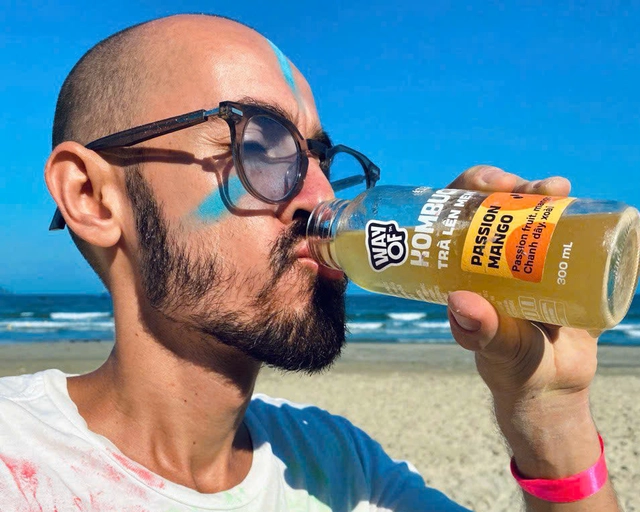
Ivan Fomenko, a Russian kombucha enthusiast living in Vietnam. Photo: Supplied
Eight years on, SCOBY cultures – the essential starter used to ferment sweetened tea into kombucha – nourished with familiar Vietnamese fruits and vegetables have opened up a path to building a livelihood for him in the Southeast Asian country.
In the early days, even selling 30 bottles of kombucha was enough to make him genuinely happy.
Today, Fomenko runs a team of eight members and produces around 1,500 bottles of kombucha each week.
Kombucha is a lightly carbonated fermented tea made from tea, sugar, and a SCOBY culture, with a sweet-and-sour taste.
In recent years, it has become increasingly popular among young consumers, thanks to its reputation as a probiotic-rich drink that supports digestion and serves as a healthier alternative to soft drinks.
Things started in rented apartment
Fomenko arrived in Nha Trang, a tourist destination on Vietnam's south-central coast, in late 2017, having previously visited the country several times as a traveler.
Accustomed to living in different places but running out of money at the time, he needed to find work to support himself, but without success.
His former girlfriend then suggested exploring a health-oriented food direction, with Fomenko taking responsibility for developing kombucha.
At that point, he did not know how to make kombucha. His only memory of it was as an unpleasant drink he had tried once as a child.
But with the pressure of making a living, he decided to give it another chance and found that it was actually “quite drinkable.”
He began watching online tutorials and soon realized that the basic principle was similar to how his father used to make vodka at home.
The Russian then started making kombucha together with his older brother, Udjin.
Their first batches were shared with friends for feedback, and only after refining the taste did they officially launch their product.
“More and more people heard about us and started recommending us to others. About 90 percent of our customers are foreigners living in Vietnam,” Fomenko said.
“Everything started simply because I needed money to live, and kombucha gave me that opportunity.
“Shortly later I grew a big love for this drink and brewing process that I keep up to these days.”
In January 2018, he founded the kombucha brand WayOf. The first batches were brewed in the small kitchen of a rented apartment, producing only around 30 bottles a week.
The man brought them to a small grocery store in Nha Trang and asked to place a few bottles in the refrigerator on a trial basis.
When they sold out and he received the money, the feeling was “like a miracle” for someone with no business experience at all.
Pennywort kombucha with Vietnamese identity
Fomenko’s kombucha is made from ingredients bought at local markets, featuring familiar Vietnamese fruits and vegetables such as turmeric, pumpkin, ginger, lemon, passion fruit, mango, pineapple, chili, carrot, ginger, beetroot, and, most notably, pennywort kombucha, a flavor deeply associated with Vietnam.
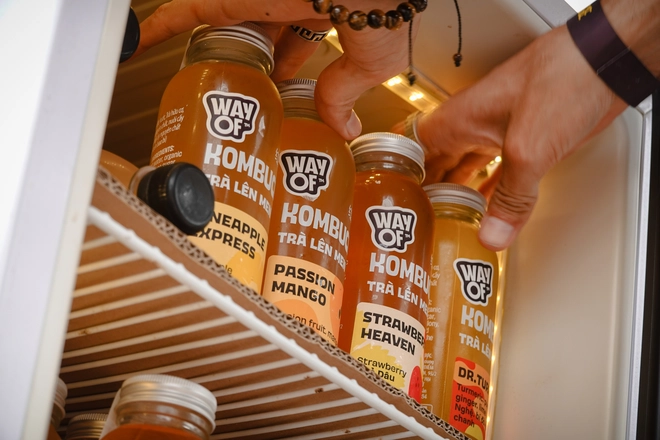
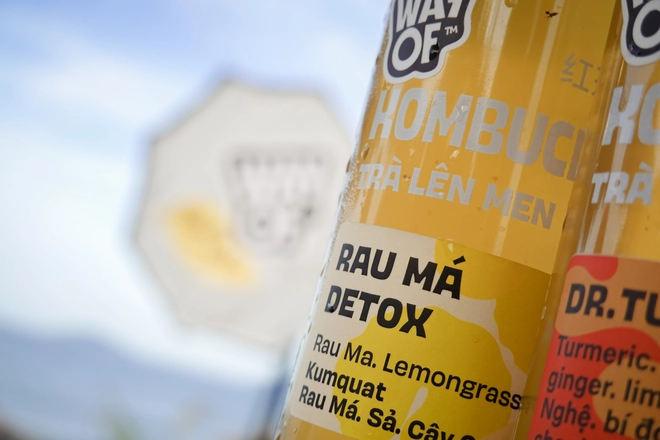
Ivan Fomenko’s kombucha products feature flavors made from familiar Vietnamese fruits and vegetables. Photo: Supplied
“I learned that pennywort is a drink everyone in Vietnam has, like sugarcane juice, available everywhere. Since I was making kombucha in Vietnam, why not create something truly Vietnamese?" he recalled.
“I wanted to make a product that people could immediately recognize as Vietnamese."
He added ingredients such as lemongrass and calamansi to balance the flavor, making it easier to drink while keeping the distinct taste of pennywort.
As a result, pennywort kombucha feels both familiar and new: unfamiliar to foreigners, familiar to Vietnamese, yet presented in a completely different form.
It also reflects WayOf’s philosophy of using local ingredients, fresh fruit bought directly from markets, juice made on site, and no artificial flavorings.
In the warm climate of central Vietnam, kombucha ferments naturally almost year-round, becoming a practical advantage.
To this day, WayOf maintains a handcrafted production approach.
From just 30 bottles a week, his output has grown to around 1,500 bottles, now available in many shops in Hanoi, Da Nang, Hoi An, Nha Trang, and Ho Chi Minh City, without relying on modern machinery.
Fomenko accepts a slower pace to maintain consistent flavor.
The COVID-19 pandemic once pushed WayOf into a difficult period, as most of its customers were foreigners.
It was also during this time that Fomenko began to focus on the domestic market and developed an additional line of nut butters under the Ms. Hội An and WayOf brands, using peanuts, sesame seeds, cashews, and macadamia nuts sourced from different regions of Vietnam.
For him, using Vietnamese ingredients is not just about cost or supply. It is also a way to ensure that the economic value created by each of his products stays in Vietnam, returning to farmers and local suppliers, a choice that gives him a sense of responsibility and pride.
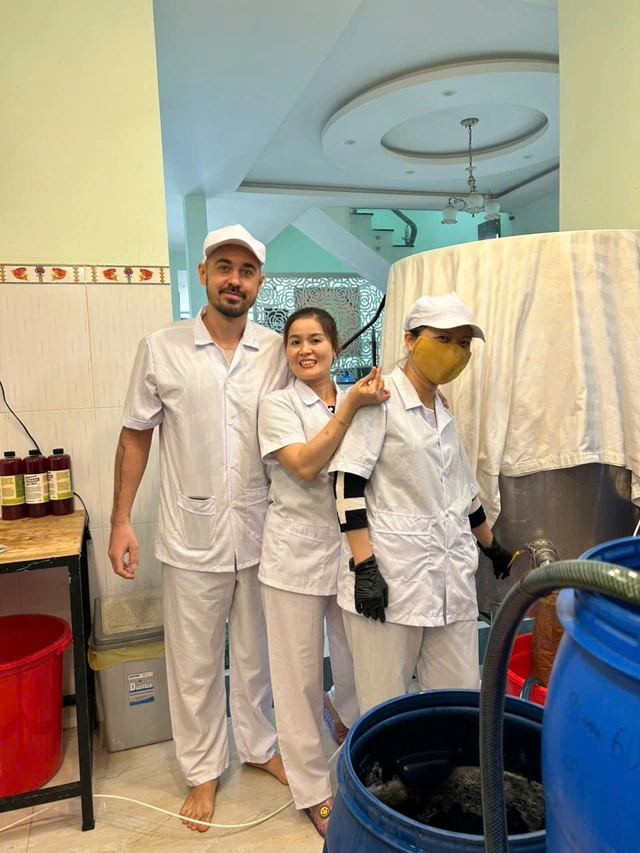
Ivan Fomenko and his team brewing kombucha together. Photo: Supplied
Today, with eight team members, Fomenko sees this as a significant commitment that makes it difficult for him to leave.
“It is no longer just about business. It is a responsibility to the people who are working with me, my customers, and what we are creating,” he said.
'More Vietnamese than Russian'
Fomenko said he fell in love with Vietnam from his first visit in 2014, though cultural differences initially made adaptation difficult.
It was not until 2017 that his life in Vietnam truly began.
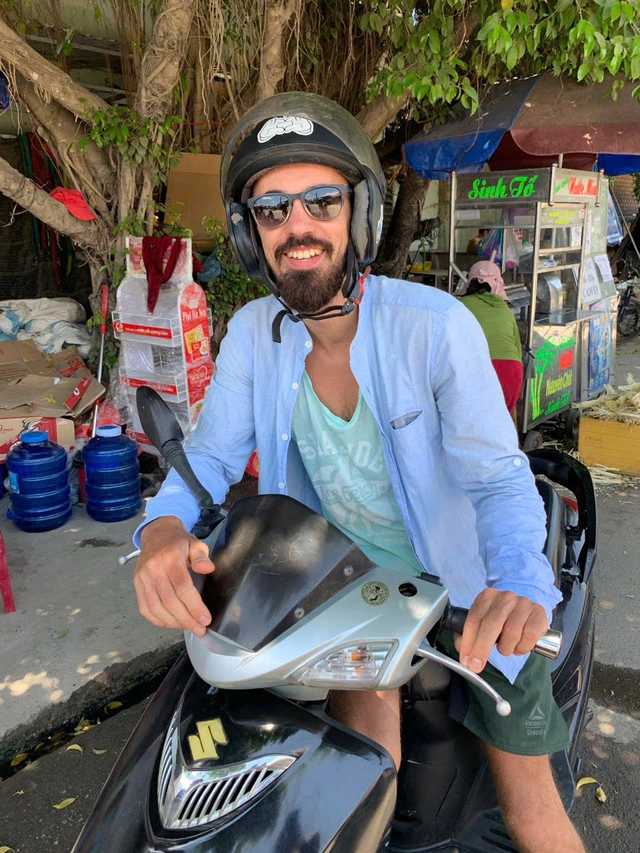
Ivan Fomenko during his time in Nha Trang. Photo: Supplied
From Nha Trang, he moved to Hoi An in 2019, just before the COVID-19 pandemic.
The decision was not driven by market calculations. Instead, he deliberately avoided large cities such as Hanoi or Ho Chi Minh City.
"I did not leave my country just to live in a big city. I have always wanted to live near the sea," he said.
Hoi An, with its nearby beach, slower pace of life and welcoming community, became the place he always wants to return to whenever he travels elsewhere.
After nearly eight years in Vietnam, Fomenko says he now feels “more Vietnamese than Russian.”
He has a Vietnamese girlfriend, a job, a community, and a rhythm of life he describes as his “dream life.”
He is no longer startled by the uncertainty of his early days of making ends meet. Vietnam has now become a place where he chooses to stay, put down roots, and continue pursuing what he finds meaningful.
Dong Nguyen / Tuoi Tre News