
German hospitals, nursing homes seek Vietnamese nurses amid staff shortages
Germany's aging population and rising demand for elderly care are deepening a nursing staff shortage, prompting hospitals and nursing homes to recruit nurses from Vietnam, according to Nguyen Tuan Nam, chairman of the Vietnam-Germany Education and Career Association (VGECA).
Nam made the remarks at a meeting in Hanoi on Wednesday, organized by the VGECA under the Vietnam-Germany Friendship Association, to discuss training programs and employment opportunities for Vietnamese nursing staff.
Germany struggles to meet demand for nursing staff
Nam said up to six million people in Germany could need nursing care in the coming years, while efforts to train domestic workers over the past five to 10 years had failed to keep pace with demand.
The shortfall has made foreign recruitment increasingly necessary, with nursing among the occupations facing the greatest demand.
An estimated 7,000-10,000 Vietnamese workers and trainees travel to Germany each year, with nursing staff accounting for around 35-40 percent of the total, according to Nam.
Most Vietnamese nurses work in elderly care, while opportunities are also available at hospitals, depending on their qualifications and recruitment needs.
Nurses with qualifications recognized in Germany can earn around 3,000 euros (US$3,371) per month before tax.
Salaries for some positions in certain states can reach approximately 4,000 euros ($4,494) after one year of work, depending on experience, Nam said.
By comparison, starting salaries for nurses in Vietnam range from around VND8 million ($311) to VND10 million ($389) per month.
Vietnamese nurses highly valued, but face international competition
Vietnamese applicants face competition from workers from India, the Philippines, South America and Eastern Europe.
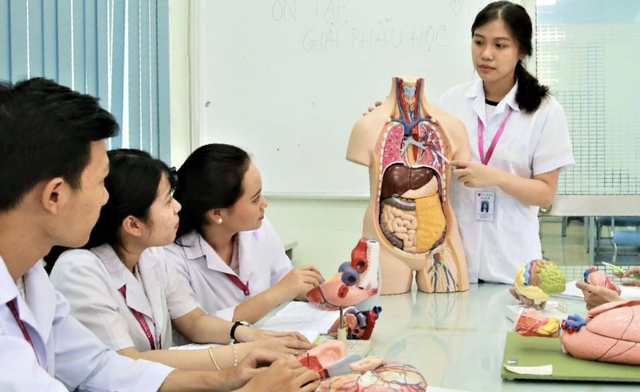
A training session for Vietnamese nursing staff. Photo: Supplied
Nam said Vietnamese workers have several advantages, including diligence, dexterity and the ability to learn quickly.
However, the Philippines has a longer history of sending nurses overseas, with relatively standardized training programs and workers known for their foreign-language skills.
Vietnam should learn from these strengths to improve the quality of its nursing workforce, he said.
Vietnamese candidates can pursue two main pathways to become nurses in Germany.
High school graduates can go to Germany for vocational training from scratch, a program that takes approximately three years.
Those with nursing degrees from colleges or universities in Vietnam can instead enroll in conversion programs to fill knowledge gaps and meet the requirements for recognition of their qualifications.
These programs generally last three to nine months, depending on individual circumstances.
Addressing concerns that sending nurses abroad could worsen staff shortages at Vietnamese hospitals, Nam said workers had the right to make their own choices in the labor market.
A representative of Oberlinhaus, a German organization active in social services, healthcare, education and vocational training, said Vietnamese trainees were highly regarded for their diligence, ability to learn quickly and strong motivation to study.
The representative added that career opportunities in Germany extend beyond graduation, with Vietnamese workers able to further develop their professional skills and advance to management or executive positions at nursing care companies.

Vinh Tho - Duong Lieu / Tuoi Tre News
Link nội dung: https://news.tuoitre.vn/german-hospitals-nursing-homes-seek-vietnamese-nurses-amid-staff-shortages-103261104192012325.htm