
Hanbok photoshoot at Vietnam’s Hue Imperial Citadel sparks controversy
A video showing a model dressed in a hanbok, the traditional Korean costume, posing for photographs in front of the iconic Ngo Mon Gate at the Hue Imperial Citadel in central Vietnam has sparked controversy on social media, drawing mixed reactions toward a local traditional costume rental shop.
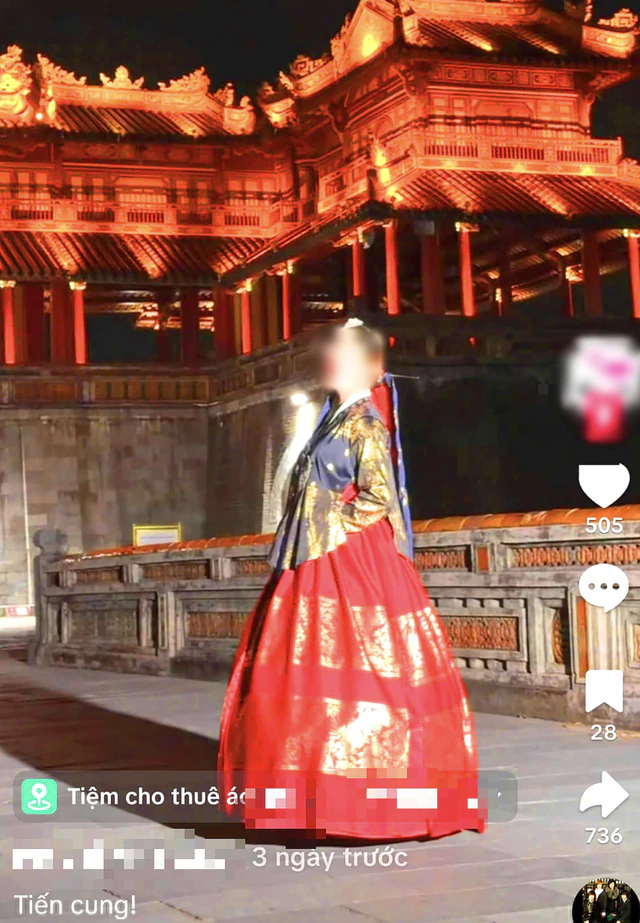
A screenshot from a video shows a clothing rental shop in Hue City, central Vietnam, facing backlash after posting the video of a model wearing a hanbok, Korea’s traditional attire, posing in front of the Ngo Mon Gate historic site.
While some people questioned the appropriateness of wearing foreign traditional attire at a Vietnamese heritage site, others argued that the photoshoot was acceptable.
Hanbok photoshoot divides public opinion
The controversy began after a post on social media platform Threads highlighted a video shared by a Hue-based shop renting ao dai (traditional Vietnamese long gown) and traditional costumes.
The clip featured a model wearing a Korean hanbok while posing in the area around Ngo Mon Gate, the largest gate of the Imperial Citadel in Hue City.
The social media user, who posted it, argued that using a foreign traditional costume to create promotional content at a heritage site was inappropriate and potentially offensive.
The post attracted more than 2,500 likes and nearly 300 comments.
Many users said businesses offering ao dai and traditional costumes should carefully consider whether their outfits suit the cultural and historical significance of locations where they conduct photoshoots.
Some argued that shops operating in Hue should prioritize promoting Vietnamese ao dai and traditional attire when photographing models at the Imperial Citadel, rather than featuring costumes from other countries.
They said a hanbok is more than simply an outfit for photographs, but it carries its own cultural significance.
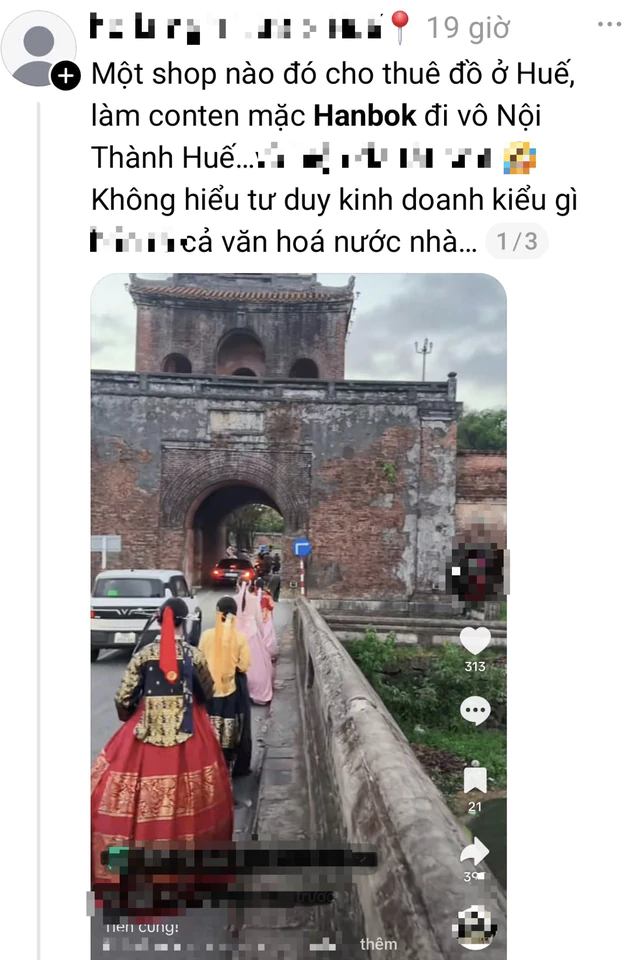
A social media post criticizes a video shared by a clothing rental shop in Hue.
Choosing clothing for heritage locations, they argued, requires careful consideration to avoid creating misleading visual associations between Korean traditional dress and Hue's imperial heritage.
However, many others took a different view, saying there was nothing inherently inappropriate about wearing foreign traditional clothing at historic sites, provided visitors complied with the relevant regulations.
Some pointed to the practice of young Vietnamese people wearing ao dai at famous landmarks overseas to promote Vietnamese culture.
From this perspective, clothing choices for travel photography should be approached with greater openness rather than assuming that foreign traditional attire is unsuitable for Vietnamese heritage spaces.
The contrasting reactions have turned what began as a promotional video for a costume rental business into a broader debate about cultural representation, appropriate conduct at heritage sites and the responsibilities of social media content creators.
Costume shop owner says she faced threats
N.T.L., owner of the N.C. traditional costume rental shop in Hue, told Tuoi Tre (Youth) online newspaper that the incident was a lesson she would not forget.
The shop primarily rents Vietnamese ao dai and traditional costumes, alongside selected foreign outfits, including Korean hanbok.
Its customers are mainly young people in Hue and tourists visiting the city, she shared.
L. said she had consulted someone with relevant expertise before arranging the photoshoot to promote the shop's products and had been told that photographing a model in a hanbok near Ngo Mon Gate was permissible.
She stressed that the video was not intended to encourage people to wear hanbok inside the Imperial Citadel or to compare Korean traditional dress with Vietnam's ao dai.
Instead, she said, it was simply meant to showcase a costume available for rent.
"Initially, we planned to photograph a model wearing a hanbok on Hue's central pedestrian street,” she recounted.
“But the models later said they wanted to take pictures in front of Ngo Mon Gate at the Imperial Citadel because the area looks beautiful when illuminated at night.”
The shoot was scheduled for late afternoon and evening to avoid disrupting tourists visiting the Imperial Citadel.
After the video was published and attracted widespread backlash, she came under considerable pressure on social media.
She claimed that some people used fake accounts and phone numbers to call and message her with insults and threats against the shop's business.
The shop also received numerous one-star reviews on Google Maps following the controversy.
"I have reported the online attacks and insults against my dignity and reputation to the police,” she said.
“Following this incident, we will no longer photograph models wearing costumes other than traditional Vietnamese ao dai at Hue's heritage sites.”
An official of the Hue Department of Culture, Sports and Tourism told Tuoi Tre that the department would review the information surrounding the incident.
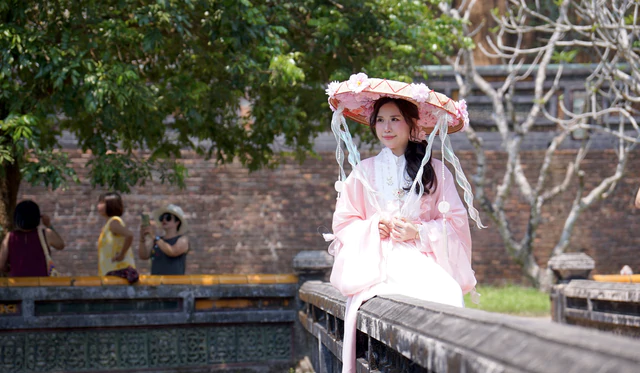
A young girl wearing traditional Vietnamese attire poses for a photo at a heritage site in Hue City. Photo: Nhat Linh / Tuoi Tre
Tieu Bac - Nhat Linh / Tuoi Tre News
Link nội dung: https://news.tuoitre.vn/hanbok-photoshoot-at-vietnams-hue-imperial-citadel-sparks-controversy-103261024122811854.htm