
Hanoi’s ‘Finland Water Road,’ where clean water changed urban life
A small riverside road in Hanoi bears no official sign, but generations of residents know it as ‘Finland Water Road,’ a name born from hardship, memory, and a landmark clean-water program that reshaped daily life in the Vietnamese capital.
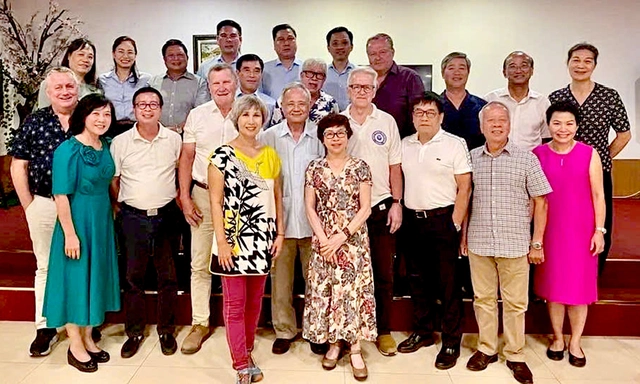
A file photo of former leaders of Hanoi Water Company welcoming Finnish experts to revisit a water supply facility
The name did not come from any administrative decree. It emerged from local residents who once carried water cans through the night, dug storage tanks into sidewalks, and waited for weak water pressure just to secure a few buckets for daily use.
To them, the arrival of reliable clean water marked such a profound change that it deserved an enduring name.
On a winter morning, the narrow road running along the Red River in Hong Ha Ward looks like any other city street.
There is no official marker or historical plaque. Yet in old household registration papers, in collective memory, and in everyday conversation, it is still called Finland Water Road.
During the 1980s and early 1990s, water scarcity was a constant worry for inner-city residents.
Low pressure meant water could not flow directly into homes.
Many apartment blocks had to ration water at night.
Public taps, sidewalk tanks, and long queues were part of daily life.
“People of our parents’ generation remember it clearly,” said Truong Tien Hung, deputy general director of Hanoi Water Co., Ltd.
“Water services were poor, and families had to build storage tanks on sidewalks because pressure was too low.”
The Yen Phu Water Plant, one of Hanoi’s oldest waterworks, dates back to 1894.
Initially operating just four wells with a capacity of about 4,000 cubic meters per day, the plant mainly served the Old Quarter.
Even after 1954, state investment only raised capacity to around 15,000 cubic meters per day, which was far short of a rapidly growing urban population.
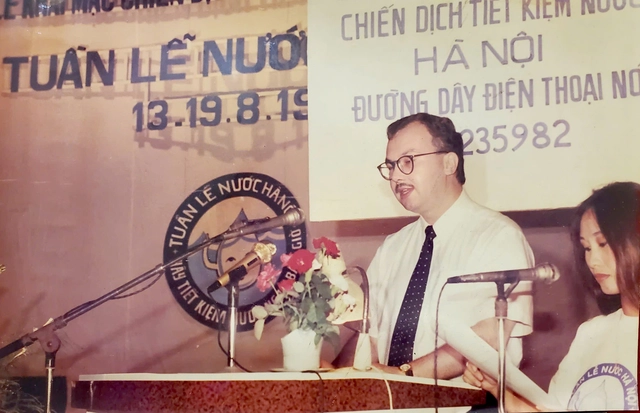
One of the archival photographs about the Finnish clean water project is displayed in the Yen Phu Water Plant’s legacy room in Hanoi.
The turning point came between 1986 and 1997, when the Finnish government implemented a non-refundable water supply assistance program in Hanoi worth about US$80 million, combined with domestic counterpart funding.
Under the program, water plants at Yen Phu, Tuong Mai, Ngoc Ha, and Ngo Si Lien were upgraded, while new plants at Mai Dich and Phap Van were built.
About 410 kilometers of transmission and distribution pipelines formed Hanoi’s first interconnected water network.
At Yen Phu, outdated slow filtration was replaced by rapid filtration, liquid chlorine disinfection took the place of electrolysis methods, and automated electrical and control systems took over manual operations.
By 1997, the Yen Phu water plant’s capacity reached 80,000 cubic meters per day, later rising to 100,000 with domestic funding.
In 2025, as Hanoi reduces groundwater extraction, the plant operates steadily at about 82,000 cubic meters per day, still the city’s largest groundwater-based facility.
Though the water is produced by Hanoi’s own plants, residents continue to call it ‘Finland water,’ not for its origin, but for what it represents.
After the program, about 1.9 million people gained access to clean water flowing directly into their homes, eliminating sidewalk tanks, public basins, and sleepless nights waiting for supply.
The change was not only physical.
The Finnish program introduced modern management: household meters, billing instead of lump-sum collection, electronic invoices, hydraulic management software, and leakage control.
“Managers can now track usage on computers, detect abnormalities, and ensure proper use,” Hung said.
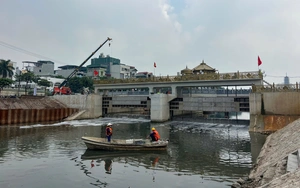
Finland Water Road runs through the An Duong-Yen Phu-Quang Ba area, following pipelines that once carried raw water from Red River wells to the Yen Phu plant.
What began as a narrow maintenance path gradually became a residential street.
Its name, born informally, was later accepted by authorities in deference to public usage.
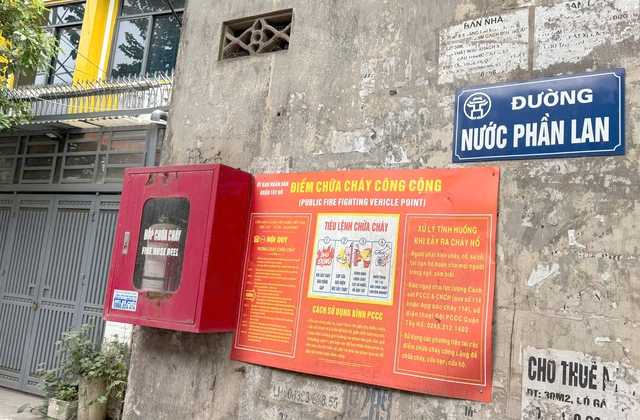
Finland Water Road in Hanoi. Photo: Tam Le
Locals like 70-year-old Hoang Thi Lot, who has lived in the area for over 30 years, remember the ‘pre-Finland’ era vividly.
She recalled cycling over a kilometer to a pagoda just to beg for five liters of water for cooking.
"The well water then was fishy, we had to dry and filter it before use," she said.
When clean water finally reached her home, it marked a fundamental shift in her quality of life.
“It reminds us of hardship, change, and friendship,” said local resident Le Thi Thanh Van.
Today, even as Hanoi adds water from the Da and Duong rivers, many families still say with pride, “We are using Finland water.”
In 2024, a group of retired Finnish experts returned to visit Yen Phu.
They were moved to find that pumps they installed 40 years ago were still operational, and even more touched to see a road named in their honor by a community that still remembers their contribution.
Minh Duy - Tam Le - Truc Quyen / Tuoi Tre News
Link nội dung: https://news.tuoitre.vn/hanois-finland-water-road-where-clean-water-changed-urban-life-103251221130951009.htm