
Ho Chi Minh City eyes establishment of geriatric hospitals to cope with aging population
Ho Chi Minh City is planning to develop geriatric hospitals as the number of elderly residents surpasses 1.5 million, reflecting the city’s rapid pace of population aging.

A senior citizen gets a health check-up in Ho Chi Minh City. Photo: Supplied
At a Tuesday meeting between the city’s Party Committee and the Department of Health, officials discussed a comprehensive plan to improve healthcare for senior citizens.
Nguyen Van Vinh Chau, deputy director of the Department of Health, said that average life expectancy in the city reached 76.7 years in 2025, meeting national targets and underscoring the effectiveness of public health programs.
Currently, all hospitals except pediatric facilities provide beds for elderly patients, and clinics offer priority areas for those aged 80 and above.
However, no hospital is dedicated solely to geriatric care.
Data show that the number of patients with chronic conditions such as hypertension and diabetes has risen sharply, with hypertension cases managed at local clinics increasing to 11,000 in 2025 from approximately 7,600 in 2024.
The city’s health authority set new goals to raise average life expectancy to 76.8 years in 2025 and 77 years by 2030, while extending healthy living years.
Plans include piloting daytime care centers, developing geriatric hospitals, and expanding digital health services.
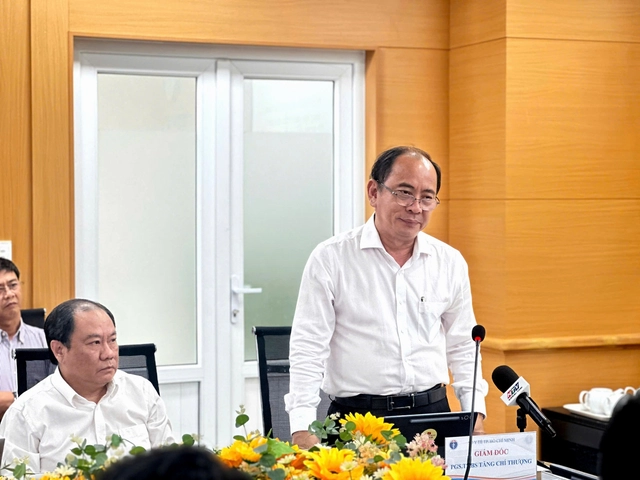
Tang Chi Thuong, director of the Ho Chi Minh City Department of Health, speaks at a meeting on elderly healthcare, March 17, 2026. Photo: T.P.
Phan Chanh Trung, head of the city’s Population Department, reported that by the end of 2025, Ho Chi Minh City had nearly 1.57 million elderly residents, accounting for 11 percent of the southern metropolis’ population.
Trung emphasized the need for long-term planning and facilities tailored to this demographic.
According to Nguyen Tang Minh, deputy director of the Department of Health, 16 social welfare centers currently operate in the city, with 12 caring for about 6,000 elderly people in difficult circumstances.
Authorities aim to expand this network to more than 30 centers by 2030, evenly split between daytime and residential care.
The city’s 168 wards and communes will host satellite care points to make services more accessible.
Nguyen Phuoc Loc, deputy secretary of the municipal Party Committee, praised the health sector’s proactive approach and stressed that effective elderly care reduces medical costs overall.
He urged stronger investment in digital transformation, community-based care, and home health services, alongside clear project planning and resource allocation.
Among the long-term goals are comprehensive health management for the elderly, the development of geriatric hospitals, and the possibility of basic free healthcare services for senior residents.
Minh Duy - Thu Hien / Tuoi Tre News
Link nội dung: https://news.tuoitre.vn/ho-chi-minh-city-eyes-establishment-of-geriatric-hospitals-to-cope-with-aging-population-103260318102148468.htm