
Ho Chi Minh City needs comprehensive solutions to tackle flooding: experts
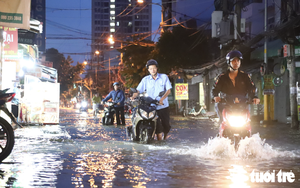
Ho Chi Minh City plans to invest more than 142 trillion VND (5.49 billion USD) in 87 flood control projects during 2026–2030 to tackle flooding at 50 hotspots, with a focus on addressing root causes and developing integrated drainage systems to ensure investment effectiveness and deliver measurable reductions in flooding.
Large investment requires targeted solutions
Urban flooding stems from multiple factors, including heavy rain, high tides, low-lying terrain, land subsidence, inadequate drainage systems and shrinking water-retention areas. Identifying the causes at each location is essential to choosing effective solutions, insiders said.
Architect Nguyen Dinh Hoa of the Ho Chi Minh City Institute of Economics and Management said flood mitigation planning should cover entire drainage basins as water flows follow terrain and drainage networks rather than administrative boundaries.
He called for a shared, regularly updated and verified map of ground elevations, drainage directions, water-retention areas, system capacity and bottlenecks to guide investment priorities. Projects must also connect with downstream drainage routes and discharge points as expanding pipelines alone will not ease flooding if downstream bottlenecks remain.

Assoc. Prof. Dr Nguyen Phu Quynh, Deputy Director of the Southern Institute of Water Resources Research, said infrastructure built 20–30 years ago may no longer meet current needs due to changes in river and tidal levels and ground elevations.
As water flows through the entire network, flood-control measures must be planned at basin level, linking rivers, canals, drainage systems and upstream factors, rather than addressing isolated sections, he said.
Le Ngoc Linh, Deputy Director of the municipal Department of Construction, said Ho Chi Minh City has 23 main drainage catchments, but urban expansion has widened topographical and hydrological disparities, while some plans are outdated. Canals, drainage systems and pumping stations remain poorly connected, and water-storage capacity is limited.
The 2026–2030 flood control plan requires a review of narrowed drainage routes, subsidence-affected gradients, sediment buildup and discharge outlets affected by high tides.
Linh stressed the need to strengthen drainage and flood prevention across catchments and sub-catchments while coordinating irrigation, disaster prevention, drainage and urban development plans.
Urban planning must reduce flood risks
Hoa stressed that flood control planning must be integrated with land use and urban development as road elevation, ground filling, residential construction and canal narrowing can affect water flows and storage capacity. Both individual projects and their combined impacts across catchments should be assessed.
Canals, regulating lakes, low-lying areas and green spaces help retain rainwater and reduce pressure on drainage systems. Given this, Hoa called for protecting these areas and major drainage routes by making planning maps and devising land-use controls.
He said that in high-risk residential areas, measures could include infrastructure upgrades, lower building density, improved drainage corridors or resettlement where necessary, while ensuring residents' livelihoods and access to essential services.
The city should combine conventional infrastructure, including pumping stations and tide-control works, with nature-based solutions such as enlarging permeable surfaces, restoring low-lying areas, establishing distributed retention ponds and expanding green spaces, he suggested.
Meanwhile, Linh stressed that tide-control works must operate in coordination with drainage systems, canals, pumping stations and water-storage areas, as blocking tidal water alone cannot prevent flooding if internal drainage remains inadequate.
To ensure investment effectiveness, experts called for prioritising flood mitigation projects based on flood severity and frequency, the number of people protected, expected effectiveness, connectivity with existing systems, environmental and social impacts, and long-term operating costs. Clear responsibility for operation and maintenance is also essential.
Effective flood control requires coordinated planning, integrated infrastructure, and better water-space management, with projects connected across catchments to achieve lasting reductions in flooding.
- REFERENCE MORE
Vietnam News Agency
Link nội dung: https://news.tuoitre.vn/ho-chi-minh-city-needs-comprehensive-solutions-to-tackle-flooding-experts-103261022171325742.htm