
Ho Chi Minh City reports 5th meningococcal case in a week as infections rise in southern Vietnam
Ho Chi Minh City has confirmed its fifth meningococcal disease case in a week, involving a 12-year-old boy infected with serogroup B bacteria, amid rising infections across southern Vietnam.
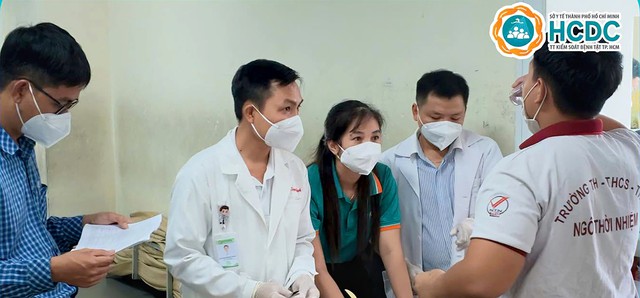
The fifth meningococcal case reported in Ho Chi Minh City was an isolated infection that was promptly contained and managed. Photo: Ho Chi Minh City Center for Disease Control
The Ho Chi Minh City Center for Disease Control (HCDC) announced on Wednesday evening that the patient, a student at Ngo Thoi Nhiem School in Binh Duong Ward, lives in Thuong Tan Commune.
HCDC described the infection as an isolated case that had been promptly contained.
The boy developed fever, sore throat, and headache on October 13 and was admitted to Children's Hospital 2 two days later with meningitis.
On October 20, a polymerase chain reaction (PCR) test of his cerebrospinal fluid confirmed the presence of Neisseria meningitidis, the bacterium responsible for meningococcal disease.
The hospital immediately notified health authorities and sent a specimen to the Pasteur Institute in Ho Chi Minh City for further testing.
On October 21, the institute identified the infection as meningococcal serogroup B.
The boy had previously received one dose of a vaccine protecting against meningococcal serogroups A, C, Y, and W but had not been vaccinated against serogroup B.
His condition has since improved. He no longer has a fever or vomiting, and his headache has eased, according to HCDC.
Following the case's detection, health authorities identified 99 close contacts at the boy's home and school and administered azithromycin as a preventive antibiotic.
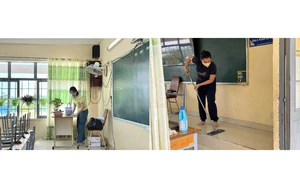
The school also disinfected classrooms and cleaned bedding used by students who stay at school during the day.
All close contacts will be monitored for 10 days after their last exposure.
Between October 14 and 20, Ho Chi Minh City recorded five meningococcal cases, all involving students, including one death.
The first four cases were linked to Hai Ba Trung Secondary School, where health authorities said transmission had been effectively contained after 2,031 close contacts received preventive antibiotics.
Serogroup B accounts for 94% of invasive cases in southern Vietnam
Associate Professor Dr. Nguyen Vu Thuong, deputy director of the Pasteur Institute in Ho Chi Minh City, told Tuoi Tre (Youth) that surveillance data showed an increase in invasive meningococcal disease cases across all eight provinces and cities in southern Vietnam.
Cases have been reported particularly in densely populated areas, overcrowded environments, places with poor sanitation, and communal settings with frequent movement of people.
Small clusters have also emerged sporadically in schools and other institutional settings, although health authorities have moved quickly to contain them.
Children aged 11-15 accounted for the largest share of reported cases, at 28.6 percent, while approximately 94 percent of invasive meningococcal infections were caused by serogroup B bacteria.
People experiencing fever accompanied by severe headache, vomiting, neck stiffness, lethargy, or a hemorrhagic rash should seek immediate medical attention.
Early diagnosis and treatment can help prevent severe complications, long-term disabilities, and death while reducing the risk of transmission.
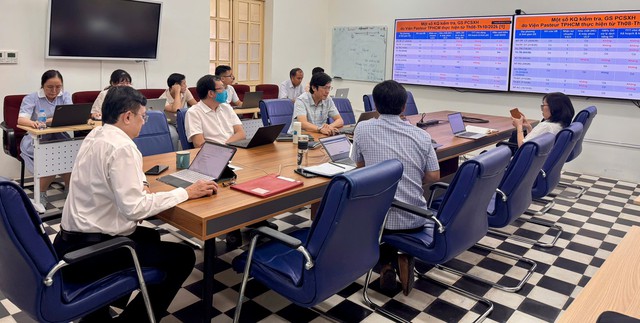
Associate Professor Dr. Nguyen Vu Thuong, deputy director of the Pasteur Institute in Ho Chi Minh City, chairs a disease prevention and control meeting for southern Vietnam held earlier this week. Photo: Pasteur Institute in Ho Chi Minh City
Vaccination, early preventive treatment urged
The Pasteur Institute recommends that close contacts of confirmed meningococcal patients receive preventive antibiotics as soon as possible, ideally within 24 hours of the case being confirmed.
They should also monitor their health for 10 days after their last exposure, even after taking preventive antibiotics.
Authorities warn against self-medicating or taking antibiotics indiscriminately.
Vaccination remains an effective preventive measure, but people should consult healthcare professionals to select vaccines appropriate for their age, health status, and the meningococcal serogroups they need protection against.
The institute stressed that vaccination does not eliminate the need for preventive antibiotics following close exposure to a confirmed case.
Even vaccinated individuals identified as close contacts must receive antibiotic prophylaxis when indicated by health authorities and continue monitoring for symptoms.
Ngoc Nguyen - Xuan Mai / Tuoi Tre News