
Ho Chi Minh City serves as fertile ground for businesses to rise
Half a century after proudly bearing the name of late President Ho Chi Minh, Ho Chi Minh City has transformed itself into Vietnam’s economic heart–a dynamic hub where entrepreneurial ambitions are nurtured and propelled onto the global stage.
With its supporting policies, transparent investment environment, well-connected infrastructure, and abundant human capital, the city has long been more than just a starting point for businesses.
It is a steadfast foundation that empowers Vietnamese enterprises to expand beyond national borders.
However, as experts and business leaders point out, sustaining its role as the country’s economic locomotive will require the city to transition toward a more sustainable, quality-driven growth model.
This includes developing a comprehensive financial ecosystem and implementing deeper, more substantive institutional reforms.
Birthplace of billion-dollar enterprises
Among Vietnam’s billion-U.S. dollar companies, dairy giant Vinamilk stands as a unique case, having grown in tandem with the city itself.
As Ho Chi Minh City marks 50 years under its current name, Vinamilk also approaches its 50th anniversary.
In its early days, shortly after national reunification, Vinamilk began with just three outdated and modest factories amid widespread economic hardship.
Mai Kieu Lien, the company’s CEO, recalled a time when market mechanisms were absent, yet visionary leaders laid the groundwork for innovative policies that would later be replicated nationwide.
“The city is not only the cradle of Vinamilk but also the birthplace of Vietnam’s dairy industry,” she said.
“The sources of fresh milk and dairy herds across the country also originated from this city,” Lien said, affirming that Vinamilk’s development has been closely tied to the city’s innovative, reform-driven, decisive, and autonomous policies.
Notably, during the reform period, the city granted the company greater autonomy to grow, while its initial human and financial resources were also sourced from the city.
Thanks to these dynamic mechanisms, the dairy enterprise overcame challenges to establish its position on the global dairy map, achieving a market capitalization of billions of U.S. dollars.
As of the end of 2025, Vinamilk’s total assets had reached over VND53.3 trillion ($2 billion), while its consolidated annual revenue had climbed to VND63.7 trillion ($2.4 billion), and its after-tax profit for 2025 stood at VND9.4 trillion ($357.4 million).
It employs nearly 10,000 workers and contributes significantly to both national and municipal budgets.
Similarly, Dai Dung Corporation, headquartered in the city, has built an international reputation in steel structures.
Its projects include iconic works such as the stadium for the 2022 World Cup in Qatar, a museum in Saudi Arabia, and a landmark building in Tokyo.
Domestically, it has contributed to major infrastructure projects like Long Thanh International Airport in Dong Nai Province and Phu Quoc International Airport in An Giang Province.
Chairman and CEO of the corporation Trinh Tien Dung shared that his firm started its operation over 30 years ago, with a small mechanical workshop in Binh Chanh, Ho Chi Minh City.
Shortly after its establishment, Dai Dung secured its first orders, working with Japanese partners and clients in the Linh Trung and Tan Thuan export processing zones.
Ho Chi Minh City provided the company with access to resources, skilled personnel, business networks, and land for factories and workshops, enabling it to expand internationally.
Dung said that the company aims to become a leading global corporation in mechanical engineering and steel structures, pursuing a steady strategy that includes strengthening its base in Ho Chi Minh City, expanding into markets across continents, establishing subsidiaries abroad, and developing an international team of experts.
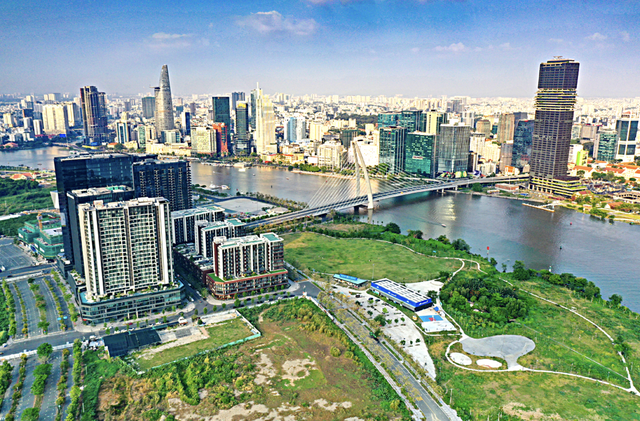
The establishment of an international financial center is seen as a strategic move, not only to attract capital flows but also to lay the foundation for a new growth model. Photo: Quang Dinh / Tuoi Tre
Driving enterprises forward
Founded in 1989 during Vietnam’s transition to a market economy, Saigon Co.op emerged as a bold experiment in economic reform.
At a time when traditional cooperatives were dissolving, the city’s leadership supported a new cooperative model that ensured stable goods distribution and social welfare.
Looking back on Saigon Co.op’s development journey, chairman Vu Anh Khoa said Ho Chi Minh City has consistently stood out for its strong growth potential, pioneering entrepreneurial spirit, stable infrastructure, and its openness to change and willingness to embrace innovation.
Saigon Co.op has evolved into a leading retail group with annual revenues exceeding VND30 trillion ($1.1 billion) and a nationwide network of outlets.
Khoa attributes this success to the city’s entrepreneurial spirit, robust infrastructure, and openness to innovation.
Government support has enabled the cooperative to expand and modernize.
“The advantages of Ho Chi Minh City serve as a launchpad for Saigon Co.op not only to serve the domestic market but also to gradually expand regionally, and bring Vietnamese products to the world,” Khoa said.
Biti’s, established in 1982, is another example of a homegrown brand that has flourished in the city.
After more than four decades, its products are now exported to numerous international markets.
Nguyen Minh Giang, director of sustainable development at the firm, described Ho Chi Minh City as a place where opportunity and ambition converge, offering businesses access to high-quality human resources and favorable policies.
As a company originating from Ho Chi Minh City, Biti’s has received significant support and encouragement from both the city’s authorities and its people over the past more than 40 years, enabling it to grow into what it is today, Giang said.
This is largely due to the city’s timely and effective business support policies, she noted.
Likewise, Tan Quang Minh Manufacture and Trading Company has benefited from the city’s dynamic environment for over 30 years.
Chairman Nguyen Dang Hien highlighted the importance of timely policy support, including trade promotion and financial assistance, which has helped the company expand its market presence.
“Thanks to supportive mechanisms and policies, our generation of entrepreneurs was able to gain an early foothold in the market, overcome challenges together, expand production and business, and contribute even more to the city,” Hien said.
Hub of visionary entrepreneurs
With hundreds of thousands of active enterprises, Ho Chi Minh City is not only an economic powerhouse but also a gathering place for individuals driven by bold ambitions, said Pham Phu Ngoc Trai, chairman of Global Integration Business Consultants Company.
Its strength lies not just in economic indicators but in the resilience and determination of its people–entrepreneurs who continuously strive for excellence, even when starting from imperfect beginnings.
Ho Chi Minh City possesses an immeasurable source of energy–an unwavering will for innovation and a steadfast belief in tomorrow.
The city has become a powerful launchpad for innovation, accounting for more than 40 percent of Vietnam’s startups and consistently leading the country in attracting foreign direct investment for many years.
Besides, Ho Chi Minh City embodies a pioneering spirit, never waiting for perfect conditions before taking action.
In times of uncertainty, it continues to move forward quietly, experimenting even without clear models and sharing opportunities even without being asked.
This is not driven by a desire to lead, but by the belief that if no one begins, no path will ever be opened, he said.
Toward sustainable and digital future
After 50 years of development, Ho Chi Minh City has made significant strides, maintaining its role as the country’s economic locomotive.
However, traditional growth drivers such as capital, labor, and land are gradually reaching their limits, underscoring the need to shift toward a more quality-driven and sustainable development model.
Associate Professor Dr. Nguyen Huu Huan, deputy head of the executive board of the Ho Chi Minh City International Financial Center, said that the city must focus on improving institutional quality, optimizing resource allocation, and accelerating technological adoption during the next phase of growth.
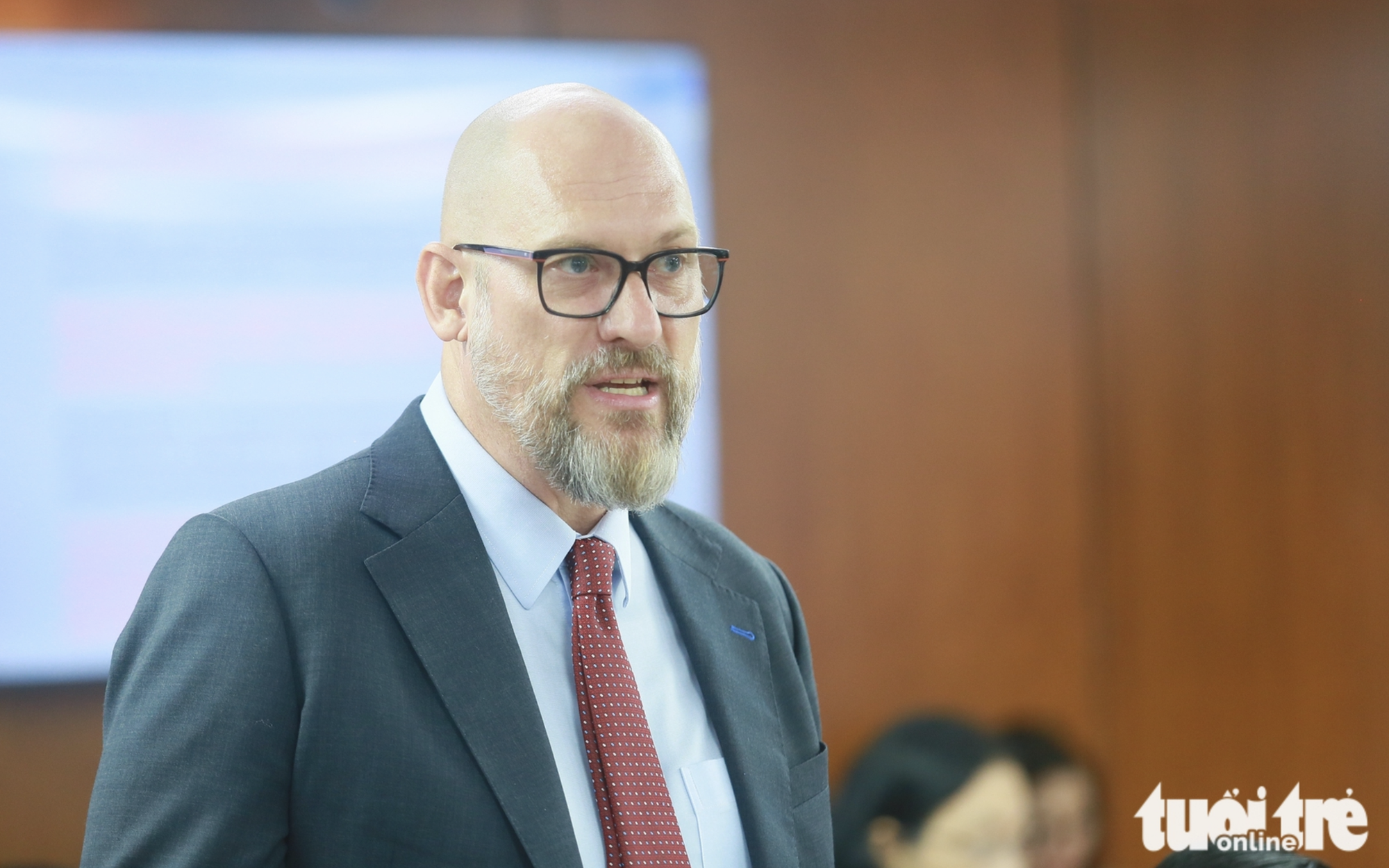
A key strategic initiative is the development of an international financial center.
Rather than functioning as an isolated financial hub, it is envisioned as an integrated ecosystem linked to the real economy.
By leveraging technologies such as blockchain, artificial intelligence, and smart contracts, the city aims to create a transparent, real-time system that connects finance, production, logistics, and trade.
If implemented effectively, this financial center could unlock new capital flows, reduce transaction costs, and enhance risk management for businesses.
More importantly, it would lay the foundation for a modern digital economy, strengthening Ho Chi Minh City’s competitiveness and reinforcing its role as Vietnam’s leading economic engine.
Tuoi Tre News
Link nội dung: https://news.tuoitre.vn/ho-chi-minh-city-serves-as-fertile-ground-for-businesses-to-rise-103260429121744323.htm