
Ho Chi Minh City targets at least 500 certified green buildings by 2030
Ho Chi Minh City aims to have at least 500 certified green buildings by 2030 as part of its efforts to promote sustainable development, reduce greenhouse gas emissions and expand international cooperation, officials said at the 2026 Business Partner City (BPC) Roundtable Conference.
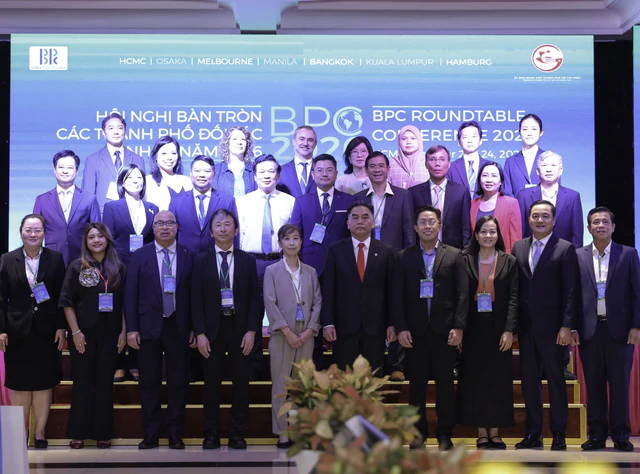
The conference brings together government officials, experts and business representatives from various cities to discuss innovation and green growth. Photo: Supplied
The Ho Chi Minh City People's Committee, in coordination with the Osaka Business Partner City Council of Japan, held the conference in the city on Friday.
This year's conference was themed "Innovation and Sustainable Development: Promoting Growth and International Cooperation among BPC Cities."
The conference brought together representatives of cities and businesses from several countries to discuss measures to help businesses adopt innovation, promote sustainable development and reduce emissions.
Ho Chi Minh City sets green development targets
Nguyen Loc Ha, standing vice-chairman of the Ho Chi Minh City People's Committee, said the conference's theme reflected a priority area for cooperation among BPC member cities.
He said sustainable development was essential to urban development alongside innovation, adding that the city was conducting a comprehensive assessment of related challenges and developing measures to address them.
He said Ho Chi Minh City sought to learn from BPC member cities' experiences in supporting businesses, developing startup and innovation ecosystems, promoting sustainable industries, reducing emissions, improving urban planning and implementing transit-oriented development.
Ha reported that Ho Chi Minh City's gross regional domestic product (GRDP) increased 9.06 percent in the first nine months of 2026.
The city is conducting greenhouse gas emission inventories at 360 facilities, including 240 that have developed emission reduction plans for the 2026-30 period.
Around 68 percent of the city's buses currently operate on electricity or other green energy sources, with the municipal government targeting a full transition by early 2027.
Ho Chi Minh City is also participating in the national roadmap for the operation of Vietnam's carbon market.
Nguyen Hong Nguyen, deputy director of the Ho Chi Minh City Department of Agriculture and Environment, said the city had developed an action plan covering 18 targets for environmental protection and climate change response.
Under the plan, Ho Chi Minh City aims to increase the green economy's contribution to at least 10 percent of its GRDP by 2030.
The city also targets a reduction in greenhouse gas emissions of at least nine percent compared with a business-as-usual scenario by 2030.
Another target is to have at least 500 certified green buildings by 2030, while the city aims to achieve net-zero emissions by 2045.
The municipal government also plans to expand mangrove forests in Can Gio and replace landfill-based waste disposal with waste-to-energy incineration to generate electricity.
International partners propose measures to support green transition
The Australian Industry Group (Ai Group) said at the conference that reducing carbon emissions could provide businesses with a competitive advantage.
The group called for measures to translate corporate sustainability commitments into business growth.
Ai Group also identified several challenges facing small and medium-sized enterprises, including difficulties in measuring emissions, covering transition costs and accessing green finance.
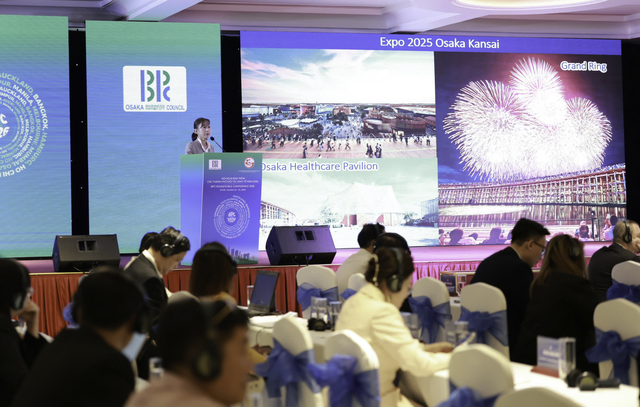
Ayako Moriyama, director of the Economic Strategy Bureau of the Osaka City Government, proposes several areas of joint action within the BPC network. Photo: Supplied
Meanwhile, a representative of the Hamburg Chamber of Commerce outlined policies adopted by BPC member cities.
The representative said there was no single policy model suitable for all cities, but the initiatives provided an open platform for BPC members to identify approaches appropriate to their local conditions.
Ayako Moriyama, director of the Economic Strategy Bureau of the Osaka City Government, said Osaka had proposed four areas of joint action within the BPC network.
The first proposal calls for strengthening the provision of information to businesses on environmental challenges and business opportunities in partner cities.
The second focuses on integrating environmental considerations into existing policies and programs.
The third involves sharing information about business events open to participants from other BPC cities.
The fourth calls for more regular coordination among BPC partner organizations.
Meanwhile, representatives of the Malaysia External Trade Development Corporation and the cities of Melbourne, Kuala Lumpur and Manila raised concerns about the management of data centers.
They said data centers made significant contributions to the digital economy but placed considerable pressure on electricity and water supplies while generating emissions.
The representatives proposed measures to promote energy and water reuse, improve planning practices and introduce reporting requirements for data center operators.
International experts at the conference identified environmental pollution and greenhouse gas emissions as urgent global challenges requiring coordinated action.
They said the BPC network's scale and international connections provided an important platform for cities to exchange experiences, strengthen cooperation and identify solutions to environmental challenges.
The Ky - Nguyen Tri - Ngoc Duc / Tuoi Tre News
Link nội dung: https://news.tuoitre.vn/ho-chi-minh-city-targets-at-least-500-certified-green-buildings-by-2030-103261024103201883.htm