
How can Vietnam attract high-quality FDI?
To attract high-quality foreign direct investment (FDI), Vietnam must offer a competitive business environment with predictable costs, reliable infrastructure, skilled talent, and stable policies, not just investment incentives.
Vietnam has issued a resolution on the development of the foreign-invested sector, calling for a shift from attracting investment based primarily on volume to selectively attracting projects that bring advanced technology, innovation, sound management practices, and stronger spillover benefits for domestic businesses.
To attract such investors, however, Vietnam must also become a compelling destination.
Investment is a two-way decision. While Vietnam seeks responsible, capable, and long-term investors, multinational companies also carefully assess where to locate factories, research centers, or regional headquarters.
Alongside the question of what kind of investment Vietnam wants, policymakers also need to ask what international investors are looking for in Vietnam.
One of the key considerations is a business environment that enables companies to control long-term costs while remaining competitive.
Although low labor costs, tax incentives, land lease rates, and investment incentives are no longer decisive advantages on their own, they remain important factors in corporate investment decisions.
Companies are increasingly focused less on short-term incentives and more on the total cost of operating a project throughout its life cycle.
That includes logistics, energy, raw materials, land rental, recruitment, workforce training, and additional costs arising from lengthy administrative procedures, infrastructure bottlenecks, or delays related to planning, construction, and customs clearance.
Generous incentives can quickly lose their appeal if transport infrastructure remains poorly connected, power supplies are unreliable, logistics costs are high, or administrative procedures are time-consuming.
As global competition for investment intensifies, businesses are looking not simply for low costs but for locations where costs remain manageable and predictable over the long term.
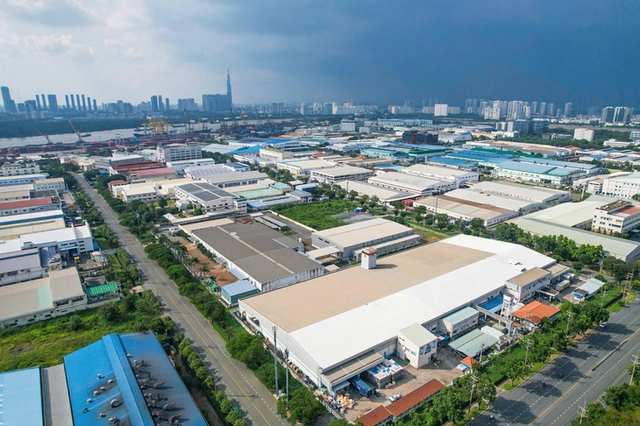
Tan Thuan Export Processing Zone in Ho Chi Minh City. Photo: Quang Dinh / Tuoi Tre
Beyond cost, investors also place increasing emphasis on quality.
Regardless of whether companies compete in mass-market or premium segments, they must consistently meet the quality standards promised to customers.
While investors themselves are responsible for their technologies, production lines, manufacturing processes, and corporate management, they also depend on a reliable supporting ecosystem.
This includes a skilled workforce ranging from technicians and engineers to managers, as well as dependable infrastructure such as electricity, clean water, telecommunications, digital networks, testing services, and technical standards that support efficient production.
These requirements are even more demanding for high-tech industries.
Semiconductor plants, data centers, medical device manufacturers, and research and development facilities cannot operate efficiently without reliable electricity, high-quality water supplies, modern digital infrastructure, and a qualified technical workforce.
Without these foundational conditions, companies face greater difficulty maintaining product quality, managing operational risks, and protecting their reputation in global markets.
Stability is another key factor determining whether investors view Vietnam as a short-term production base or a long-term strategic destination.
Companies seek transparent, consistent, and predictable policies. They want confidence that government commitments will be honored, regulations will be applied consistently, and any changes to development plans will be implemented according to a clear road map.
For businesses, every delay in administrative procedures, every additional trip to government agencies, and every unresolved issue involving land, construction, electricity, water supply, or customs procedures translates into additional operating costs.
At the same time, investors also consider the host country's international connectivity. Much of Vietnam's FDI sector is integrated into global supply chains and export-oriented manufacturing.
As a result, Vietnam's international standing, trade integration, ability to benefit from free trade agreements, and trustworthy relationships with major partners all influence investment decisions.
Investors evaluate not only the size of Vietnam's domestic market but also its ability to serve as a reliable link in global manufacturing and trade networks.
A country with political and social stability, broad international partnerships, deep economic integration, and growing international credibility is better positioned to attract large-scale investment projects with long payback periods.
Understanding investors' core priorities—cost, quality, and stability—will help Vietnam move beyond simply promoting investment toward building an investment environment capable of attracting long-term strategic partners that contribute to the country's future development.
Tuoi Tre News
Link nội dung: https://news.tuoitre.vn/how-can-vietnam-attract-high-quality-fdi-103260709141803016.htm