
How will Grab spend its $115mn support package in Vietnam, and who benefits?
Grab has unveiled a nearly VND2.95 trillion ($115 million) support package in Vietnam, with most of the funds allocated to passenger promotions and driver incentives, following a regulatory review of its pricing and fee policies.
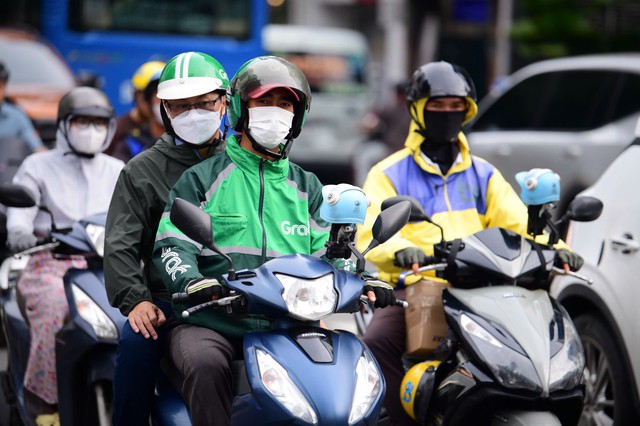
Many Grab drivers have complained that high deductions reduce their take-home earnings from each trip. Photo: Quang Dinh / Tuoi Tre
The package comprises six groups of measures aimed at reducing costs for passengers, improving drivers' earnings, and making the platform's pricing and fee structures more transparent.
It follows a nearly two-month review by the National Competition Commission under the Ministry of Industry and Trade.
The largest portion of Grab's package, VND1.808 trillion ($70.67 million), will go toward passenger promotions, accounting for more than 61 percent of the total.
Another VND860 billion ($33.62 million), or about 29 percent, will be allocated to driver bonuses and financial support, while VND52 billion ($2.03 million) will cover fuel and electric vehicle charging assistance.
Grab also expects its revenue to fall by around VND227 billion ($8.87 million) due to adjustments to its fee structure.
An additional VND3.9 billion ($152,448) has been set aside to reimburse drivers for trips on which deductions exceeded the permitted threshold.
Starting November 10, Grab will reduce platform fees by VND1,000-2,000 ($0.04-0.08) on certain short-distance trips and cap its total share of passenger payments at 32 percent, excluding taxes and fees collected on behalf of third parties.
According to the National Competition Commission, the minimum share of fares retained by GrabBike drivers will increase from 52 percent to 60.59 percent, while GrabCar drivers will retain at least 59.68 percent.
However, these are minimum rates under Grab's revised policies and do not necessarily mean all drivers will see corresponding increases in income.
The 32-percent cap could also serve as a benchmark for competitors Be and Xanh SM, although it is not a mandatory limit across the industry.
The commission has also required Grab, Be, and GSM to improve transparency around additional charges and ensure passengers can actively choose optional services.
Grab must submit monthly reports on the implementation of its measures. The commission will continue monitoring compliance and consider enforcement action if violations of competition or consumer protection laws are detected.
Similar cases involving ride-hailing platforms worldwide
Ride-hailing and food delivery platforms have faced regulatory scrutiny in several countries over driver rights, pricing policies, and competition concerns.
In 2023, New York reached a $328 million settlement with Uber and Lyft over issues related to driver rights.
The two ride-hailing companies subsequently agreed to a $175 million settlement in Massachusetts in 2024.
In Europe, food delivery companies Delivery Hero and Glovo were fined approximately EUR329 million in 2025 for violating competition rules.
However, the cases involved different types of financial measures, ranging from penalties and compensation payments to promotional spending and driver support.
- REFERENCE MORE
Ngoc Nguyen - Ngoc An - Cong Trung / Tuoi Tre News
Link nội dung: https://news.tuoitre.vn/how-will-grab-spend-its-115mn-support-package-in-vietnam-and-who-benefits-103261106194740316.htm