
In southern Vietnam, fuel price surge pressures transport firms to raise fares
Transport operators across southern Vietnam are scrambling to revise fares up to avoid heavy losses after domestic fuel prices jumped sharply on Saturday.
Vietnam raised retail fuel prices sharply on Saturday afternoon, the second increase in three days, after the government activated emergency pricing rules following a surge in global oil prices linked to tensions between the United States, Israel, and Iran.
On Thursday, domestic fuel prices were adjusted up sharply, with RON95 gasoline increasing by VND2,189 (US$0.08) per liter, according to the Ministry of Industry and Trade.
Under the latest adjustment, the retail price of RON95-III gasoline was capped at VND27,047 ($1.03) per liter, up VND4,707 ($0.18) from the previous base price.
The price of E5 RON92 gasoline rose by VND3,777 ($0.14) to a maximum of VND25,226 ($0.96) per liter.
Diesel 0.05S increased by VND7,207 ($0.27) to no more than VND30,239 ($1.15) per liter, while kerosene jumped by VND8,490 ($0.32) to VND35,091 ($1.34) per liter.
The price of 180CST 3.5S fuel oil went up by VND3,831 ($0.15) to a maximum of VND21,327 ($0.81) per kilogram.
A survey by Tuoi Tre (Youth) newspaper found that both goods and passenger transport companies are considering immediate price adjustments to avoid mounting losses.
Mai Ky Thang, a long-time freight operator running Phan Thiet-Ho Chi Minh City Route, bemoaned that domestic fuel prices had skyrocketed.
Thang said expenses had already risen at the start of March when toll collection officially began on Phan Thiet-Dau Giay Expressway.
A truck in his fleet now incurs nearly VND1 million ($38) in additional fees per trip.
“With the expressway tolls, my profit from each shipment has been cut by almost half,” Thang lamented.
“That’s when the truck is fully loaded. In reality, we usually operate at around 60 percent capacity."
The latest fuel price hike has made matters worse.
“In previous adjustments, the fuel prices only went up by a few hundred to a few thousand Vietnamese dong per liter," he said.
“I could slowly revise freight rates or try to hold out to keep customers during difficult times.
“However, during the latest adjustment, the prices jumped by nearly VND10,000 [$0.38] per liter. There’s no way we can absorb that.”
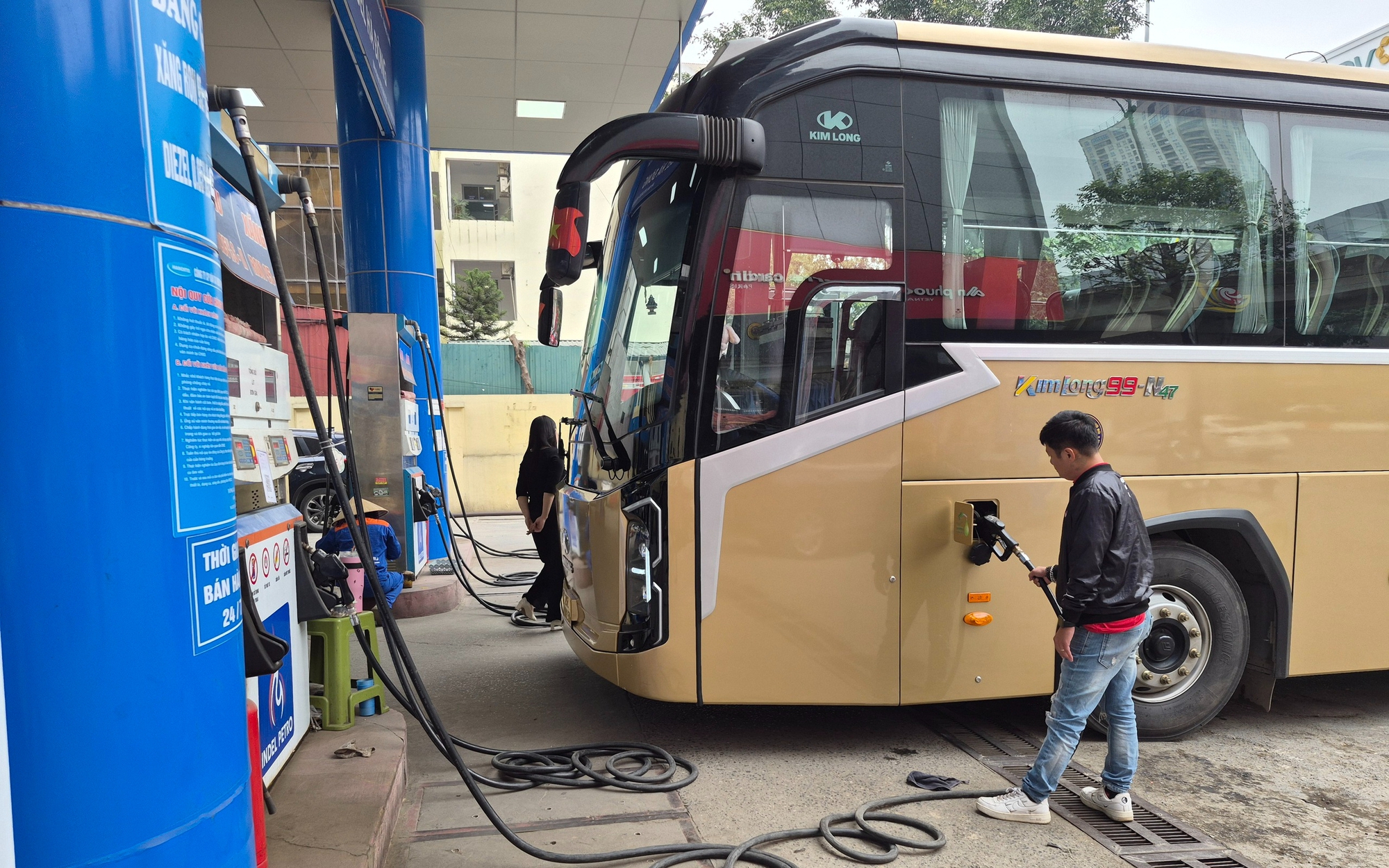
Thang estimated freight charges must increase by at least VND100,000 ($3.8) per metric ton to offset the higher fuel costs.
“Of course, our customers will feel the impact the most,” he admitted.
“But in this business, we simply have no other choice."
Passenger transport service suppliers face similar challenges, though raising fares is not as straightforward.
Pham Van Nien, owner of Tan Nien Bus Company, which operates passenger routes from Dong Nai to provinces in the Central Highlands, said his business will have to absorb losses for several days following the fuel price spike.
“Passengers have already booked their tickets, and ticket prices are tightly regulated by authorities. We can’t just raise them immediately,” Nien explained.
“While waiting for approval from authorities to adjust fares, I’ll have to cover the losses for trips that were booked earlier.”
Nien also noted that refueling has become increasingly difficult in recent days, as many petrol stations have imposed limits on fuel purchases.
“In the past, we could fill up once and complete an entire trip," he said.
“Now we have to stop four or five times to buy fuel before the bus can depart."
The ripple effects of higher fuel prices are not limited to land transportation.
Fishing vessel owners in the Binh Thuan area, part of Lam Dong Province, are also reconsidering whether to put to sea, as fuel accounts for a large portion of their operating costs.
Do Van Thanh, director of Bich Thanh Co., a seafood purchasing company based in Phan Thiet, Lam Dong Province, warned that the sharp rise in fuel prices could push fishermen into losses.
“With the current fuel prices, fishermen will need to carefully plan each trip to avoid losses," Thanh stated.

The Middle East conflict escalated on Saturday last week after the U.S. and Israel carried out air strikes on multiple targets in Iran.
Tehran later responded with attacks on Israeli territory and missile launches targeting dozens of U.S. bases in Gulf countries, including the United Arab Emirates, Kuwait, Saudi Arabia, Qatar, Bahrain, and Oman, resulting in casualties and property damage.
Due to the conflict, the Strait of Hormuz, through which around a fifth of global oil consumption passes, closed, disrupting global fuel supplies.
Tieu Bac - Duc Trong / Tuoi Tre News
Link nội dung: https://news.tuoitre.vn/in-southern-vietnam-fuel-price-surge-pressures-transport-firms-to-raise-fares-103260308090526427.htm