
Inside Vietnam's DNA testing center identifying fallen soldiers
Inside a laboratory, bone fragments are cleaned, ground into powder, DNA is extracted and sequenced, and the results are compared with genetic profiles of fallen soldiers' relatives. It is a painstaking process to restore the identities of Vietnamese soldiers who died in wartime after decades without names.
More than 10,000 sets of remains recovered from war cemeteries across Vietnam have been transferred to the DNA Identification Center under the Institute of Biology of the Vietnam Academy of Science and Technology for identification.
Gene sequencing systems are operating continuously as scientists work to identify the remains.
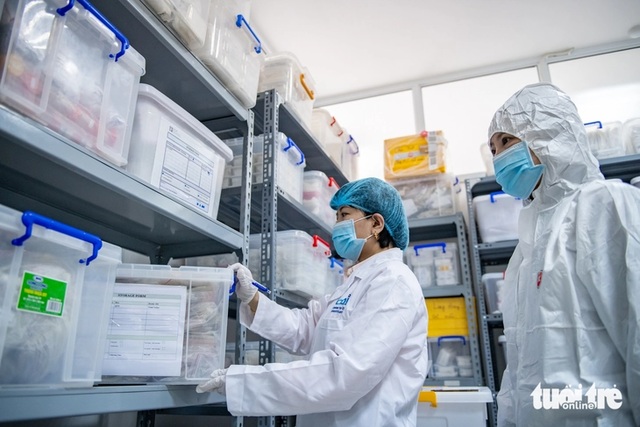
More than 10,000 sets of remains recovered from war cemeteries across Vietnam have been transferred to the DNA Identification Center. Photo: Nam Tran / Tuoi Tre
Inside the center's storage room, bone samples that had lain underground for decades are carefully cleaned and packaged in transparent containers before undergoing the identification process.
Vu Anh Tuan, a forensic examiner at the DNA Identification Center, said identifying the remains of fallen soldiers in Vietnam is considered one of the most difficult forensic identification challenges in the world.
Many of the unidentified remains were originally buried under rudimentary conditions and have been relocated several times.
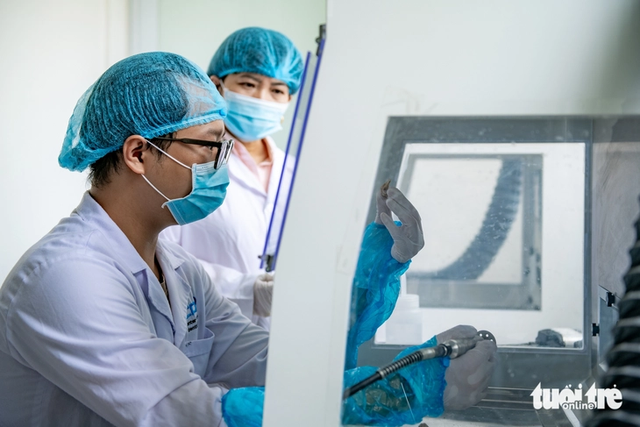
After being cleaned, a bone sample is placed into a silver mortar and ground into fine powder for DNA extraction. Photo: Nam Tran / Tuoi Tre
In addition, Vietnam's hot, humid tropical climate and prolonged flooding in many areas have caused severe DNA degradation.
According to Tuan, all bone samples must be preserved in accordance with strict technical standards upon arrival at the center.
The identification process also follows rigorous procedures to prevent contamination and ensure accurate results. Samples are first cleaned, then ground into fine powder under sterile conditions using specialized laboratory equipment.
DNA extraction follows, a crucial step that determines whether identification is possible.
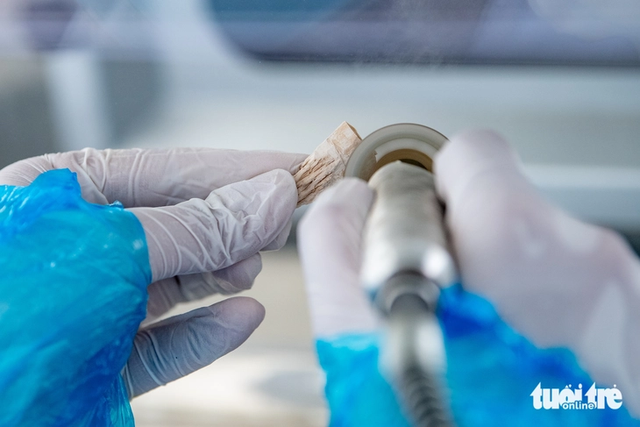
A bone fragment is cleaned before being placed into the grinder. Photo: Nam Tran / Tuoi Tre
The extracted DNA is then analyzed and compared with DNA samples from relatives using data provided by Vietnam's Ministry of Public Security. Processing a single sample typically takes three to four weeks.
"The first identification case I handled was in 2006, when we restored the identity of fallen soldier Dinh Dinh Binh," Tuan recalled.
"His final message to his commander before he died was, 'As long as Binh remains, the outpost remains.' I still remember those words today and regard them as a source of motivation in my work."
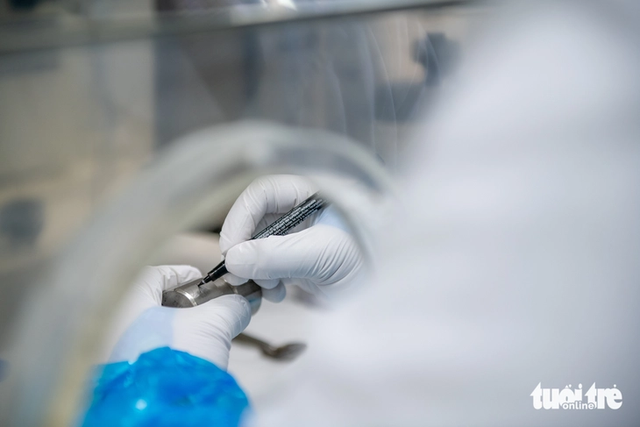
The identification process requires meticulous work, with conclusions based entirely on scientific data with absolute accuracy. Photo: Nam Tran / Tuoi Tre
He said he and his colleagues are driven by a heartfelt mission, with every successful identification bringing encouragement to everyone involved.
Under Vietnam's 500-day campaign to search for, recover, and identify the remains of fallen soldiers, the center is expected to analyze 6,623 samples from the more than 10,000 currently stored there.
New technology expands identification capabilities
Tran Trung Thanh, director of the DNA Identification Center, said conventional mitochondrial DNA analysis has produced many positive results over the years. However, Vietnam still has about 230,000 sets of remains awaiting DNA identification, creating the need for more advanced technologies.
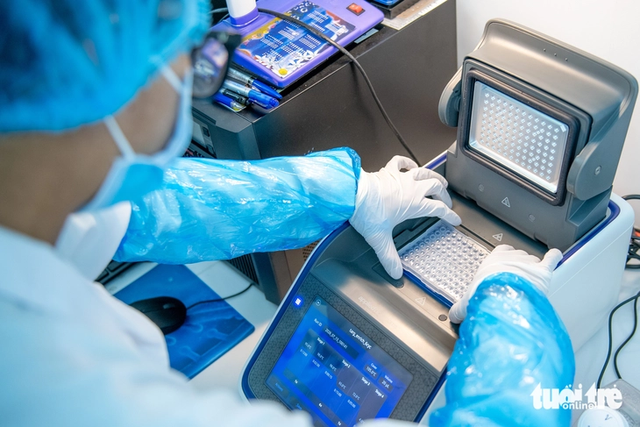
About 175,000 fallen soldiers have yet to be found, while approximately 300,000 sets of recovered remains have not yet been identified. Photo: Nam Tran / Tuoi Tre
To overcome the limitations of traditional methods, the Vietnamese government assigned the Vietnam Academy of Science and Technology to lead an official development assistance (ODA) project to strengthen wartime remains identification through technology transfer, capacity building, and receiving equipment, chemicals, and laboratory supplies funded by the United States government.
The project is also supported by the International Commission on Missing Persons.
The newly adopted NGS-SNP technology, combined with next-generation gene sequencing, enables comparisons with relatives as distant as fourth-generation family members on both paternal and maternal family lines.
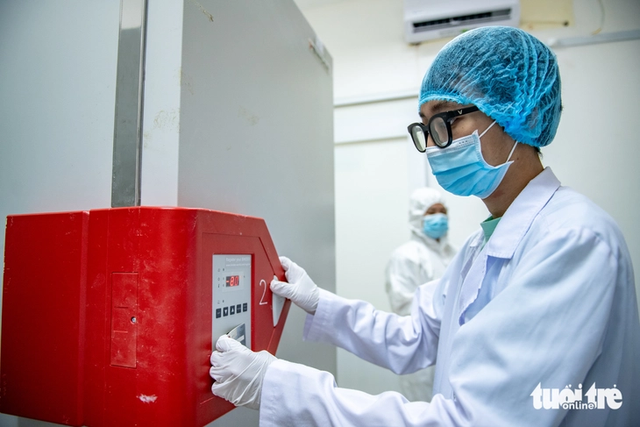
New DNA identification technology has brought renewed hope to families who have waited decades to learn the fate of their loved ones. Photo: Nam Tran / Tuoi Tre
The technology is particularly effective at analyzing severely degraded DNA by reading very short DNA fragments, making it well suited to the condition of Vietnamese wartime remains after decades of decomposition.
The effectiveness of the technology was demonstrated during a pilot project at Tra Linh Martyrs' Cemetery in Cao Bang Province, northern Vietnam.
Among 58 bone samples suitable for testing, most of which were severely degraded, researchers compared them with DNA samples from relatives of 14 fallen soldiers and successfully identified two individuals during the first pilot phase.
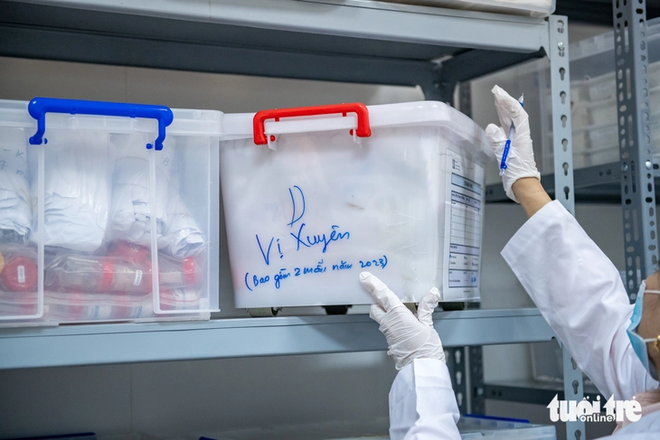
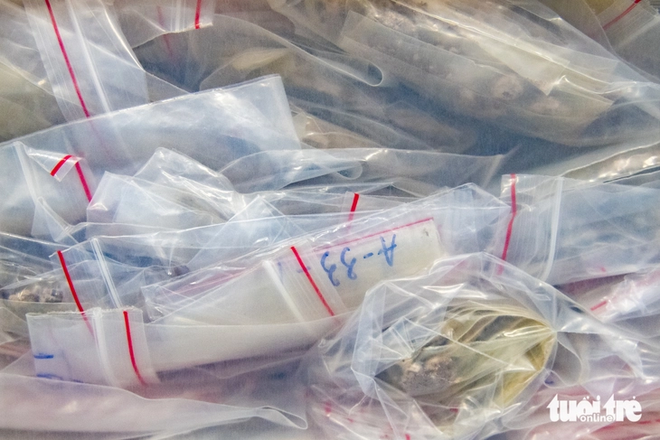
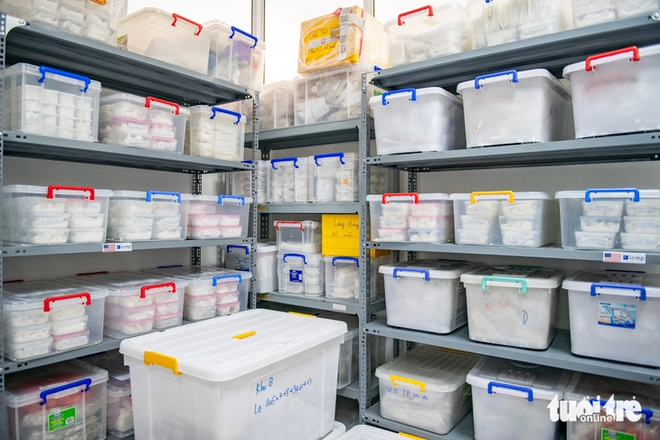
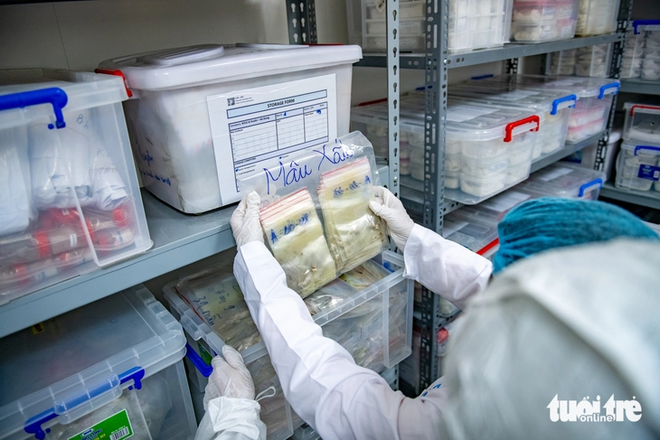
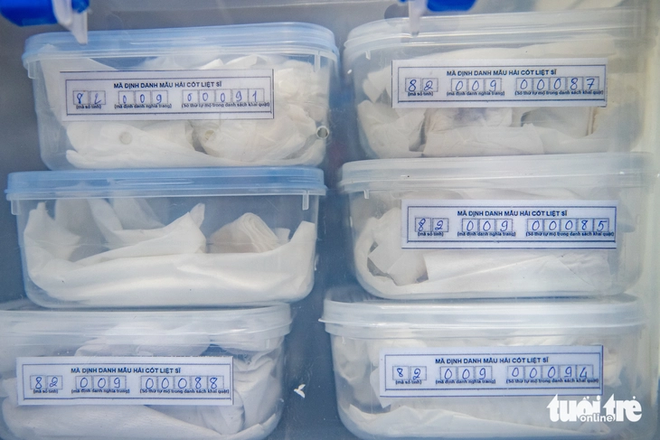
Tens of thousands of bone samples are awaiting DNA analysis at the DNA Identification Center. Photo: Nam Tran / Tuoi Tre
Samples that could not be matched were mainly limited by the lack of DNA samples from relatives.
Thanh said the technology is scheduled to be transferred to all DNA identification laboratories in Vietnam by the first quarter of 2027.
"We are carrying out this project as carefully as possible to ensure that, once transferred, the technology will effectively support Vietnam's DNA identification efforts," he said.
Thanh Ha - Nguyen Bao - Nam Tran / Tuoi Tre News
Link nội dung: https://news.tuoitre.vn/inside-vietnams-dna-testing-center-identifying-fallen-soldiers-103260715123249044.htm