
Italian lawyer spends over 4 years pursuing cashew fraud case involving Vietnamese exporters
An Italian lawyer has spent more than four years pursuing legal action in a cross-border fraud case involving 100 containers of cashew nuts exported by Vietnamese companies, even after five of the six affected businesses withdrew from the criminal proceedings.
The case, which emerged in early 2022, sent shockwaves through Vietnam's agricultural export sector after six Vietnamese companies were targeted in what investigators described as a sophisticated international fraud scheme.
Lawyer Davide Gallasso, a specialist in commercial, international, and contract law, as well as arbitration and litigation, has served as the lead legal representative for the Vietnamese companies.
Working with his colleagues, he helped secure the return of the cargo and enabled the exporters to recover most of their capital within three months.
However, when the case entered the criminal prosecution stage, only Phuc Van Company continued to pursue legal action alongside Gallasso's law firm.
Rapid intervention saves shipments
According to Gallasso's legal team, the case was not merely a commercial dispute but a carefully organized transnational criminal operation.
The fraudsters allegedly exploited the documentary collection payment method to obtain the original shipping documents, allowing them to seize control of the cargo while nearly 100 containers were arriving at major Italian ports, including Genoa.
Facing the prospect of losing both their shipments and their businesses, the Vietnamese exporters sought emergency legal assistance from Studio Gallasso & Associati in Italy.
Gallasso and his colleagues quickly coordinated with port authorities and Italian judicial authorities to obtain orders freezing the cargo at port, preventing the goods from being released unlawfully.
The law firm also successfully persuaded Italian courts to issue urgent rulings recognizing the Vietnamese companies' lawful ownership of the shipments.
As a result, all six companies were able to resell the recovered cashew nuts to new buyers in Europe, allowing them to recover most of their working capital within three months.
While recovering the cargo addressed the companies' immediate financial losses, Gallasso's legal team believed criminal prosecution was essential to dismantle the international fraud network and seek justice.
However, as the case moved into a lengthy and complex criminal process, five of the six Vietnamese companies chose to withdraw and focus on rebuilding their businesses.
Only Phuc Van Company remained committed to pursuing the case.
According to the law firm, pursuing an international criminal case for more than four years has required enormous financial and professional resources.
After most of the victims withdrew, legal fees paid by a single company were insufficient to cover the costs of evidence collection, litigation, travel, and daily operations.
Despite the financial burden, Gallasso and his colleagues continued the case at their own expense, saying they believed those responsible should be held accountable and that the reputations of legitimate Vietnamese exporters deserved to be protected.
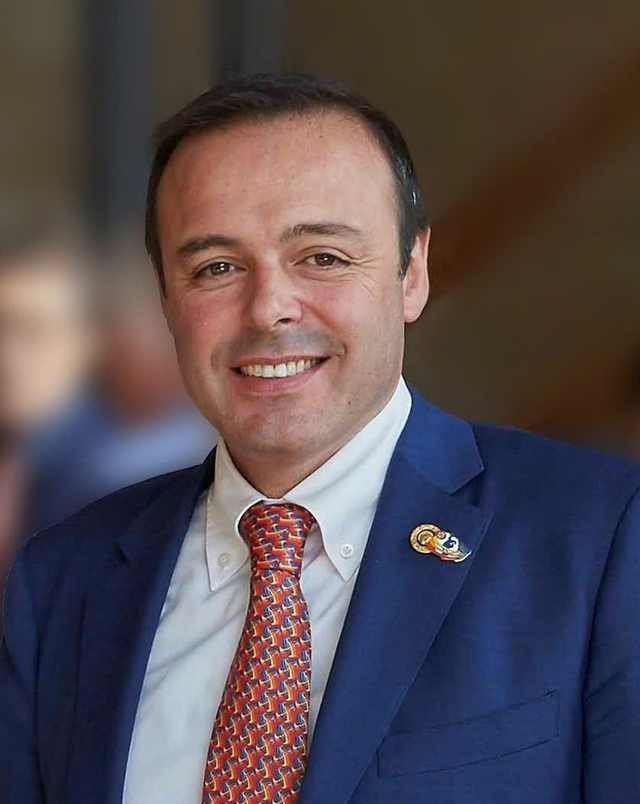
Italian lawyer Davide Gallasso
Italian court allows remote testimony
The Italian court reportedly considered dismissing the case because of its complexity and the lack of sufficient cooperation from the Vietnamese victims.
Recognizing the determination of Gallasso's legal team, the court instead required representatives of all six affected Vietnamese companies to participate in a hearing in Naples to testify, confirm their losses, and complete key witness documentation.
The requirement created a major obstacle, as traveling from Vietnam to Italy for the hearing would be costly and procedurally difficult for the companies.
To prevent the case from being dismissed, Gallasso worked directly with the Italian Consulate General in Ho Chi Minh City to arrange what his law firm described as an unprecedented solution in judicial cooperation between the two countries.
Under the arrangement, the Vietnamese companies would be allowed to testify remotely from the Italian Consulate General in Ho Chi Minh City, while Gallasso would appear in person before the court in Naples.
The remote hearing eliminated geographical barriers, making it easier for the companies, most of which are based in southern Vietnam, to fulfill their obligations as witnesses.
According to the law firm, despite the arrangements, only Phuc Van Company confirmed its participation in the online hearing. The other five companies either remained silent or had yet to respond.
Two of those companies had since dissolved after suffering severe financial losses following the 2022 incident.
Even so, the law firm argued that the two companies’ former owners could still appear as witnesses in their personal capacity to help establish the facts of the case.
Gallasso's legal team said the case has grown beyond a dispute over financial losses, describing it as a matter of justice, commercial integrity, and Vietnam's reputation in international trade.
The Vietnam Cashew Association, the Ministry of Industry and Trade, and other relevant authorities were called to provide stronger support for Vietnamese exporters facing international commercial disputes.
Protecting the interests of legitimate exporters requires not only broad policy commitments but also sustained support in individual cases, especially those involving organized international fraud.
If a foreign law firm can devote four years to pursuing justice for Vietnamese businesses without seeking profit, then the organizations tasked with protecting the interests of Vietnamese enterprises have no justification for standing on the sidelines.
* The piece was originally written in Vietnamese by Mai Tuyet Minh, CEO and owner of True Vietnam SRL in Italy and 4BE Company Limited in Vietnam, and has been translated into English and edited by Tuoi Tre News.
Tuoi Tre News