
Japan’s Fujiya starts Vietnam cookie production, plans exports to 12 markets
Japanese confectionery maker Fujiya has begun producing its Country Ma’am soft cookies at a factory in southern Vietnam and plans to export the products to 12 markets, including Japan, by the end of June, according to Nikkei Asia.
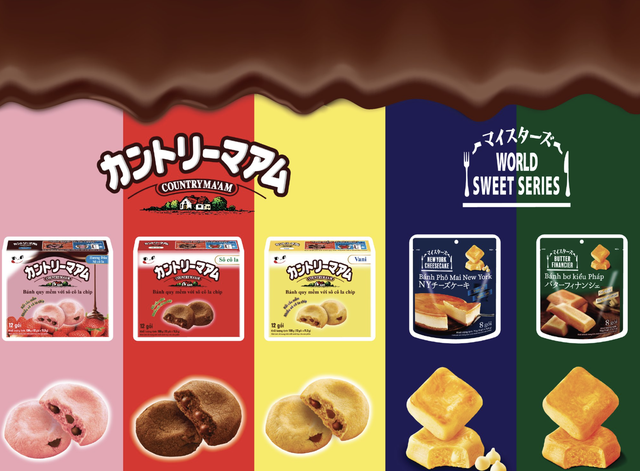
Fujiya confectionery products. Photo: Fujiya Vietnam
Through its subsidiary Fujiya Vietnam, the company started production at a plant in the southern province of Tay Ninh.
The facility, which began operations in November 2025, is the first overseas production base for the Country Ma'am brand and has an annual capacity of 3,600 tonnes, equivalent to about 500 million cookies.
Sales of Vietnam-made Country Ma'am cookies are scheduled to begin in Thailand in March, with exports to South Korea and Taiwan to follow.
By the end of June 2026, products from the plant are set to be shipped to major Southeast and South Asian economies including Indonesia, India, and Bangladesh.
Previously, Country Ma'am cookies were mainly produced and exported from Fujiya's Hadano factory in Japan.
Of the 12 export markets planned from Vietnam, nine currently import the product from Japan.
Fujiya plans to gradually shift supply for overlapping markets to its Vietnam facility.
Fujiya, which has operated in Japan for more than 100 years, manufactures and retails cakes, cookies, candy, chocolate and beverages, and operates more than 1,000 stores nationwide.
In 2025, the company reported consolidated revenue of about 119.5 billion yen (US$770.6 million), up more than eight percent from the previous year.
Yuki Higashiuwatoko, head of Fujiya Vietnam, said consumption of soft cookies in Japan tends to increase as the economy grows and that the company expects a similar trend in Vietnam and other countries.
In Vietnam, the sweetness level of Country Ma'am cookies has been reduced to align with health-conscious trends and lighter taste preferences.
In South Korea, the product will have a richer and sweeter flavor profile.
Fujiya Vietnam said the Tay Ninh factory still has available land and that the company is considering expanding production capacity or manufacturing other confectionery products at the site to serve additional markets.
Other Japanese food companies, including Ajinomoto and Kewpie, have also expanded operations in Vietnam.
According to the Japan External Trade Organization (JETRO), the average annual salary of factory workers employed by Japanese companies in Vietnam is $5,270, lower than labor costs in Japan and China.
A Fujiya Vietnam factory manager said the company can produce confectionery of quality comparable to Japan's at lower cost.
Fujiya Vietnam sources flour and sugar domestically but imports some ingredients such as chocolate.
Higashiuwatoko said the company can import such ingredients at relatively low cost by utilizing Vietnam's multilateral trade agreements.
Nghi Vu - Bao Anh / Tuoi Tre News
Link nội dung: https://news.tuoitre.vn/japans-fujiya-starts-vietnam-cookie-production-plans-exports-to-12-markets-103260228151020191.htm