
Karaoke noise fades in Ho Chi Minh City
Since Decree 282 took effect on December 15, Ho Chi Minh City has seen a noticeable decline in noisy karaoke activities in many residential areas, a change widely welcomed by residents.
In several areas, the spontaneous use of portable loudspeakers and high-power karaoke systems within residential zones has dropped sharply compared to previous months.
Vendors in the electronics area of Nhat Tao Market in Dien Hong Ward shared that consumer behavior has shifted significantly.
Demand for large, high-power speakers has slowed, while interest in smaller, indoor music systems has increased.
“Before the decree came into force, powerful speakers had been sold very well, especially on weekends,” said one loudspeaker trader at the market.
“However, customers are now asking more carefully about volume levels. Many have chosen smaller speakers for indoor use to avoid disturbing others.”
The change is even more apparent in residential areas.
Quoc Huy, a resident of Binh Dong Ward, said his neighborhood is no longer tortured by karaoke noise.
“In the past, neighbors would sing karaoke about three times a week, mostly on weekends, from 8:00 pm to 11:00 pm,” he said.
“Since Decree 282 has been widely publicized, people have started reminding each other and exercising more restraint.
"The all-night karaoke sessions have basically stopped.”
Huy said that noise levels have dropped significantly, calling it a positive and encouraging sign.
He hopes the situation will remain stable and help preserve a peaceful living environment.
Similar changes have been noted along Nguyen Trai Street in An Dong Ward, where shops that once blasted music now keep their speakers at much lower volumes.
Sound is audible only at close range and no longer spreads far enough to disturb nearby residents.
Some residents confirmed the difference.
“It has been much quieter at night over the past few days. There’s no more blaring music lasting for hours,” one local said.
“I really hope this continues.”
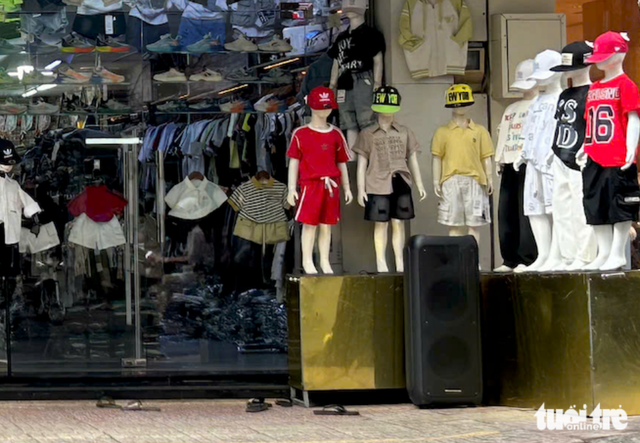
Several shops on Nguyen Trai Street in An Dong Ward, Ho Chi Minh City completely turn off high-power speakers. Photo: Huu Duy / Tuoi Tre
In a residential area on Huong Lo 2 Street in Binh Tri Dong Ward, one resident recalled how karaoke noise used to be a daily occurrence, sometimes with two or three households singing at the same time – front, side, and back – making rest nearly impossible.
“But on the weekend of December 21 and 22, I didn’t hear anyone singing at all,” said Hung, a local of the area.
“The following weekend, December 27 and 28, there was only one daytime party with karaoke, played at a reasonable volume and ending early."
Near Ba Chieu Market in Gia Dinh Ward, Huong said life has become noticeably calmer.
Before Decree 282, neighbors would point speakers directly toward her house during parties and drinking sessions.
Even repeated requests and threats to report the issue had little effect.
“For the past few weeks, it’s been completely quiet,” she said happily.
“My neighbors still gather to eat and drink, but they don’t sing anymore.
"Weekends at home are finally peaceful, real rest at last."
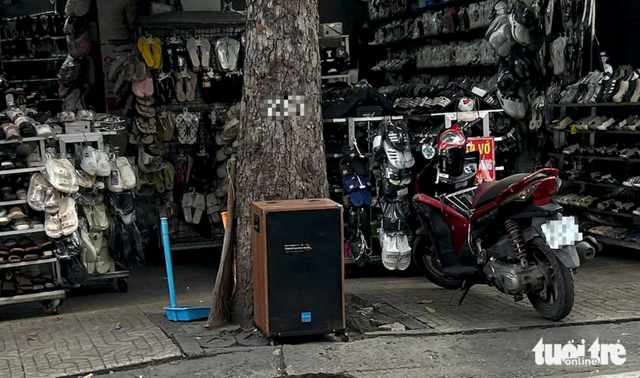
Some shops keep the volume low to avoid disturbing nearby residents. Photo: Huu Duy / Tuoi Tre
Calls for consistent enforcement
Residents said the improvement has not only enhanced their living space, but also reflects rising awareness among household businesses, particularly as regulations on noise violations have been tightened and widely discussed.
Despite the positive early results, many stressed that consistent enforcement is essential to prevent a return to old habits.
“It only takes a few strictly handled cases for the whole area to comply,” one resident said.
“We just hope the constant noise we endured before doesn’t come back.”
For many, quiet is not merely a personal preference but a legitimate community right.
Effective enforcement of the new regulations will improve overall quality of life, reduce conflicts, and foster harmony in residential neighborhoods.
The decline in karaoke noise following the implementation of Decree 282 is widely seen as an encouraging first step.
Residents remain optimistic that with continued inspections, strict handling of violations, and sustained public awareness, the long-standing problem of noise pollution by karaoke can gradually be eliminated.
Over the past few days, police in Tang Nhon Phu Ward have coordinated with local organizations to step up public outreach and education on Decree 282.
Efforts have centered on reminding residents not to gather for karaoke or play loud music that disrupts others.
As a result, most residents have gained a clearer understanding of the harmful effects of noise and their responsibility to comply with the law.
Many have voluntarily committed to avoiding noisy activities, contributing to quieter, more united, and more orderly communities in line with state regulations.
Under Decree 282/2025, which took effect on December 15 and replaced Decree 144/2021, the long-standing regulation that prohibited noise only after 10:00 pm was abolished.
Instead of regulating noise by time frame, the new decree focuses on the actual level of noise generated, regardless of whether it occurs during the day or at night.
Karaoke singing or the use of portable loudspeakers can be penalized at any hour if the sound exceeds allowable limits, not just late at night as before.
Penalties can reach up to VND160 million (US$6,070) for noise levels exceeding the standard by 40 dBA or more, along with possible suspension of operations and mandatory payment of measurement costs.
Tuoi Tre News
Link nội dung: https://news.tuoitre.vn/karaoke-noise-fades-in-ho-chi-minh-city-103251231114740798.htm