
Nearly $38 million to turn Moc Bai into Southern Vietnam’s smart gateway
Authorities in southern Vietnam’s Tay Ninh province are finalizing a feasibility study for a project to develop Moc Bai border gate infrastructure through 2030, according to the provincial Economic Zone Management Board.
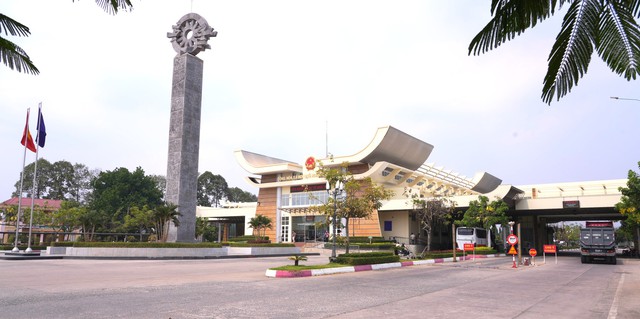
Moc Bai Border Gate Joint Control Station has been in operation since 2004. Photo: Son Lam
Initial designs envision a modern, sophisticated international border gate equipped with smart digital infrastructure, while ensuring visual appeal as well as national defense, security and foreign relations requirements.
The Moc Bai Infrastructure Development Project through 2030 has been approved by the Tay Ninh provincial People's Committee, with total investment of VND962 billion (US$37.6 million).
Of this, more than VND179 billion ($7.0 million) will go toward compensation, support and resettlement, with the remainder allocated to construction, equipment and other related costs.
The project will be developed on a comprehensive and integrated scale, comprising three main components: expanding the road connecting the Ho Chi Minh City-Moc Bai Expressway with Moc Bai International Border Gate; upgrading and expanding Moc Bai Border Gate's Joint Control Station and improving the landscape around Border Marker 171 on the Vietnam-Cambodia border; and building a drainage canal for the border gate area.
Tay Ninh province recently formed a survey team to conduct a field assessment and review the project's overall plan.
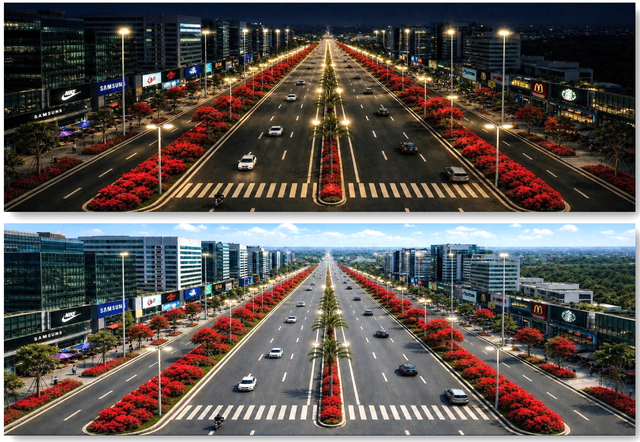
Design for expanding the expressway section from Moc Bai International Border Gate to the Ho Chi Minh City-Moc Bai Expressway. Photo: Tay Ninh Economic Zone Management Board
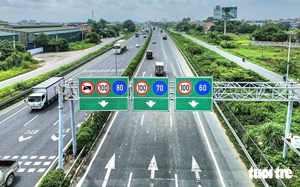
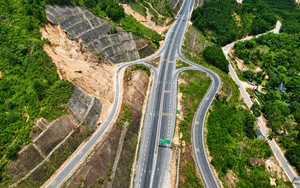
The survey team agreed to retain the approved scale and alignment of the road connecting the expressway to the border gate. The approximately 4.45-kilometer road will link Moc Bai Border Gate with the Ho Chi Minh City-Moc Bai Expressway.
The project will widen the total carriageway to 38 meters and provide 15 meters of sidewalks on both sides.
It will also include a median, land reserves for greenery on both sides, as well as lighting, landscaping, drainage and traffic safety systems.
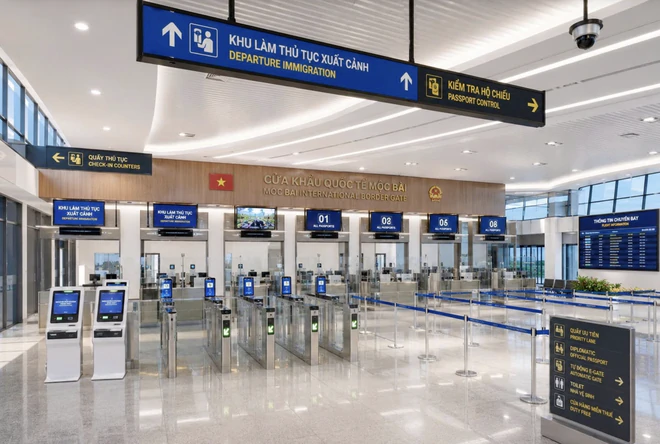

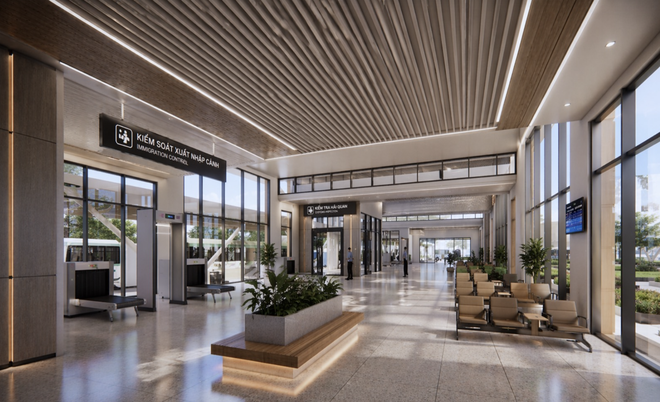
Design and proposed roadmap for developing Moc Bai International Border Gate into a digital, smart border gate. Photo: Tay Ninh Economic Zone Management Board
For the Joint Control Station and the landscape around Border Marker 171, the selected plan calls for renovating about 1,500 square meters of the existing facilities and constructing about 1,900 square meters of new facilities on both sides, bringing the total area for immigration control to approximately 3,400 square meters.
The plan also calls for narrowing the existing roof canopies on both sides to create a more open, lightweight and harmonious space.
In the initial phase, about 418 meters of road will be built to serve imported cargo vehicles, with the remaining section to be considered for investment later depending on available funding.
The drainage system component will cover approximately 3.53 kilometers.
The dual-purpose border canal is not included in this project. Instead, authorities will coordinate research under a separate border canal project to ensure the two projects are developed in sync and avoid duplication of investment in the future
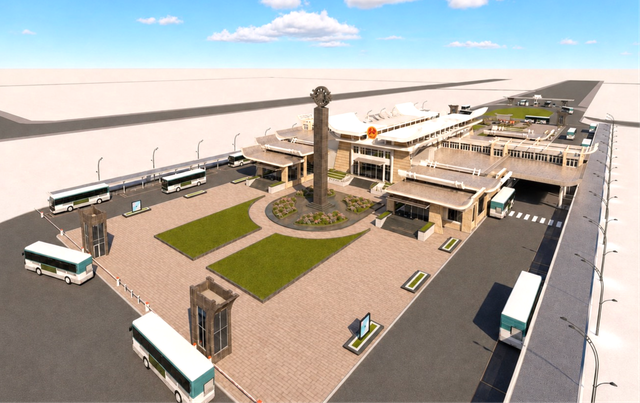
A rendering of the Moc Bai International Border Gate infrastructure after the planned renovation and upgrade. Photo: Tay Ninh Economic Zone Management Board
The total number of passengers crossing Moc Bai International Border Gate rose from approximately 1.289 million in 2015 to 2.081 million in 2025.
The figure is projected to reach 2.645 million by 2030 and about 6.91 million by 2050.
The Moc Bai Infrastructure Development Project through 2030 aims to complete and integrate the technical infrastructure system in the Moc Bai border gate area, upgrade the transportation network, border control facilities, and infrastructure serving trade and services, and ensure seamless connectivity with the Ho Chi Minh City-Moc Bai Expressway.
The project also seeks to address current problems caused by uncoordinated infrastructure investment, including flooding and traffic congestion, while giving the border gate a modern appearance befitting the largest international land gateway in southern Vietnam.
It is also expected to improve operational efficiency, attract secondary investment to functional areas within the border economic zone, and contribute to national defense, security, and foreign relations.
Van Giang - Son Lam / Tuoi Tre News
Link nội dung: https://news.tuoitre.vn/nearly-38-million-to-turn-moc-bai-into-southern-vietnams-smart-gateway-103260907221929205.htm