
Open-cast pit to eco park: India reinvents old mines
CHHATTISGARH/NEW DELHI - On a moonless night in central India, Pannelal Rajak braces an axe on his shoulder and sweeps a high beam torch across the still, inky water of a lake. Rajak points in the distance to where the light fades. "My land was there," he says.
Decades ago, Rajak, now 78, gave up his land for the Bishrampur open-cast coal mine in exchange for money and a job in the mine he believed would follow.
But, Rajak never got the job. He says the mining company would not give him work because of a disability in his left hand.
Today, he guards the same mine, which was turned into a boating lake with a floating restaurant when the coal ran out.
"At least I am earning something here now," he says.
Bishrampur stands as a model for India's attempts to give its exhausted mines a second life.
The world's second-largest coal producer and consumer after China is accelerating regeneration programmes across hundreds of mines as their coal runs out, aiming to create sustainable livelihoods for the communities who live there, mostly from tourism.
Spread across 1,472 hectares (5.68 square miles), the Bishrampur mine's 10 pits yielded more than 38.7 million tons of coal between 1961 and 2018 when the coal finally ran out.
Over time, some of the pits had gradually filled with water, creating a deep, bottle-green lake.
The district administration, with some funding from South Eastern Coalfields Ltd (SECL), transformed it into a small tourist hub with rafts, a park and a few cottages. SECL is a unit of Coal India Ltd, the world's largest coal miner.
The site, which began to be repurposed for tourism in 2018, is managed by a women's community group and a fishery cooperative, and attracts as many as 150 people at the weekend.
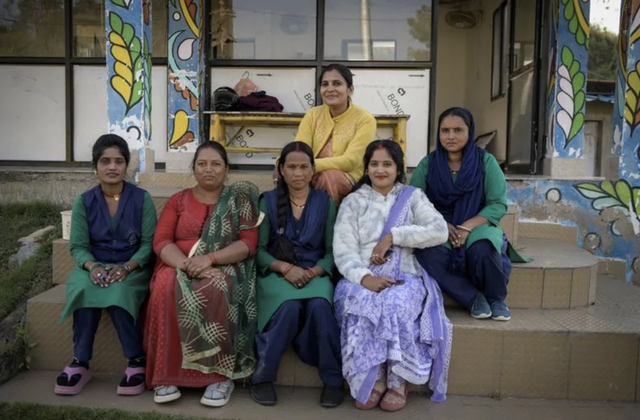
Women from the Shiv Shakti Mahila Gram Sangathan self‑help group pose for a photo at Kenapara Eco Park, which was developed from a closed open‑cast coal‑mine pit into a small tourist hub, in Surajpur, India, November 16, 2025. The site, which began to be repurposed for tourism in 2018, is managed by a women's community group and a fishery cooperative, and attracts as many as 150 people at the weekend and, for the women, the gains have gone beyond income. "Here women are known by the name of their husband or father-in-law. We wanted to be known by our own names," the group's leader, Pooja Sahu said. Photo: Reuters
For the women, the gains have gone beyond income.
"In the village, most women are only housewives. Our movements were restricted," says 30-year-old boat operator Anjani Singh.
"Working here, meeting officials and people gave us confidence."
The group's leader, Pooja Sahu, agrees.
"Here women are known by the name of their husband or father-in-law. We wanted to be known by our own names," she says.
Around Kenapara, the nearest village, locals now recognise them as the women who "run the boats."
Savita Gupta, 28, who runs the lake's floating restaurant, said her association with the women's group had transformed her from housewife to entrepreneur.
"I hope my daughter will learn from my life and think about becoming an independent woman," Gupta said.
Not far from the water, other projects are also underway.
A 40-hectare solar park generating 12 megawatts of power employs several local residents, including technician Pawan Kumar, 22, who earns 15,000 Indian rupees ($162.25) a month.
Officials say they have restored several hundred hectares of former mining land, planting trees including sheesham - a North Indian rosewood - and mango. SECL has spent around 43 million rupees developing the project, government data shows.
But the revival is fragile.
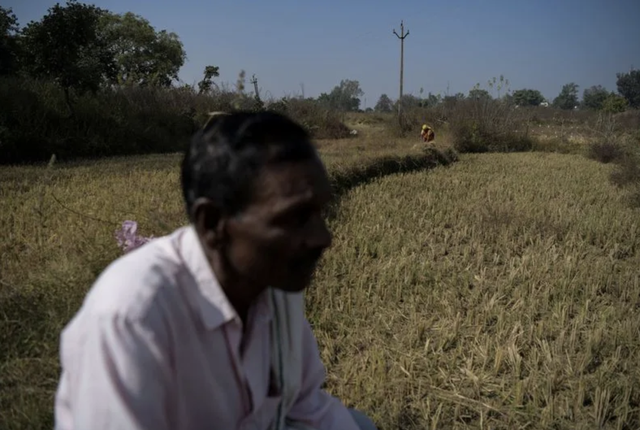
Pannelal Rajak, 78, who is a security guard at Kenapara Eco Park, oversees workers harvesting paddy on his farmland in Surajpur, India, November 16, 2025. Decades ago, Rajak gave up his land for the Bishrampur open-cast coal mine in exchange for money and a job in the mine he believed would follow, but he never got the job. Today he guards the same mine. "At least I am earning something here now," he says. Photo: Reuters
The women say they pay 2,000 rupees a month each to rent the boats and cover most of the maintenance costs themselves. They worry SECL is not doing enough to publicise the site and its attractions.
A nightly light show has been shut for months due to faulty lights.
SECL officials recently visited to take stock — the first such inspection in five years, the women say.
"Currently, it is managed by the district authority," says Ashish Clarence, an official with SECL, which highlights the park as a model for tourist development in its company brochures. The firm is considering improvements and maintenance to the site, he said, without giving more details.
Back on the night shift, Rajak pulls his torch in an arc across the water and listens to the faint creak of the boats in the dark.
He once worked this same patch as a hotel watchman when the mine was operational but the hotel and the job disappeared when the coal ran out.
"I've seen how things end here. This time, let it not end," he says.
($1 = 92.4475 Indian rupees)
Reuters
Link nội dung: https://news.tuoitre.vn/open-cast-pit-to-eco-park-india-reinvents-old-mines-103260317104448678.htm