
Over-1,000-year-old village in Hanoi captivates foreign visitors
Located just three kilometers from Hanoi’s Old Quarter, Bac Bien Village has become a favorite destination for foreign visitors seeking an authentic glimpse of traditional Vietnamese life despite having little formal tourism promotion.
Cycling through the village’s narrow roads, visitors can easily spot international tourists exploring daily life in Bac Bien, a village known for being home to the An Xa Pagoda Bell, recognized as a national treasure, and for being the hometown of celebrated military commander Ly Thuong Kiet.
Tran Dan, who has spent three decades organizing cycling tours for tourists, recalled being surprised when he first visited Bac Bien in 2008 and discovered that a traditional village had remained largely intact despite its proximity to central Hanoi.
“A foreign friend told me that there was a fascinating village on the other side of the river. When I eventually visited, I found that it truly lived up to the recommendation,” Dan said.
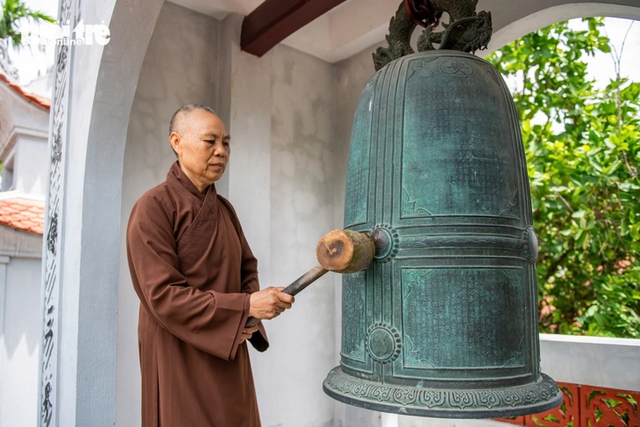
The An Xa Pagoda Bell was recognized as a national treasure in 2026. Photo: Nam Tran / Tuoi Tre
In 2010, he launched a cycling tour that takes international visitors from Hanoi’s Old Quarter across Long Bien Bridge to Bac Bien Village and the ancient Co Loa Citadel.
Tour participants cycle through the village, visit Phuc Xa Communal House and An Xa Pagoda, and enjoy lunch prepared by local residents.
“International visitors, especially high-end travelers, love these village tours because they want to discover a more authentic and less commercialized side of Vietnam,” Dan said.
“Everyone who visits the village feels a sense of peace and often wishes they could stay longer. Some lucky groups even have the opportunity to watch hau dong [a mediumship ritual] at riverside temples such as Duc Ong Temple, Rung Temple, Nui Temple, and Thoai Temple.”
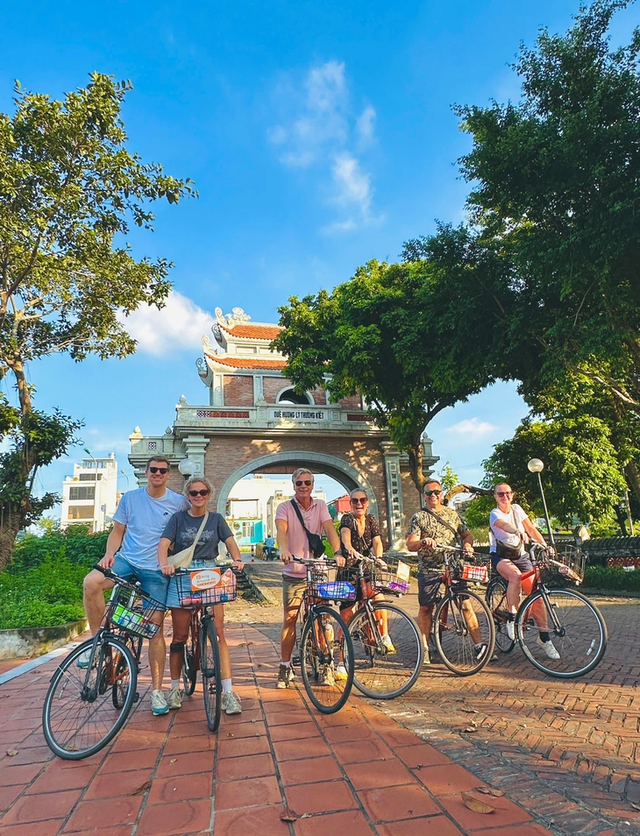
International visitors experience a cycling tour exploring Bac Bien Village in Hanoi. Photo: Supplied
According to village elders, Bac Bien has a history spanning more than 1,000 years. The village was originally known as An Xa and was located in the area where Hanoi’s Mot Cot (One Pillar) Pagoda now stands.
In 1010, when King Ly Thai To moved the capital from Hoa Lu to Thang Long, residents of An Xa relocated and established a new settlement along the Red River.
After several relocations and name changes over the centuries, the village eventually became known as Bac Bien.
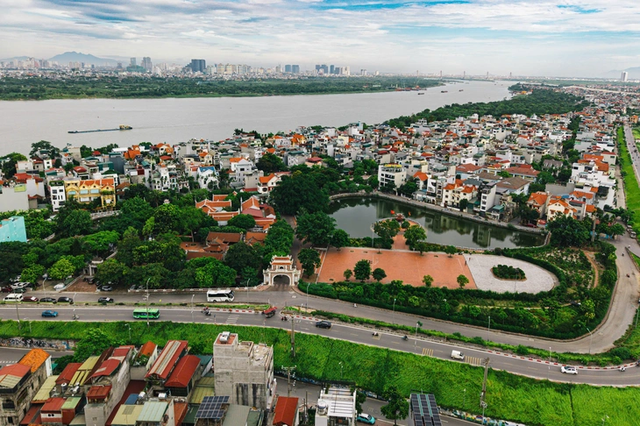
An aerial view of Bac Bien Village in Hanoi. Photo: Vietnam News Agency
The village is also recognized as the hometown of Ly Thuong Kiet, one of Vietnam’s most renowned military commanders, who led forces in the historic 1077 battle on the Nhu Nguyet River against invading Song troops.
Every year on the second day of the sixth lunar month, villagers hold commemorative ceremonies honoring Ly Thuong Kiet and local tutelary deities.
According to Luu Ngoc Thanh, a lecturer at the Faculty of Cultural Heritage of the Hanoi University of Culture, Bac Bien possesses exceptional potential for cultural tourism.
He said the village’s greatest asset is its rare combination of a riverside ecological landscape along the Red River and a dense concentration of historical and cultural heritage sites.
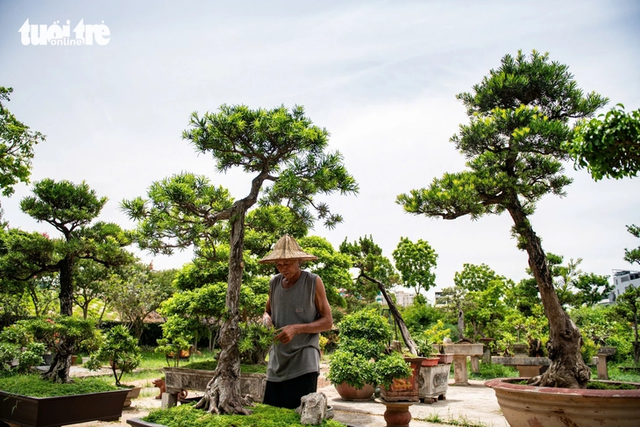
A bonsai garden at the village entrance serves as a stop on cycling tours. Photo: Nam Tran / Tuoi Tre
Despite extensive urban development in Hanoi, Bac Bien has maintained its traditional village layout, communal spaces, temples, pagodas, and strong community bonds.
Its location, only a bridge away from Hanoi’s Old Quarter, makes it especially attractive to visitors seeking a peaceful and nostalgic atmosphere.
Over the past few years, tourism in the village has evolved from informal visits into a more organized effort, with groups of local young people working to preserve and promote the village’s cultural values.
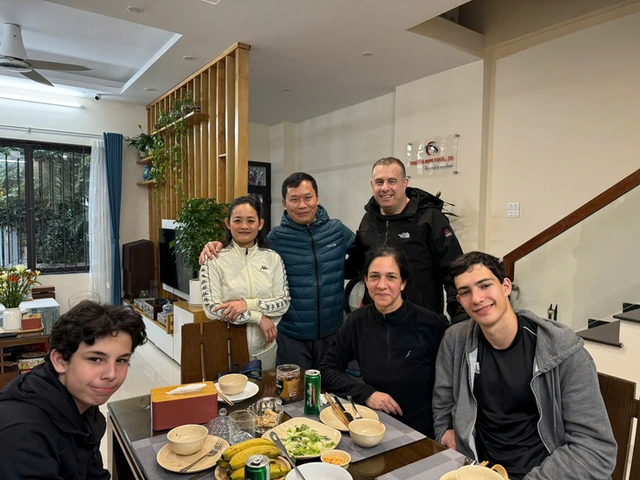
Hoang Huong, a resident of Bac Bien Village in Hanoi, welcomes guests to her home. Photo: Supplied
Nguyen Ngoc Anh, director of Phuong Nam Trading and Services JSC, said many first-time visitors are surprised that the village lacks ancient houses typically associated with heritage destinations.
However, he noted that the village’s historical character lies not only in architecture but also in its enduring social fabric and traditional way of life.
Many households in Bac Bien are home to four generations living together under one roof.
In a city where urban life can often feel anonymous, villagers still know and interact closely with one another.
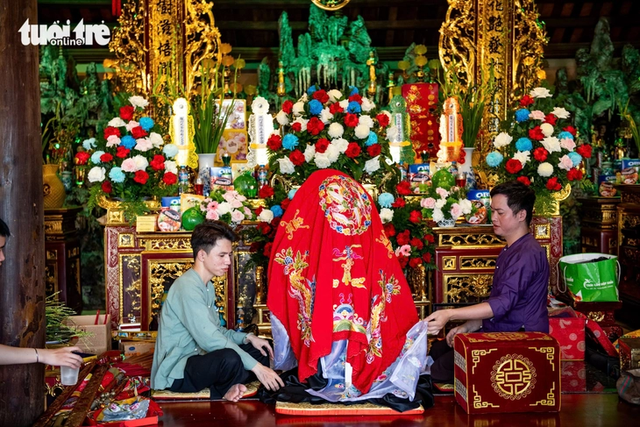
Visitors watch 'hau dong' (a mediumship ritual) at Rung Temple in Bac Bien Village, Hanoi. Photo: Nam Tran / Tuoi Tre
Hoang Huong, a resident who frequently prepares meals for visiting tour groups, said she always welcomes guests as if they were friends visiting her home.
Tourists often accompany locals to markets and participate in cooking traditional Vietnamese dishes such as spring rolls and bun cha (grilled pork meatballs with vermicelli noodles).
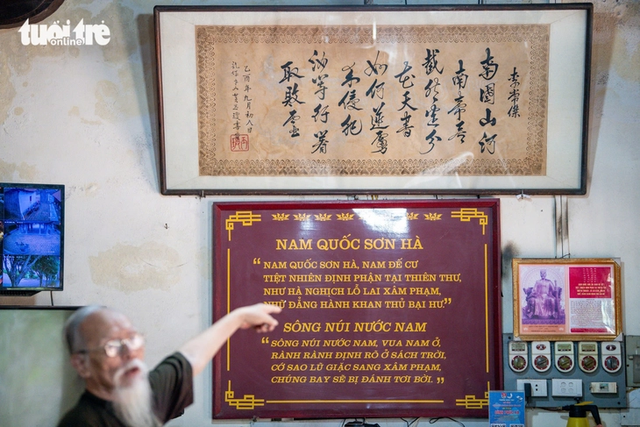
Village elders take pride in being born and raised in the hometown of military commander Ly Thuong Kiet. Photo: Nam Tran / Tuoi Tre
Thanh from the Hanoi University of Culture believes the most suitable development model for Bac Bien is community-based heritage tourism combined with riverside experiential tourism.
For such a model to succeed, local residents must play a central role in managing, operating, and benefiting from tourism activities.
“For many years, heritage conservation has often meant keeping sites untouched, which can sometimes turn heritage into an economic burden," Thanh said.

Thousands of students visit Phuc Xa Communal House and An Xa Pagoda in Bac Bien Village, Hanoi each year to pay tribute to Ly Thuong Kiet and learn about his legacy. Photo: Supplied
Cultural tourism allows heritage to remain alive and generate income. Revenue from tourism can then be reinvested in monument restoration and festival preservation. This is the principle of using heritage to sustain heritage, Thanh added.
Thanh Ha - Nguyen Hien - Nam Tran / Tuoi Tre News
Link nội dung: https://news.tuoitre.vn/over-1000-year-old-village-in-hanoi-captivates-foreign-visitors-103260625175822874.htm